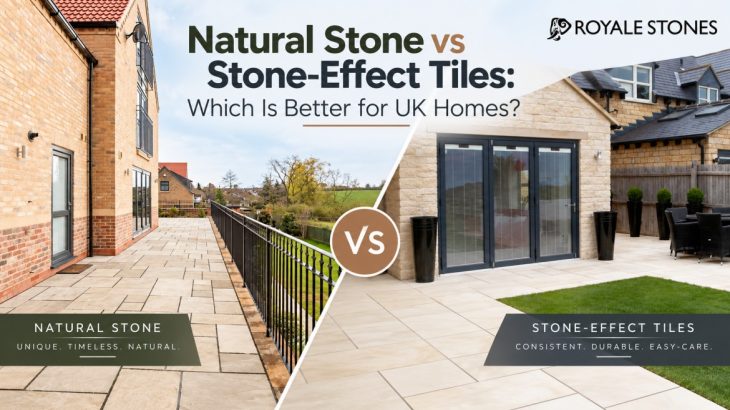
Choosing between natural stone and stone-effect porcelain is one of the most common decisions homeowners face when planning a home. Both options deliver a premium, timeless look, and both are built to handle the British climate — they simply do it in different ways. In short: natural stone brings unique, quarried character and a genuine connection to the outdoors, while stone-effect tiles bring consistent colouring and an easy-care finish. The right choice comes down to the look you want and how you’d like to care for your outdoor space.
What Is Natural Stone Paving?
Natural stone paving is quarried directly from the earth, meaning every slab is genuinely unique in colour, veining, and texture. Popular UK choices include Indian sandstone, limestone, and granite, each offering a distinct, one-of-a-kind character. Over time, natural stone develops a soft patina that many homeowners love, adding to its sense of history and authenticity.
What Are Stone-Effect Tiles?
Stone-effect tiles, widely known as porcelain paving, are manufactured from high-fired clay engineered to capture the appearance of sandstone, limestone, or slate in a consistent, uniform finish. Because porcelain is fired at extremely high temperatures, it has very low water absorption, which suits homeowners who want a dependable, ready-to-go surface with minimal fuss.
Performance in the British Climate
The UK’s mix of rain, freeze-thaw winters, and warm summers means both materials are chosen with the weather firmly in mind. Well-sealed sandstone paving performs beautifully through cold, damp seasons, and a simple annual seal keeps it looking its best year after year. Porcelain, with its naturally low porosity, is a great match for exposed or shaded spots that see a lot of rainfall, offering reliable, all-weather performance with very little seasonal attention needed. Both stand up well to the demands of a typical UK home — the choice really comes down to how hands-on you’d like to be with upkeep.
Appearance and Design Flexibility
Natural stone brings organic tonal variation that changes subtly with the light, which is part of why it remains so popular for classic garden paving schemes across the UK, especially where a relaxed, rustic, or country-garden feel is the goal.
Granite paving slabs, for example, offer a denser, more uniform crystalline finish that suits sleek, contemporary layouts as well as traditional ones. Stone-effect porcelain, meanwhile, is manufactured to a consistent colour batch, so what you see in the showroom is what you get across the whole patio, which works well for homeowners who want a crisp, uniform, design-led look.
Cost Considerations
Budget is a helpful starting point for narrowing down your options. Natural stone, particularly premium ranges, tends to sit at a higher price point due to the cost of quarrying and transport, though certain sandstone ranges remain very competitively priced. Porcelain tends to offer predictable, consistent pricing across a batch, since manufacturing costs are stable. Installation style also differs slightly: porcelain’s uniform thickness and edges can speed up laying time, while natural stone’s naturally varied sizing gives installers scope to create bespoke, characterful patterns. Whichever direction you lean, it’s worth comparing like-for-like paving slabs from the same supplier, since colour and finish can vary between ranges.
Maintenance and Practicality
Natural stone can be kept looking its best with occasional resealing and gentle cleaning, a simple routine that many homeowners enjoy as part of caring for a genuinely natural material. Porcelain garden patio tiles, on the other hand, can usually be kept looking new with nothing more than a wash of mild detergent and water, which suits busy households or larger areas where a quick, easy clean is preferred.
Which Option Suits Your UK Garden Best?
If you’re drawn to natural texture, one-of-a-kind colouring, and a material with genuine geological history, sandstone, limestone, or granite are wonderful choices. If your priority is consistency and an easy-care finish that performs reliably through wet winters and warm summers alike, stone-effect porcelain is a great fit. Many homeowners also combine both, using porcelain across high-traffic zones of the garden and natural stone as a characterful accent for seating areas or borders.
For a bright, contemporary finish, white garden slabs in either material can visually enlarge a smaller space and reflect more light on overcast days, which suits the UK’s often grey skies particularly well. It’s also worth thinking about how the space will be used day to day: a family garden with children and pets may enjoy porcelain’s easy-clean surface, while a quieter, design-led courtyard might be the perfect setting for natural stone’s distinctive character.
Quick Comparison
| Factor | Natural Stone | Stone-Effect Porcelain |
| Appearance | Unique, organic variation | Consistent, uniform batch |
| Weather performance | Excellent, with annual sealing | Excellent virtually no sealing needed |
| Maintenance style | Occasional resealing and cleaning | Wash and go |
| Cost | Character-led, varies by range | Predictable, consistent pricing |
| Best for | Rustic, characterful, bespoke designs | Sleek, low-maintenance, high-traffic areas |
Final Thoughts
Both natural stone and stone-effect tiles are excellent choices for a UK garden, each suited to a different style and climate priority. Whether you lean towards organic, quarried character or the consistent, easy-care finish of porcelain, both materials can create a durable, attractive outdoor space built to handle the British weather beautifully for years to come.