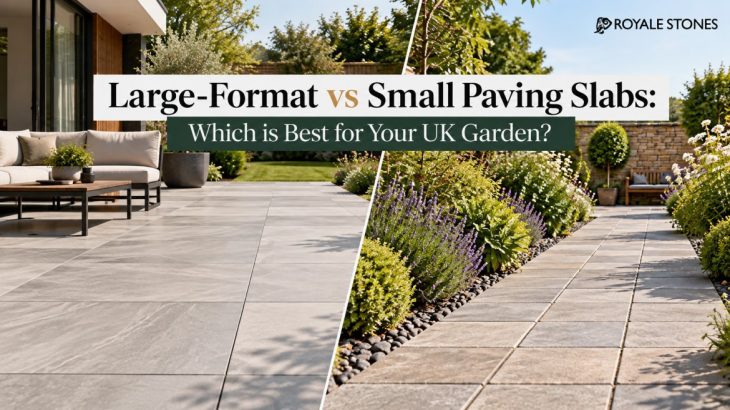
Choosing between large-format and small slabs is one of the first decisions in any patio project. It shapes how the finished space looks, how long installation takes and how much upkeep follows.
Quick answer: Large-format slabs (900x600mm and above) suit most contemporary UK gardens, because fewer joints create a cleaner, more spacious finish. Small-format slabs (600x600mm or smaller) suit awkward layouts, narrow paths and DIY projects, as they are lighter and easier to cut.
If you are comparing paving slabs for the first time, this guide explains how each format performs in British conditions.
What Counts as Large-Format and Small Slabs?
Slab sizes are not formally standardised, but the UK market generally groups them as follows:
- Small format: up to 600x600mm, including 600x300mm
- Large format: 800x800mm, 900x600mm and 900x900mm
- Extra-large format: 1000x1000mm and 1200x600mm
Outdoor porcelain slabs are typically 20mm thick, whatever the size.
Benefits of Large-Format Slabs
- Fewer joints: A 900x600mm slab covers 0.54m², so a 20m² patio needs around 37 slabs, compared with around 56 slabs at 600x600mm.
- A more spacious look: Fewer lines draw the eye across the surface, which can make a compact garden feel larger.
- Less maintenance: Less grout means fewer places for moss, algae and weeds to take hold in the UK’s damp climate.
- Modern appearance: Rectified edges allow tight, neat joints, although a 4mm joint is recommended for a crisp finish.
The trade-offs are weight, more wastage when cutting and the need for a flat, well-prepared base.
Benefits of Small-Format Slabs
- Easier handling: Lighter slabs are simpler for one person to lift and lay.
- Flexible layouts: Smaller pieces follow curves, corners and narrow side returns with less waste.
- Pattern variety: They suit grid, staggered and mixed-size layouts.
- Simple repairs: Replacing one damaged slab is straightforward.
The trade-offs are more joints, a busier appearance and more grout to maintain over time.
Which Format Suits Your Garden?
- Compact courtyard or terrace: Large-format slabs, provided the shape is fairly regular.
- Large entertaining area: 1200x600mm or 900x900mm for a bold, uninterrupted surface.
- Curved borders or irregular shapes: Small-format slabs, which cut and fit more easily.
- Garden paths: 600x300mm or 600x600mm keeps proportions in scale.
- DIY projects: Small or medium formats are more manageable.
Many homeowners now choose garden patio tiles that echo their indoor flooring, creating a continuous flow from kitchen to terrace. Large formats make this effect most convincing.
Porcelain or Natural Stone?
Format is only half of the decision. Material affects durability, upkeep and character.
Porcelain paving is the leading choice for large formats. It has very low water absorption, resists frost and stains, and offers consistent colour. Outdoor porcelain typically needs no sealing, which suits busy households.
Natural stone remains popular in small and medium sizes. Traditional garden slabs in riven sandstone or limestone bring natural variation that suits period and cottage-style properties, although natural stone usually benefits from sealing.
How Do Cost and Grip Compare?
Slab size alone rarely dictates price. Range, finish and origin matter far more, and current 900x600mm and 1200x600mm porcelain listings at Royale Stones overlap in price per square metre. The real budget difference often lies in installation: large formats need a flatter base and more careful handling, while small formats involve more joints and more laying time.
Grip matters just as much in the UK, where shaded, damp corners stay slippery for much of the year. Whatever the size, consider:
- Surface texture: A textured or matt finish gives better traction than a polished one.
- Slip rating: Ask for the product’s R-rating, particularly near steps and pool or hot tub surrounds.
- Colour: Lighter tones stay cooler underfoot in summer, while darker tones show dust and watermarks more readily.
Installation Tips for UK Gardens
Whichever format you choose, groundwork decides how long the surface lasts. Good garden paving starts below the surface:
- Sub-base: Lay a 100mm compacted layer of limestone or gritstone.
- Mortar bed: Use a 30mm semi-wet bed, with grit sand and cement at 4:1 or stronger.
- Primer: Apply slurry primer to the back of porcelain slabs only, never the top surface.
- Drainage: Set a gentle fall away from the house, and keep the finished level below the damp-proof course.
- Cutting: Use a wet tile cutter with a continuous porcelain blade.
- Curing: Avoid foot traffic for 24 hours after grouting.
Order 10% extra to allow for off-cuts and wastage, and increase the allowance slightly for large formats.
Which Slab Size Should You Choose?
Choose large-format slabs for a clean, contemporary look with minimal joints. Choose small-format slabs for curved or compact areas, paths and easier DIY laying. For most rectangular UK gardens, a large-format porcelain slab on a properly prepared base offers the best balance of appearance, durability and low maintenance.
Before you commit, order samples to see colour and texture in your own light, or visit one of the Royale Stones showrooms in Lincoln, Watford, Peterborough, Birmingham or Kent. The calculator on each product page works out your quantities automatically.