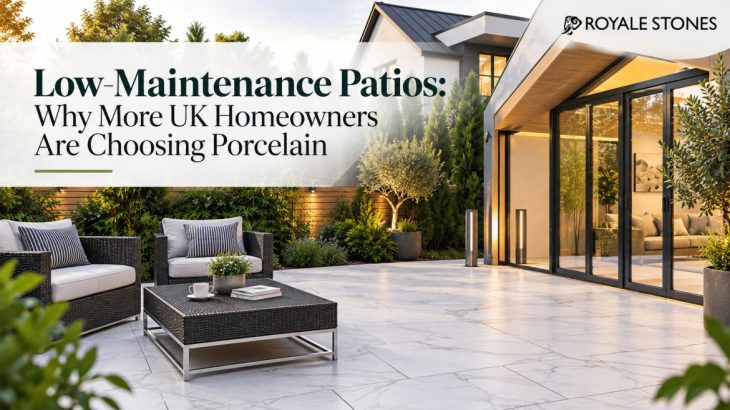
Porcelain has become the preferred choice for UK patios because it is virtually non-porous, frost-resistant, and needs little more than an occasional sweep or rinse to stay looking new, unlike concrete or natural stone, which require regular sealing and cleaning.
British weather has never been kind to outdoor spaces. Between damp winters, sudden downpours and the occasional heatwave, a patio needs to cope with everything the UK climate throws at it while still looking presentable on a Sunday afternoon. It’s exactly this challenge that has pushed porcelain to the front of the queue for homeowners planning a new patio, and the shift shows no sign of slowing down as more gardens across the country are redesigned around it.
Why Low Maintenance Has Become the Priority
A decade ago, most UK gardens were paved with concrete flags or natural stone, both of which demand regular attention to stay presentable. Algae, moss and weathering are a constant battle, particularly in the wetter regions of the country. As lifestyles have become busier, homeowners are less willing to spend their weekends scrubbing slabs or resealing stone every year. Instead, demand has shifted towards materials that hold their appearance with minimal intervention, which is precisely where porcelain paving has carved out its reputation as the practical, modern choice.
What Makes Porcelain So Easy to Live With
Porcelain is manufactured under intense heat and pressure, which gives it a density that natural materials simply cannot match. This process makes each tile virtually non-porous, so it resists staining from barbecue grease, red wine, bird droppings and garden mud far better than sandstone or concrete. Because so little moisture penetrates the surface, porcelain is also highly resistant to frost damage, a genuine concern in a country where temperatures regularly dip below freezing through the winter months. There’s no need for annual sealing, and a quick sweep or occasional pressure wash is usually enough to keep tiles looking as good as the day they were laid.
Porcelain Compared with Traditional Paving Slabs
Homeowners weighing up their options often compare porcelain directly against traditional paving slabs made from concrete or natural stone. While concrete slabs are budget-friendly, they tend to fade, crack and stain more readily over time. Natural stone brings undeniable character but comes with the trade-off of higher upkeep, including periodic sealing and more careful cleaning to avoid etching the surface. Porcelain sits in a different category altogether: it offers the aesthetic variety of natural stone, in finishes ranging from limestone-effect to timber-look, without the ongoing maintenance schedule that traditional materials require.
Choosing a Colour That Works with Your Garden
One of porcelain’s biggest advantages is the sheer range of finishes now available to UK homeowners. Darker tones such as anthracite and charcoal are popular for contemporary gardens, as they hide everyday marks well and create a striking contrast against greenery. At the other end of the scale, white garden slabs have become a firm favourite for smaller courtyards and modern extensions, since lighter tones reflect available light and make compact spaces feel noticeably larger. Whichever direction a project takes, porcelain’s consistent colouring from tile to tile means the finished patio looks uniform, which isn’t always guaranteed with quarried garden slabs cut from natural stone.
How Porcelain Stacks Up Against Granite
For homeowners drawn to a more premium, natural look, granite paving slabs are often the alternative under consideration. Granite is prized for its strength and distinctive flecked appearance, and it performs well outdoors, but it typically costs more and can still require occasional sealing to guard against staining in high-traffic areas. Porcelain, by contrast, replicates many of granite’s visual qualities through stone-effect ranges while keeping ongoing care to little more than routine sweeping, making it an appealing middle ground between budget concrete and premium natural stone.
Practical Considerations Before You Order
Choosing the right garden patio tiles isn’t only about colour and finish. Thickness matters for outdoor use, with 20mm porcelain now the UK standard for patios, driveways and pathways, since it offers enough strength to handle furniture, foot traffic and occasional vehicle weight without cracking. Slip resistance is equally important given the amount of rainfall the UK receives, so look for a tile with a suitable R-rating for outdoor use. Getting the sub-base and joining right during installation also plays a significant role in how well a patio performs over the years, regardless of how durable the tile itself is, so it’s worth working with an experienced installer or following manufacturer guidance closely.
Is the Investment Worthwhile?
Porcelain typically costs more upfront than concrete, which understandably gives some homeowners pause. The calculation changes, however, once ongoing costs are factored in. There’s no annual resealing to budget for, no replacement slabs needed after a few harsh winters, and no professional cleaning required to remove ingrained algae or staining. Over a ten-year period, many homeowners find that the reduced maintenance more than offsets the higher initial spend, while the patio itself continues to look as sharp as it did on day one. For a feature that’s used almost daily throughout spring and summer, that combination of durability and appearance tends to justify the price difference.
Bringing It All Together
The appeal of porcelain isn’t a passing trend; it reflects a genuine shift in what UK homeowners expect from their outdoor spaces. A well-chosen garden paving scheme should enhance a property without becoming another item on the weekend to-do list, and porcelain consistently delivers on that promise across colour, durability and day-to-day upkeep. For anyone planning a refresh this year, comparing finishes, sizes and colourways before committing is time well spent, since the right choice now means a patio that continues to perform, and look the part, for many years to come.