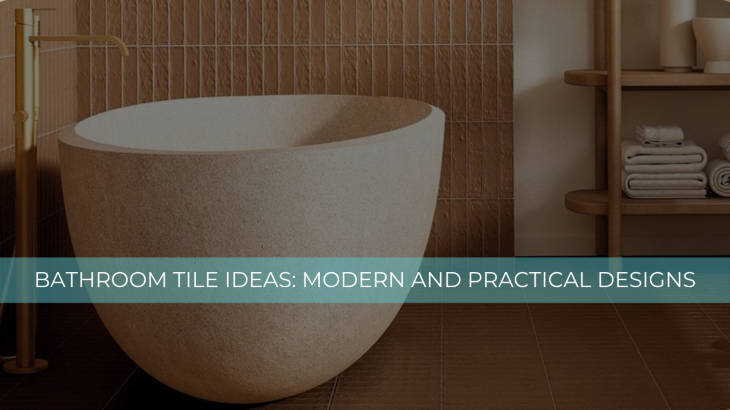
Previously, the bathrooms might have been only a functional space. Now? Bathrooms serve functionality and aesthetics equally. They set the tone for your home’s style, comfort, and long-term value.
Choosing the right bathroom tiles can transform a mundane washroom into a modern sanctuary or a classic that never goes out of style. With countless options in materials, patterns, and finishes, making confident decisions requires both design insight and technical understanding.
This guide explores bathroom tile ideas for UK homeowners, interior designers, and trade professionals. It blends inspiration with practicality, helping you select tiles that last, look stylish, and suit your space.
Why Bathroom Tile Choice Matters
Tiles are not only aesthetic elements; they are functional, long-term investments. The wrong selection can lead to premature wear, water damage, or dated design. Key considerations include:
- Material durability: Porcelain and natural stone tiles differ in water resistance and maintenance.
- Slip resistance: Safety is critical for both family and commercial bathrooms.
- Size and scale: Large tiles can make small bathrooms feel spacious, while mosaics add texture and interest.
- Colour palette: Light tones expand spaces, whereas bold shades create a statement.
- Finish and texture: Matt, gloss, and textured surfaces impact cleaning ease and style.
By balancing style and functionality, you can create a bathroom that endures both time and trends.
Choosing the Right Bathroom Tiles
Selecting bathroom tiles involves understanding your space, style preferences, and practical requirements.
Bathroom Tile Material Options
Porcelain Tiles
- Highly durable and water-resistant
- Available in large format or intricate patterns
- Low maintenance and long-lasting
Ceramic Tiles
- Affordable and versatile
- Wide range of colours and designs
- Slightly less dense than porcelain, may require extra sealing
Natural Stone Tiles
- Marble, travertine, and slate offer luxury and texture
- Require time to time sealing to prevent staining
- Adds a timeless, premium feel
Porcelain vs Ceramic vs Natural Stone
| Feature | Porcelain | Ceramic | Natural Stone |
| Water Resistance | Excellent | Good | Moderate (requires sealing) |
| Durability | Very high | Medium-high | High (but softer stones may chip) |
| Maintenance | Low | Moderate | Moderate-high |
| Slip Resistance | High (textured available) | Moderate | Varies by stone & finish |
| Aesthetic Flexibility | High | Very high | Premium, natural look |
| Cost | Mid to high | Low to mid | High |
Porcelain is often the professional choice for bathrooms due to its longevity and minimal upkeep, while ceramic suits those seeking affordability without compromising style. Natural stone is ideal for luxury bathrooms but demands maintenance.
Bathroom Tile Patterns
Patterns influence both the style and perception of your space. Some common options include:
- Subway Tiles: Also called as metro tiles, they are classic and versatile, ideal for wall tiling and shower surrounds.
- Hexagon Tiles: Hexagon tiles are geometric shaped tiles that create visual interest.
- Mosaic Tiles: Perfect for small areas, wet rooms, or feature walls.
- Chevron and Herringbone: Add movement and elegance to floors or walls.
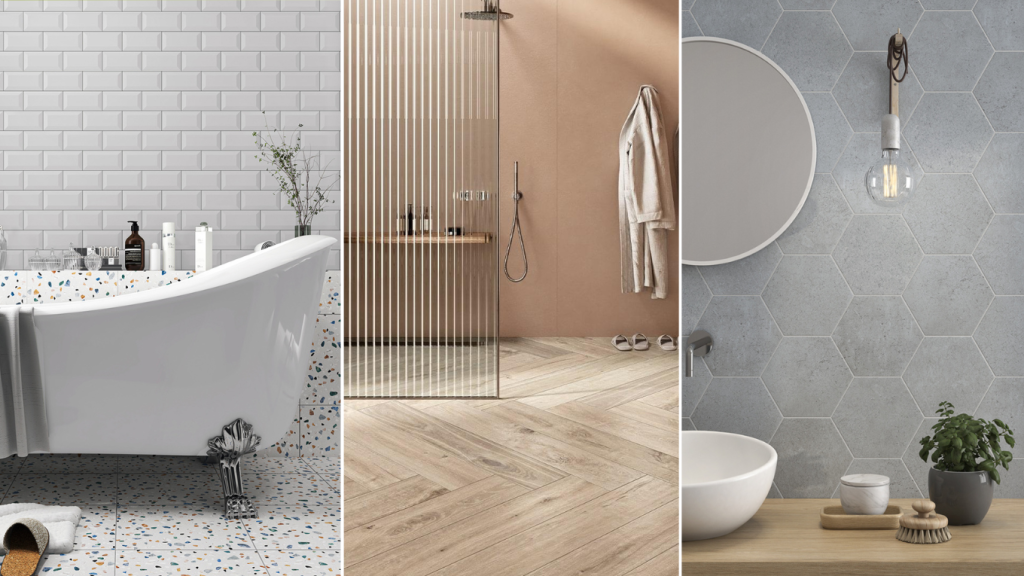
Pro Tip: In small bathrooms, larger format tiles with minimal bathroom tile grout colours can make the room feel more expansive.
Colour Schemes and Finishes
Colour and finish dramatically affect mood and perception.
Popular Colours for 2026
- White and Neutral Tones: Timeless, clean, and ideal for small spaces.
- Soft Greys and Blues: Create a contemporary yet calming environment.
- Bold Accents: Black, navy, or emerald for statement features.
Finish Considerations
- Matt Finish Tiles: Reduce glare, hide water spots, suitable for floors.
- Gloss Finish Tiles: Reflect light, enhance colour, ideal for walls.
- Textured Tiles: Improve slip resistance in wet areas while adding depth.
| Finish | Best Use | Pros | Cons |
| Matt | Floors, wet zones | Non-slip, subtle | Can appear flat |
| Gloss | Walls, backsplashes | Bright, reflective | Shows water spots |
| Textured | Showers, wet rooms | Safe, tactile | Harder to clean |
Tile Ideas for Different Bathroom Spaces
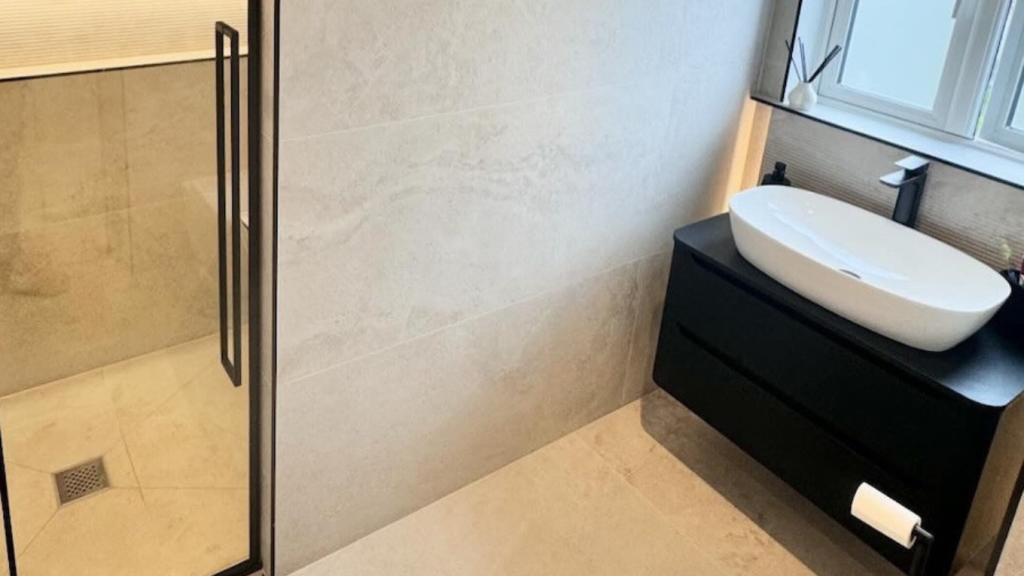
- Use light, neutral tones to make spaces feel larger.
- Consider large format porcelain tiles to reduce grout lines.
- Introduce subtle textures or mosaics for visual interest without clutter.
Modern Bathroom Tile Ideas
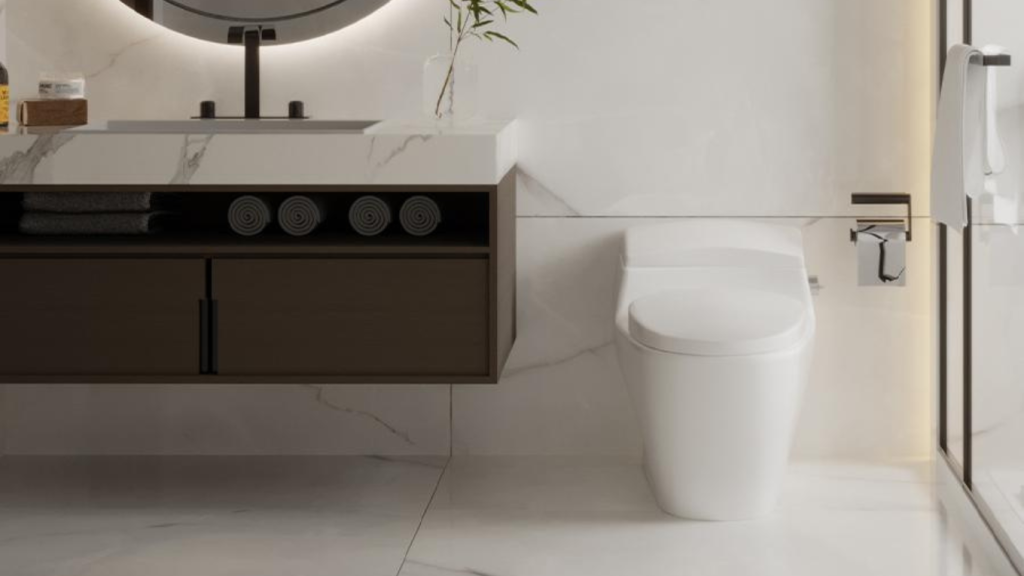
- Minimalist colour palette with grey, white, or black.
- Geometric tiles or large format tiles for clean lines.
- Combine matt floor tiles with gloss wall tiles for contrast.
Luxury Bathroom Tile Ideas
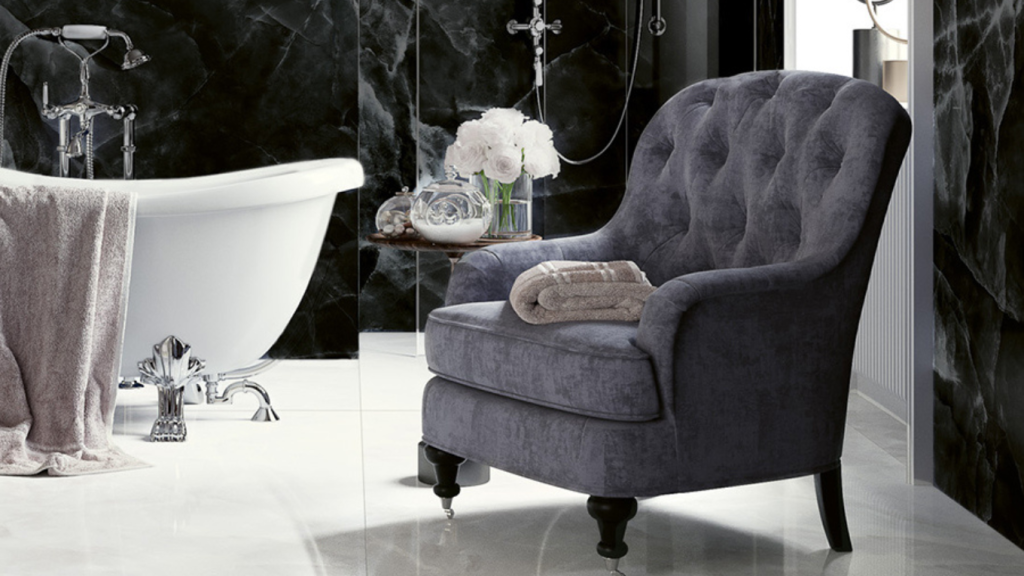
- Marble effect porcelain for timeless elegance.
- Textured natural stone for tactile richness.
- Use feature walls or geometric mosaics to highlight focal points.
Functional Considerations
Bathroom Floor Tiles
- Use non-slip tiles, especially near wet areas.
- Porcelain or textured tiles offer durability and safety.
- Consider underfloor heating compatibility for comfort.
Bathroom Wall Tiles
Your bathroom tiles should be primarily aesthetic and waterproof. They are less load-bearing than floors.
- Gloss finishes help reflect light and enhance room brightness.
- Subtle patterns or mosaics create visual interest without overwhelming.
Shower and Wet Room Tiles
- Large format tiles minimise grout lines and water penetration.
- Matt or textured tiles reduce slip risk.
- Ensure correct grout and sealant selection for longevity.
Installation Guide
Professional installation ensures long-term performance:
- Grout Selection: Use waterproof, mould-resistant options.
- Tile Layout: Align patterns to room geometry to enhance perception of space.
- Sealing Natural Stone: Essential to prevent staining and water damage.
- Professional-Grade Adhesives: Reduce future tile lifting or cracking.
Reliable installation paired with high-quality materials is the best investment for a bathroom that remains stylish and functional.
Pedestal Sinks vs Vanity Units
Choosing a sink affects both aesthetics and storage:
| Feature | Pedestal Sink | Vanity Unit |
| Space Saving | Yes | Moderate |
| Storage | Minimal | High |
| Design Flexibility | Classic | Modern, multifunctional |
| Maintenance | Easy | Requires cleaning around edges |
| Integration with Tiling | Simple | Allows bathroom floor and wall tiles to continue seamlessly |
Want a detailed comparison? Read more here: Pedestal sinks vs vanity units.
Styling with Accessories
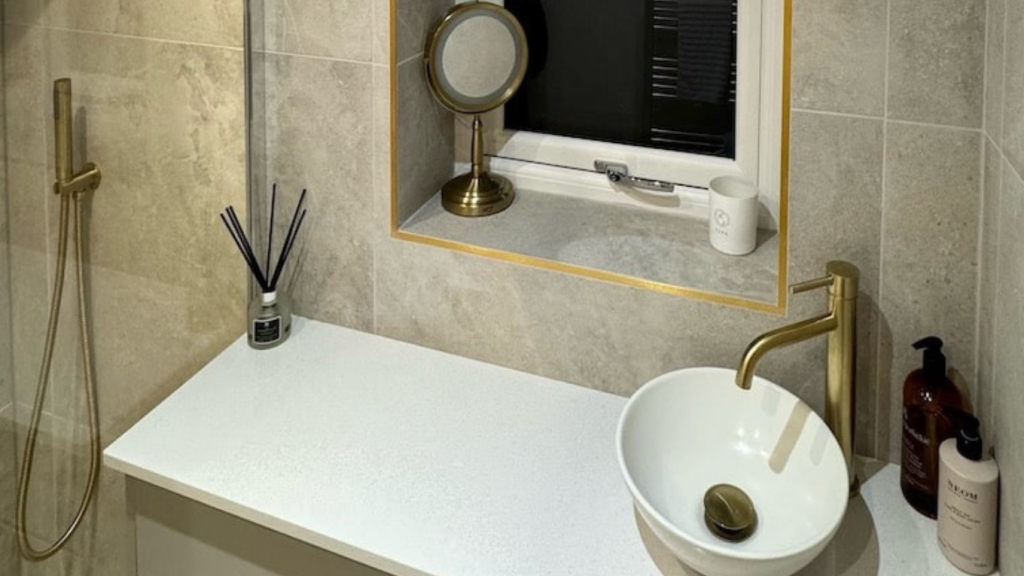
Tiles form the backdrop, but accessories elevate the design. When you add complementing stylish taps and accessories, you subtly complete the look of your bathroom.
For your bathroom space to look a bit more put together, coordinate your bathroom radiators and towel rails colour and finish with other elements.
Your vanity units, mirrors frame over your feature walls or patterned tiles give a focal point to your bathroom.
For tailored guidance, Royale Stones offers expert advice and a wide range exploration of compatible tiles and accessories.
Practical Tile Advice
- Durability: Porcelain and professional-grade ceramics outperform budget alternatives over time.
- Maintenance: Matt and textured finishes hide water marks better than gloss tiles.
- Long-term Value: Well-chosen materials and professional installation prevent costly replacements.
- Grout Care: Regular cleaning and sealing protects against staining and mildew.
- Colour Longevity: Neutral tones retain relevance longer than seasonal bold colours.
High-quality materials may cost more upfront but save on maintenance, replacement, and future design updates.
To Wind Up,
Choosing bathroom tiles requires more than following trends. By balancing style, durability, and practicality, you can create a space that looks modern, functions well, and remains timeless. Consider material, finish, size, and pattern alongside colour schemes, functional requirements, and professional installation.
For expert guidance on selecting bathroom floor and wall tiles, indoor floor tiles, indoor wall tiles and backsplashes, or bathroom vanities, explore Royale Stones to find solutions that combine long-term performance with elegant design.
Frequently Asked Questions
What is the current trend on bathroom tile?
Modern bathroom tiles favour natural tones, large formats, and textured surfaces. Geometric patterns, subtle mosaics, and marble-effect porcelain are popular for creating sophisticated yet practical spaces.
What is the 1-3 rule for tiles?
The 1-3 rule recommends selecting one dominant colour, three complementary shades, and one accent to create a balanced and visually appealing bathroom. It ensures harmony across walls, floors, and accessories.
What is the best kind of tile to use in a bathroom?
Porcelain tiles are widely regarded as the best choice due to high water resistance, durability, and low maintenance. Ceramic tiles are a practical alternative, while natural stone adds luxury but requires sealing.
What makes a bathroom look outdated?
Outdated bathrooms often feature small patterned tiles, dated colour schemes, excessive grout lines, and overcomplicated designs. Modern aesthetics favour clean lines, neutral tones, and larger format tiles.
What bathroom colours are in for 2026?
Neutral tones like white, soft grey, and beige dominate, complemented by soft blues and greens. Bold accents, such as black or navy feature walls, are used sparingly to create sophistication.
What makes a bathroom look expensive?
High-quality materials, professional installation, and cohesive design elevate a bathroom. Features like marble-effect tiles, large-format flooring, well-chosen accessories, and subtle textures contribute to a luxury feel.