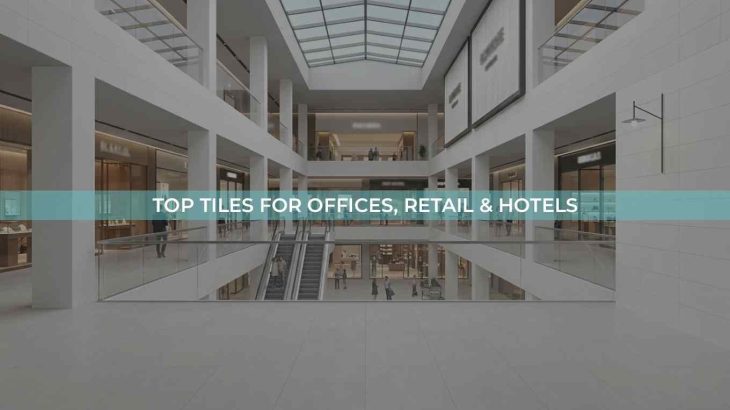
A research on Commercial Interior Environment Design (September 24-26) says that the form and significance of the business environment are no longer limited to buying and selling goods, but have become a comprehensive reflection of modern business cultures in cities.
Commercial sectors are broad, and the principles of good commercial tiling are universal. Commercial tiles decide the colour schemes of your interior, shaping brand identity, influencing customer behaviour and determining the long-term operational performance of a space.
From marble-clad lobbies of five-star hotels in London to hardwearing and non-slip floors of NHS healthcare facilities, the right tile speaks before anyone can utter a word.
As a trusted supplier of indoor floor and wall tiles for commercial and residential spaces across the UK, Royale Stones ensures you get durability, aesthetics, compliance, and value.
Best Commercial Floor Tiles UK
The best commercial floor tiles meet all expectations, including slip-resistance, durability, and tile size.
Slip Resistance
Anti-slip floor tiles for commercial spaces are a must for legality and practicality. Health and Safety at Work Act 1974 and guidance from HSE and standard bodies make it a statutory requirement for any commercial project.
The most relevant rating systems for commercial floor tiles are the Pendulum Test Value (PTV) and the German R-rating system.
- R9: Suitable for dry indoor areas with low risk
- R10: Minimum recommendation for commercial washrooms, office kitchens, and entrances.
- R11 and Above: Minimum requirement for wet rooms, sports halls, commercial kitchens, and healthcare settings.
Failure of compliance exposes building owners and operators to legal liabilities if any accidents occur.
Durability Rating for High-Footfall Areas
The Porcelain Enamel Institute (PEI) rating measure any tile’s resistance to surface abrasion. For commercial floor tiles UK specifiers recommend:
- PEI 3: Boutiques, offices, hotel bedrooms with light commercial use
- PEI 4: Retail, offices, and restaurants with standard commercial environment
- PEI 5: For heavy commercial use in shopping centers, transport hubs, and healthcare corridors.
For publicly accessible commercial uses, always specify PEI 4 and above.
Commercial Tile Sizes
Most well-established commercial spaces prefer large-format tiles with fewer grout lines in sizes 900x600mm, 600×1200mm, 800×1600mm and beyond. They are:
- Easier to maintain
- Reduce bacterial accumulation in hygiene-sensitive settings
- Deliver a seamless and premium visual effect
Types of Tiles for Commercial Interiors — By Space
Different commercial spaces require different commercial indoor tiles.
Offices
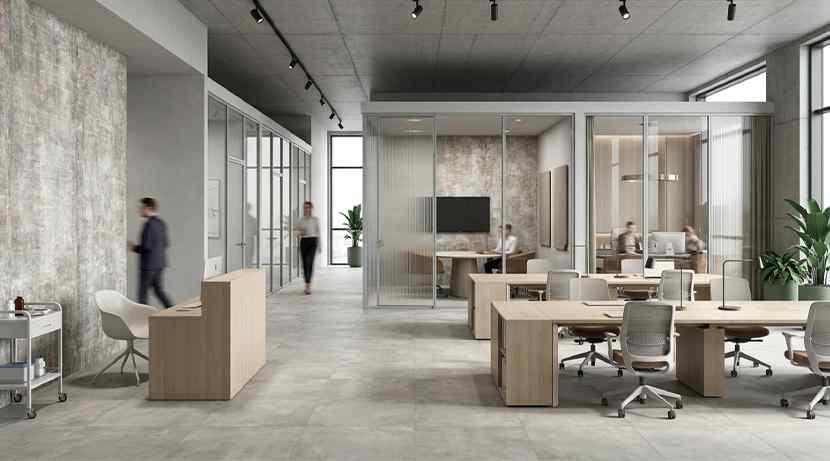
Modern offices have a wide typology, i.e., open-plan, hot-desking, hybrid, cellular, serviced and medical offices, with different design requirements.
Office Floor Tiles
For office floors, concrete-effect tiles for modern office design are a defining aesthetic with durability under busy working environments. Porcelain office floor tiles UK specifiers recommend delivering that industrial-chic finish which suits creative agencies and professional service firms alike.
Reception areas and lobbies can also benefit from polished porcelain marble-effect floor tiles and black Onyx effect wall tiles, and counters. It is a combination that never fails to communicate quality and luxury.
Office Wall Tiles
In breakout and collaborative areas, wood-effect wall tiles introduce warmth and texture, which might otherwise read as an overall clinical interior. For a cleaner look, large tiles with light tones look their best.
Office Washroom Tiles
In office washrooms, practicality must be prioritised as much as the aesthetics. Lighter-toned porcelain tiles with bolder grout, high anti-slip ratings, moisture resistance, and an easy-clean surface remain popular for office bathrooms.
Retail Stores and Shopping Environments
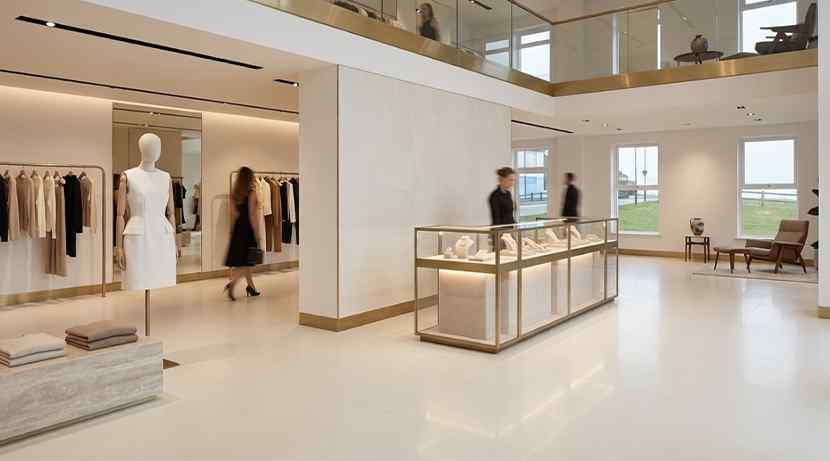
The retail environments of the UK are broad, demanding a broad tile palette.
For instance, in luxury retail like flagship stores for fashion houses, high-end jewellers, and premium homeware brands, marble-effect tiles deliver an aspirational finish that reinforces brand positioning.
Retail Floor Tiles
Large-format tiles with low grout lines on floors paired with statement-patterned or textured feature walls create a visual anchor without cluttering the space.
On the other hand, mass marketing retail and food service environments require durable, non-slip commercial floor tiles with PEI4-5 ratings with easy-to-clean finishes and robust grout to withstand daily wear and cleaning regimes.
In the boutique retail sector and independent cafe fit-outs, checkerboard tiles have seen a significant resurgence, delivering a confident, characterful aesthetic for picture-perfect and spatial identity.
Retail Wall Tiles
Spread across all retail niches, interior designers are using patterned tiles for commercial accent walls as a way of brand storytelling. They are a smart way of drawing the eye, framing product displays, and creating an Instagrammable moment.
Hotels, Hospitality & Leisure
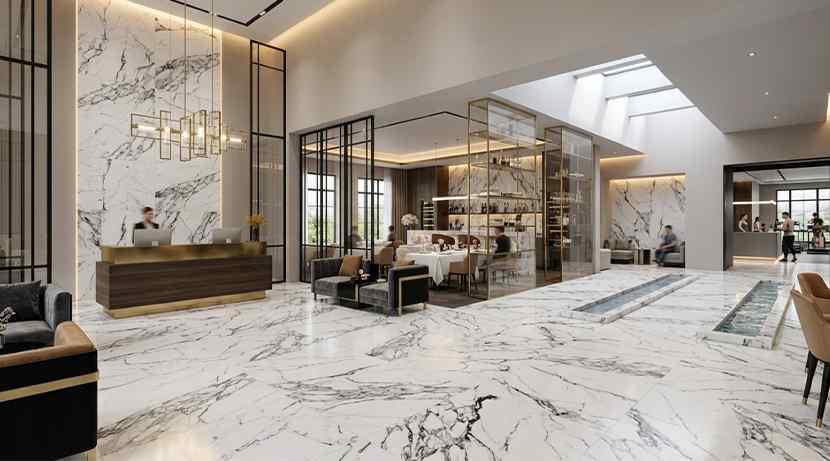
The hospitality sector demands one of the most sophisticated tile specifications. Hotels, luxury resorts, restaurants, spas, cinemas, casinos, and gyms require tiles that are aesthetically pleasing and highly practical.
Hospitality Floors
Hotel lobbies and foyers benefit from grey, white and limestone-effect porcelain tiles with large specifications. Used as restaurant floor tiles and gym floor tiles, they deliver depth, minimalism, and Scandi aesthetics, while being highly slip-resistant and low-maintenance. They give a sense of arrival for a memorable guest experience.
Hotel Bathroom Tiles
Hotel bathrooms demand a specialist approach. Commercial bathroom tiles for hotels and leisure facilities require a high anti-slip floor rating, fully tiled shower enclosures, and surface finishes that resist water ingress and are easy to maintain between guest stays.
White marble-effect tiles remain one of the most inspirational choices for hotel bathroom walls, replicating the natural visual richness of nature without the maintenance burden.
Tiles for Gyms and Sport Halls
In gyms and sports halls, R11-rated non-slip floor tiles commercial-grade are non-negotiable. Easy clean surfaces and resistance to the impact of dropping heavy equipment are additional considerations for leisure tile specification.
Healthcare, Education & Specialist Settings
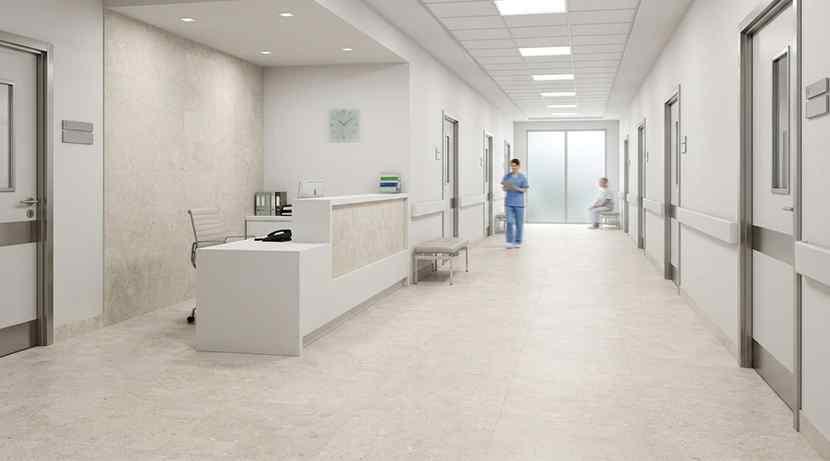
Hospitals, clinics, nursing homes, care homes, schools, and universities require functionality as one of the most necessary tile specifications. Some of the major concerns about these settings are:
- Hygiene
- Anti-slip floor tiles compliance
- Ease of cleaning
- Chemical resistance
- Long-term durability
Porcelain tiles are one of the most sought-after for healthcare and educational settings. Their low porosity limits bacterial absorption, making them compatible with clinical-strength cleaning agents. They meet one of the most rigorous UK hygiene standards.
For mixed-use developments, multi-residential schemes and sui-generis commercial settings, the same priorities apply.
Need help specifying tiles for your project? Call Royale Stones’ experts on 0800 002 9421.
Commercial Wall Tiles UK– Features Walls, Washrooms & Wayfinding
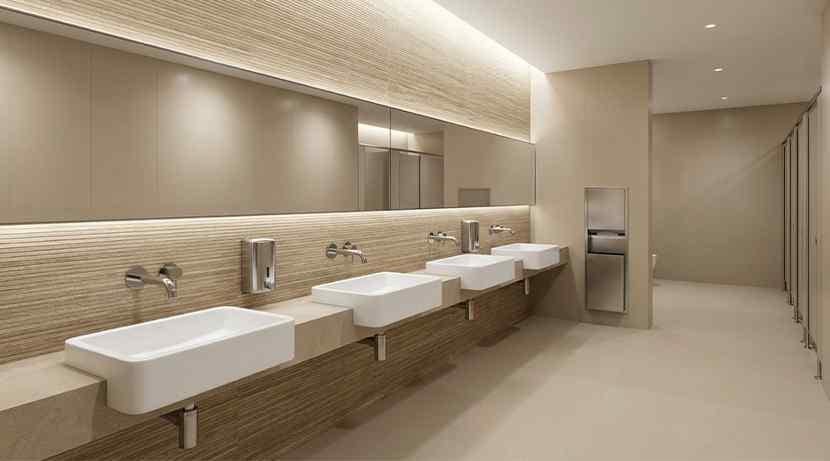
Commercial wall tiles are getting the spotlight as feature walls and accent walls in washrooms. What was once a purely functional surface is now a primary vehicle for brand storytelling, spatial definition and sensory experience.
In reception areas and lift lobbies, large slab wall tiles in light tones create a powerful backdrop that anchors your interior design.
The feature walls have migrated from residential interiors into commercial hospitality, including bar backs, restaurant focal points, and hotel corridor feature walls. 3D split face tiles and fluted tiles are some of the most frequently seen in hospitality settings as accent walls.
For commercial washrooms and toilets, 600×1200 porcelain floor tiles with minimised grout joints and non-porous finishes reduce maintenance. Commercial wall tiles must be compatible with the floor specifications for a cohesive and high-quality finish.
Tile is an underutilised wayfinding tool in large commercial spaces like stations, theatres, service stations, and healthcare campuses. The colours, patterns, and surface of the wall tiles guide the movement and establish zone identity without any additional signage.
Importance of Tiles in Commercial Spaces
The floors and the walls define the whole vibe of your commercial interior. Here are some of the most prominent reasons:
Brand Identity & First Impressions
The first impression of a commercial design is architectural. The moment a customer, guest, or employee crosses a threshold, the environment around them has already communicated with them about quality, care, and brand values.
Luxury retailers like Prada, Dolce & Gabbana, and Chanel’s flagship store interiors are carefully characterised with signature marble and stone-effect tiles, immaculate grout lines, and statement feature walls, reinforcing their premium positioning of every product on display.
And at the end of the spectrum, high-traffic commercial spaces, such as supermarkets, service stations, and coffee chains, prioritise durability, longevity, ease of maintenance, and non-slip compliance. Yet, tile aesthetics matter in communicating cleanliness, approachability, and brand colour.
Customer Experience & Dwell Time
According to research by Path Intelligence mentioned by Mapsted, 1% increase in customer experience and dwell time boosts sales by 1.3%. Thus, interior design researchers insist on material choice and its correlation with long customer stays, space navigation, and perceived value.
In lobbies, foyers, and waiting rooms, the use of natural stone-effect orlarge-format floor tiles creates a sense of calm, quality, and spaciousness that carpet or vinyl cannot replicate.
Functionality Meets Aesthetics
The tile must earn its place technically, as well as visually, in any commercial project. Grey porcelain tiles in stone-effect and concrete-effect carry distinct connotations and performance profiles.
The tile material chosen for walls, floors, stairs, or accent surfaces must meet regulatory requirements while delivering design intent. This dual is mandatory, making any tile specification demands expertise, not guesswork.
How to Choose the Right Commercial Tile
Choosing the right commercial tile depends on the area they are being used in, the level of durability required, and how much traffic the tile is going to receive.
- Office Lobby: Choose larger formats, polished finishes, and minimal grout lines while keeping ease of maintenance in mind.
- Office Washrooms: Porcelain wall and floor tiles with a minimum R10 rating, easy cleaning surface finishes.
- Retail Floor: Nonslip porcelain tiles with a minimum PEI4-5 rating and R10+ slip resistance for public areas with high tolerance for frequent cleaning.
- Hotel Lobby: Extra-large marble or stone effect tiles as appropriate for specific hotel vibes, with a statement or textured feature wall.
- Hotel Bathroom: Minimal antislip large porcelain tiles on floors and walls, and fully tiled wet-room specifications. Wall tiles must complement the floor family.
- Gym or Sports Hall: R11+ rated antislip floor tiles with high durability and easy clean surface finish throughout.
- Healthcare or Education: Low porosity porcelain tiles with chemical resistance and anti-slip compliance. For hygiene and well-being, favour simple and light colour palettes.
Conclusion
Tile specification is a very important discipline in commercial interior, rewarded by expertise, precision, and a thorough understanding of design intent as well as operational reality.
When you balance slip resistance with aesthetic ambition, durability with brand identity, and lifecycle value with sustainability credentials, you know you have chosen the right surface choice. It will not only serve a building but also the users for decades to come.
Whether you are specifying tiles for a boutique hotel, a busy retail park, or a corporate office, Royale Stones has a range, expertise, and stock to deliver.
Explore our full indoor tile collection for commercial spaces or contact us at 0800 002 9421 or click here to send a quick message for project-specific advice tailored to your scheme.
FAQs About Commercial Indoor Tiles
Which tiles are best for commercial use?
Full-bodied porcelain tiles are a professional specification for most commercial applications. They are exceptionally durable, have low porosity, slip resistance of R9-R11+ and a wide range of finishes and colours to choose from.
What are commercial tiles called?
Commercial tiles are also called contract tiles or commercial-grade tiles in the UK specification industry. The terms commercial indoor tiles or commercial floor tiles are also widely used by architects, specifiers, and procurement professionals.
What type of tile is used in commercial kitchens?
Commercial kitchens need floor tiles with minimum R11 slip resistance (for constant moisture and grease), porcelain-made tiles due to their low porosity for floors and walls (high tolerance for industrial cleaning chemicals) and narrow, tight joints for practicality and easy cleaning.
What is the difference between commercial and residential tile?
The fundamental difference is their performance specifications. Commercial tiles are made for higher levels of use, greater footfalls, harsher cleaning regimes, more demanding slip resistance and higher PEI ratings.