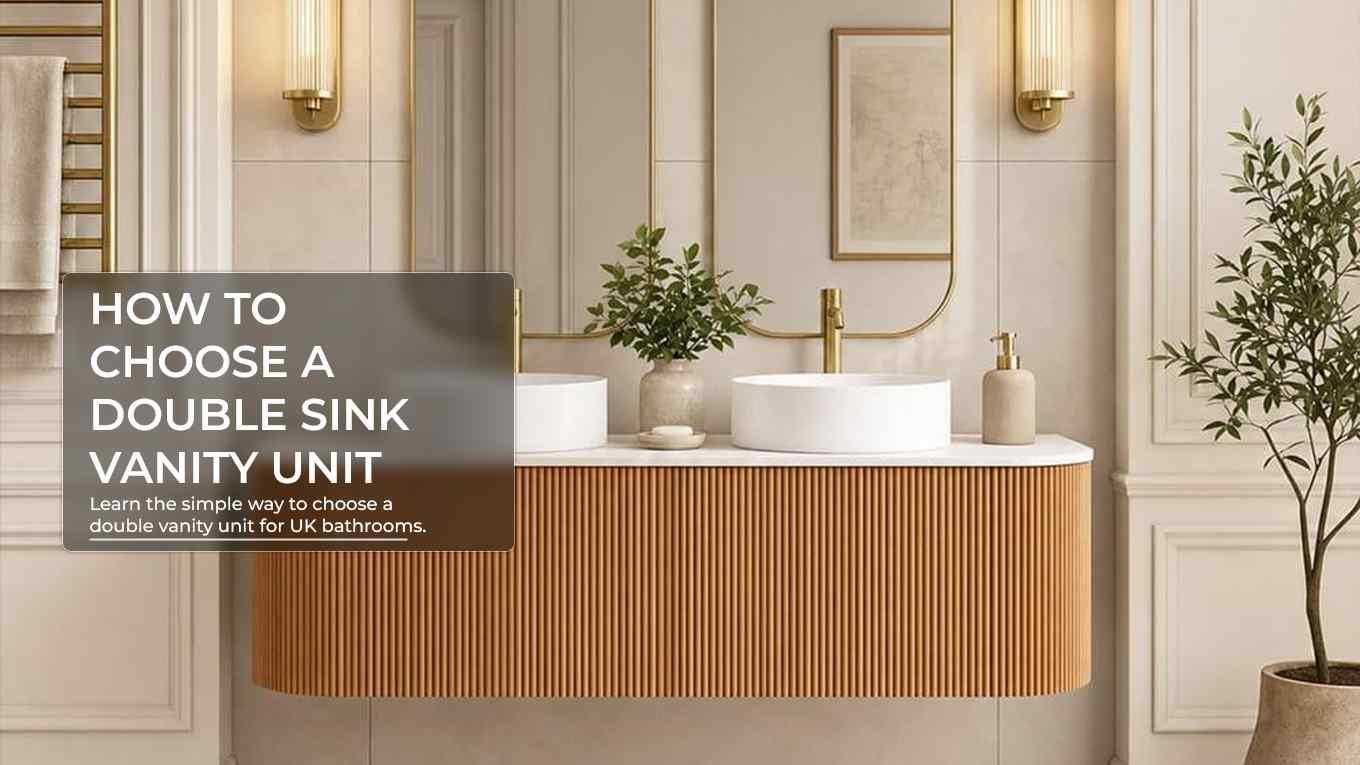
How to Choose the Right Double Sink Vanity Unit (Without Getting It Wrong)
Imagine you have designed a beautiful bathroom; the floor tiles look sleek, the wall tiles are carefully chosen, and the wet area is exactly how you planned. The vanity unit is what you always pictured for your bathroom, only to realise that it clashes with the measurements and plumbing of your traditional bathroom, looks like a giant, and does not provide adequate storage.
A double-sink vanity unitis one of the most significant investments in a bathroom renovation; at the same time, it demands more thought than most people give it. Wrong sizing, wrong mounting style and incompatible with the bathroom’s layout; no amount of premium finish can save you if you encounter any of these problems.
But here is how you get it right.
Double Vanity Unit Size That You Actually Need
Sizing is where most buyers get confused and make their first mistake. The double vanity unit you choose should fit the bench width of your bathroom comfortably while leaving enough space for you to move around and open drawers or doors.
As a general rule, these are the sizes that most UK homeowners get:
Double Vanity Unit 1200mm
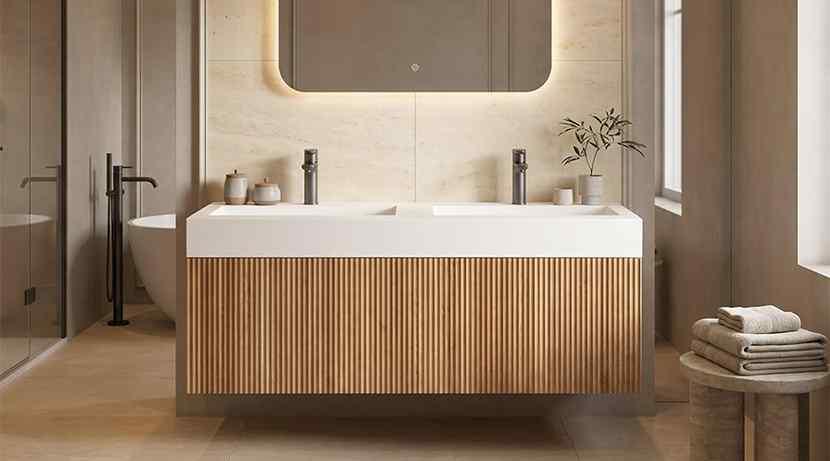
It is the minimum viable width for a double-basin vanity set-up. It works as a starting point, but offers less storage and is tight to work with.
Double Vanity Unit 1500
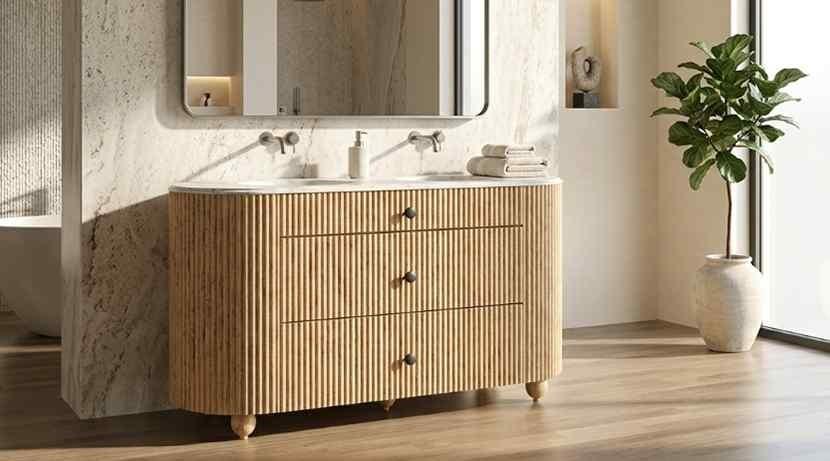
This bathroom vanity unit is a genuine blend of space and storage. It is optimum for medium-sized bathrooms. (Always account for door swings and safe movement while installation)
Double Vanity Unit 1800mm
Ideal for shared and family bathrooms, this double vanity unit size leaves enough room to breathe in the bathroom. It is properly designed for large bathrooms and en-suites.
Beyond width, think about the depth of the vanity unit. For a standard vanity unit, it should typically be about 480-500mm.
Vanity Unit Size Considerations
Before making any decision, measure your bathroom twice:
- Floor to wall height
- Wall-to-wall distance
- Door swing clearance
- Movement space
You would not want a double-sink vanity unit 1200mm wide that blocks the door; it is worse than useless in your bathroom.
It is also crucial to consider the plumbing positions. If the outlets and water supply points are already fixed, it will cost you a lot of money and time to replace them.
For odd plumbing, choose a unit that is specifically designed around adjustable trap positions. If you do not like the current setting, factor in all the costs that can be incurred in repositioning it.
Wall Hung vs Freestanding Vanity Unit: Which Is Right for Your Bathroom
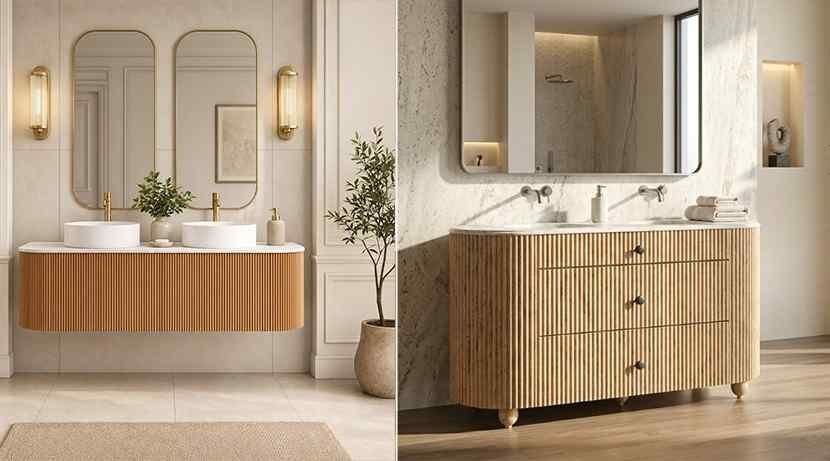
Most people think it is an aesthetic decision, and a lot of times it looks like one. Nonetheless, both mounting styles carry structural and practical implications that matter far more in the long run.
Wall Hung Double Sink Vanity Units
A wall-hung double-basin vanity unit is fixed on the wall and clears the floor beneath. It creates visual lightness that makes small bathrooms appear large, which is why they are a popular choice in modern ensuite designs. The floating profile is much more hygienic and easier to clean around as compared to the freestanding options.
Trade-off
The wall you want to hang the wall-mounted double vanity unit on must bear its load.
- Timber stud walls typically require noggins installed to support fixing points.
- Solid masonry walls are generally problem-free for wall-hung vanity units.
If you are unsure about the walls, consult a bathroom fitter before committing to the wall-mounted unit.
Freestanding Double Vanity Units
A floor-standing double vanity unit is self-supporting as it sits directly on the floor. It makes installation more straightforward and is suitable for almost any wall type.
They also offer more internal space and storage, which is particularly useful for family spaces rather than en-suites.
Freestanding vanity units also hide pipework efficiently without additional boxing.
Downside
The only downside is the floor space it occupies. In a bathroom with a width of under 2.5 meters, a full-depth freestanding vanity unit can feel imposing and cluttered.
Choosing the Right Basin Type and Storage Configuration
Not just the carcass, but the basin and storage choice also have a great deal of importance.
Countertop vs Undermount Basins
The basin type you choose affects the entire visual language of the unit. A countertop basin unit, where the basin sits proud of the surface, is bold and design-forward. Vanity unit basins make a strong statement in contemporary bathrooms.
On the other hand, an undermount basin vanity, where the basin is recessed beneath a solid countertop surface, creates a cleaner line and is easier to wipe down daily.
Both choices are valid. What matters more is whether the basins are included with the unit or purchased separately; it affects the total cost and complexity of matching finishes.
Storage That Actually Works
A double vanity unit with no adequate storage is a missed opportunity. While choosing a vanity unit, look for:
- Soft-Close Drawers: It is non-negotiable in premium bathroom furniture. Standard hinges will wear out in months.
- Full-Length Internal Drawers: They are more accessible and practical as compared to shelves, which lose space around pipework.
- Adjustable Shelving: It is crucial behind cupboard doors for flexibility, as you need to change.
If you are fitting a double sink vanity unit with a mirror cabinet above, check the mirror cabinet’s internal depth. Make sure it does not conflict with the wall-hung units that may look awkward.
Royale Stones’ bathroom vanity range includes options that have integrated soft-close drawers and matching mirror units. They are designed to work together without requiring separate sourcing.
Materials, Finishes, and Durability
You can find numerous timeless materials, finishes and durability when it comes to double-sink vanity units.
MDF vs Solid Wood Bathroom Vanity
Modern bathrooms have switched from solid wood to moisture-resistant MDF bathroom vanity units, and for a very good reason. Solid wood moves, warps, and faces joint failure in a humid environment. High-quality MDF comes with a sealed finish, which is a more practical choice for the majority of bathrooms.
A wood vanity unitwith proper lacquering can be effectively used in bathrooms with good ventilation. Oak and walnut finishes bring warmth that matt MDF cannot replicate. The key is ventilation: if your bathroom doesn't have an extraction fan or window, any timber or adjacent material will suffer.
Colour and Finish
The vanity unit is the focal point of any bathroom, and its finish and colour anchor the entire bathroom palette.
- Neutral tones, such as white, grey, and stone, integrate with a wide range of bathroom floor and wall tile choices.
- Bold options from coloured vanity options, if you are confident enough, can anchor a bathroom with real character.
Consider the finish of your mixer taps as well. Brushed brass against a navy blue or forest green vanity unit reads deliberate design, rather than random.
Practical Considerations Before You Buy Double Sink Vanity Units
Before you place your order or fall in love with a particular vanity unit, work through this checklist:
- Bathroom Measurement: Measure the bathroom height, width, door swing and plumbing rough-ins; the distance and size matter.
- Wall Type: Confirm your wall type, and whether it is compatible with the wall-hung double vanity unit you are thinking about.
- Internal Drawer Layout: Verify that the unit’s internal drawer layout aligns with the pipe positions. Some drawer designs do not accommodate central pipework.
- Basin Mixer Taps Finishes: Order basin mixer taps at the same time to ensure the finish and height are compatible with your chosen basin.
If you are pairing the vanity with bathroom tiles, plan the layout before the vanity, particularly if you are tiling behind and beneath a wall-hung vanity unit.
Conclusion
A double-sink vanity unit done well elevates a bathroom from just functional to genuinely considered.
The decision basically comes down to three things:
- Get the size right for your space
- Choose a mounting style that suits not just the aesthetics of your bathroom but the wall construction as well
- Select the storage and finish that stands up to years of daily use.
Take the measurements seriously. Match the components before ordering to save yourself from revisiting the decision for a long time.
Browse our full double vanity unit collection at Royale Stones to compare sizes, finishes and configurations in one place.
Frequently Asked Questions
Is a 60-inch double sink vanity too small?
A 60-inch double-sink vanity (roughly 1500mm double vanity unit) is not too small for most bathrooms. It is actually a well-proportioned size for a dual basin setup. It provides enough counterspace between two sinks and accommodates generous drawer/cupboard storage beneath. For tighter family bathrooms, it represents a practical maximum before a room feels crowded.
Does a double sink vanity need two drains?
Yes, each basin in a double sink vanity requires its own drain. The two waste pipes can, however, be connected to a single waste outlet in the wall or floor, if the plumbing is configured correctly. Always confirm the drainage configuration before purchasing the unit to avoid costly alterations later.
What is the minimum distance between sinks in a double vanity?
Around 750mm to 900mm (~30-36 inches) recommended centerline-to-centerline. This provides enough elbow room for two people to use the basin simultaneously without being uncomfortably close.
What are the pros and cons of installing a double vanity in a bathroom?
The main advantages are that they are practical for shared bathrooms, they reduce morning congestion, and they add significant storage and a visual anchor to the room. The disadvantages are that they require a large space to accommodate without feeling cramped, and high-quality twin-basin furniture costs more than a single equivalent.
- Bathroom Tiles
- Porcelain Paving
- Bathroom Vanity Units
- Floor Tiles
- Garden Paving
- Kitchen Tiles
- Porcelain
- Wall Tiles
- Natural Stone Paving
- Onyx Tiles
- Paving Slabs
- Sandstone Paving
- Marble Tiles
- Terrazzo Tiles
- Anti Slip Tiles
- Wood Effect Paving
- Paving
- Exterior Floor Tiles
- Outdoor Tiles
- Outdoor Porcelain Tiles
- Brick Effect Tiles
- Bathroom Basins
- Stone Effect Wall Tiles
- Indoor Tiles
- Vinyl Flooring
- acoustic wall panels
- Porcelain Tiles
- Dijon Limestone
- Vanity Units
- Knowledge Base
- Inside Out Tiles
- Porcelain Paving Slabs
- Slate Effect Tiles
- Concrete Effect Tiles
- External Wall Tiles
- Wood-Effect Tiles
- Victorian Floor Tiles
- Luxury Tiles
- 3D Split face Wall Tiles
- Outdoor Porcelain Paving
Recent Post
-

Large-Format vs Small Paving Slabs: Which is Best for Your UK Garden?
October 9th, 2026 -

Limestone OR Limestone-Effect Porcelain – Which One Is Better?
October 9th, 2026 -

Low-Maintenance Patios: Why More UK Homeowners Are Choosing Porcelain
September 22nd, 2026