
The vanity unit determines storage, sightlines, the position of plumbing and the finish; everything else has to work around it. In a well-designed bathroom, it sets the tone for everything else in the room: the lighting, the tiles, the mirror, and the atmosphere.
Get it right, and the rest of the room falls into place. Get it wrong, and you are looking at either an expensive reinstallation or a bathroom that never quite works.
That is why homeowners consistently return to Royale Stones when they want a modern vanity unit that lasts, looks exceptional, and genuinely fits the way they live.
A Range Wide Enough to Actually Match Your Bathroom
Most suppliers offer variety in name only. In practice, you get a handful of sizes in the same two finishes. Royale Stones constantly stocks high-quality vanity unit designs, spanning genuinely different styles, construction methods, and configurations.
Wall Hung Vanity Units: When They Work, When They Don’t
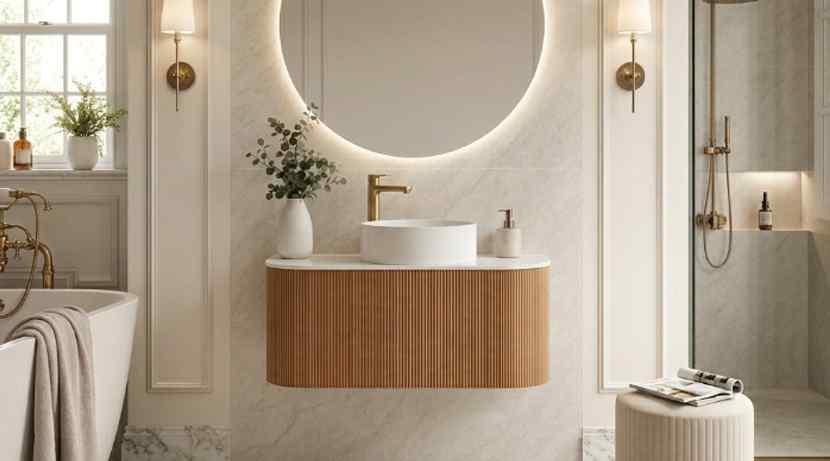
Wall-hung vanity units, also known as wall-mounted vanity units, are the right choice when the floor space is at a premium, or you want a modern, floating aesthetic. The visual continuity and breathing room they create are especially effective in cloakrooms and small bathroom designs.
The proof is in long-term ownership. Emily Shaw, a Royale Stones customer who specified the Kensington Solid Wood wall-mounted vanity with white stone top, noted after several months:
“It looks and feels great quality and we’ve had a few compliments from guests.”
That kind of feedback, months in, not days after delivery, is the more reliable signal.
Floating vanities are also practical, in addition to being a treat for the eyes. They make cleaning the bathroom floor tiles considerably easier, which often gets overlooked in the design stage.
What Buyers Consistently Underestimate: Wall-hung units are only as strong as the wall behind them. Hollow stud walls require a reinforced batten frame before installation. Solid masonry walls have no such issue. If you are not certain of your wall construction before ordering, establish it first; retrofitting the wall after delivery is an avoidable cost.
Royale Stones’ wall-hung vanity units are available from 400mm for cloakrooms through to 1200mm for larger bathroom runs, with finishes spanning matt white, solid wood fluted, and coloured options.
Freestanding Vanity Units
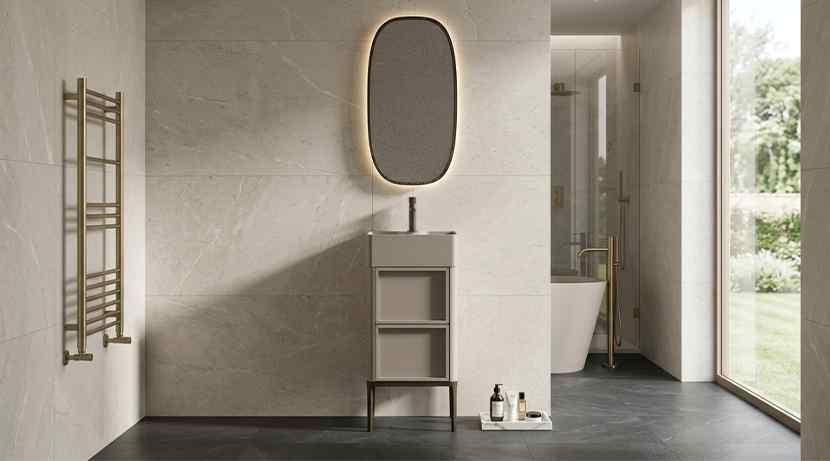
Also known as a floor-standing vanity unit, it carries more visual weight than wall-hung alternatives, which is a feature, not a drawback, in larger bathrooms where a floating unit would look undersized and insubstantial.
In a traditional or transitional bathroom scheme, a well-specified freestanding unit reads as furniture rather than a fixture. That distinction matters when the bathroom is a room you actually spend time in rather than move through.
Our Goa Freestanding Vanity is a strong example of how a floor-standing unit can read more as a furniture piece than a fixture in a small bathroom. It adds warmth and presence rather than blending into the background.
Specification Note: Freestanding units sit directly on the floor, which simplifies installation but makes floor cleaning slightly more involved. Factor this in if your bathroom tiles are a grout-heavy format.
Double Vanity Unit
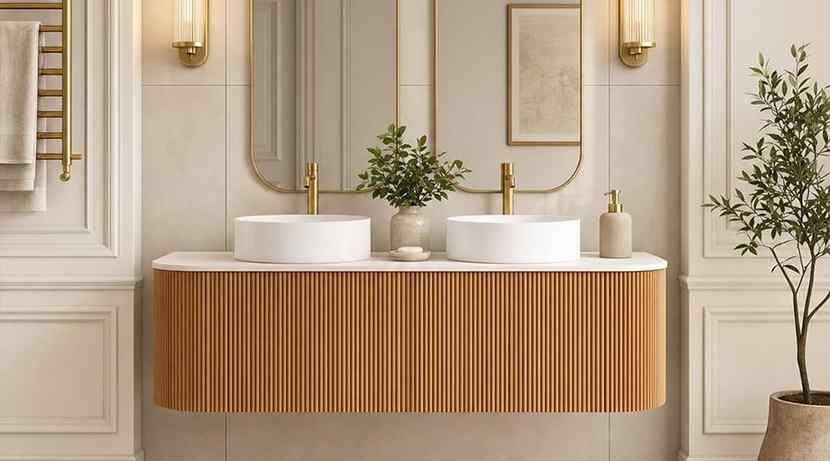
Double sink vanity units solve one of the most persistent problems in family bathrooms: the morning bottleneck. Two basins, one run of storage and a symmetry that photographs well and functions even better.
The specification decisions that matter most here are often overlooked at the browsing stage:
- Width: Most double vanity units start at 1200mm. Measure the available wall run first, accounting for door swing, radiator position, and any existing pipework
- Basin configuration: Countertop basins on a double unit create a surface that photographs well but requires the tap height to clear the basin rim — confirm this before ordering taps separately
- Storage symmetry: Paired door or drawer configurations under each basin keep the unit functional for two users independently
The Bali Solid Wood Fluted Double Vanity at 1400mm is among the most-specified double units in the Royale Stones range, particularly in main family bathrooms where storage and longevity are the primary brief.
Wood Vanity Unit
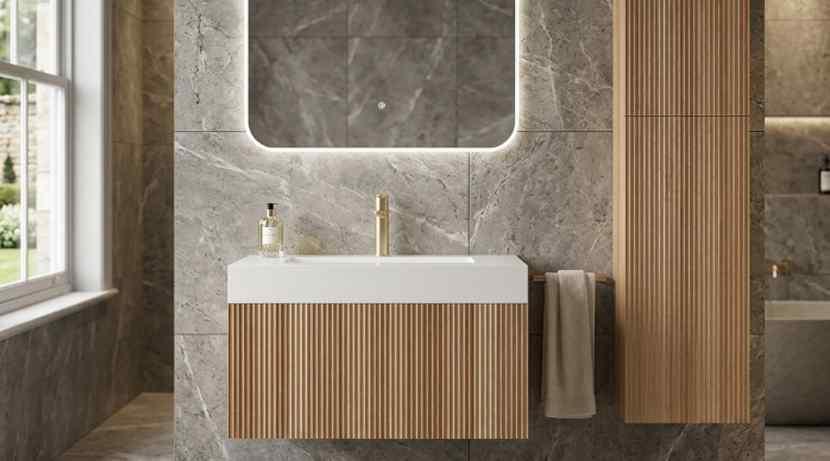
The objection to wood in bathrooms is legitimate: UK bathrooms are humid, poorly ventilated in older housing stock, and subject to daily condensation cycles. A solid wood vanity unit that isn’t built for this environment will show it within two to three years.
Particularly one of the best-selling units, our Bali Solid Wood Fluted range brings the natural texture and material into the UK bathrooms that otherwise can become too clinical easily.
On the Fluted Detailing: This has moved from a trend finish to a mainstream specification in UK bathroom design. The reason it works practically as well as aesthetically is that the vertical channelling reduces the visual impact of minor surface variation over time. It ages better than flat-panel alternatives in high-humidity environments.
Customers consistently cite the quality-to-price ratio as a standout; a reflection of direct sourcing rather than retail markup.
Coloured Vanity Units
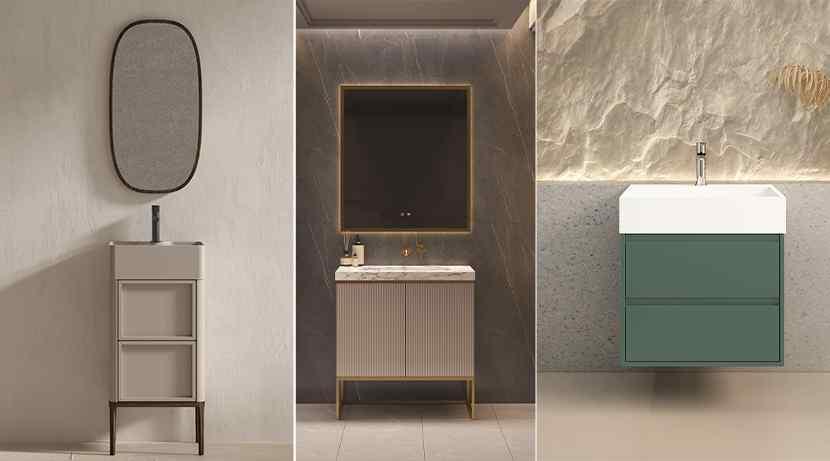
The risk with colour in a bathroom isn’t that it looks wrong on day one. It’s that it looks dated by year three when the wider trend has shifted. That is why coloured vanity bathroom units deserve more consideration than they typically get.
At Royale Stones, the coloured vanity units that hold their relevance longest are:
- Sage Green: References natural stone and garden tones that have remained consistent in UK interiors for decades
- Dark Grey and Anthracite: Neutral enough to work with most tile palettes, strong enough to anchor a scheme
- Matt Black: Performs well with brushed brass tapware; avoid with chrome, which creates a jarring contrast
- Clay and Putty Tones: Underused but significantly more versatile than stark white in rooms with warm-toned natural stone
A well-chosen colour defines a bathroom scheme in a way that a simple white cannot.
Combined Vanity and Toilet Units
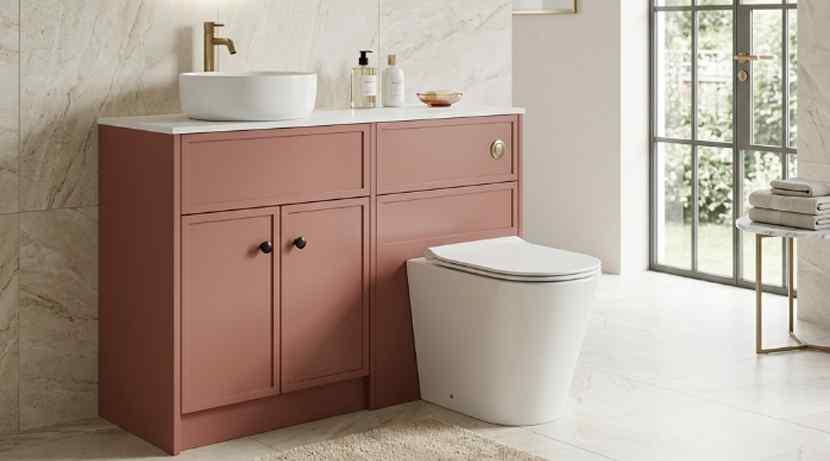
A combined vanity and toilet unit addresses cloakrooms, compact bathrooms, and downstairs powder rooms where every inch counts.
Having a WC and basin storage as a unified piece removes the visual noise of mismatched furniture and makes any small space feel considered.
The Basin In Question: Material Matters More Than You Realise
The basin is the most-touched surface in the bathroom. Choosing the wrong material is one of the most common vanity unit mistakes and one of the hardest to fix after installation.
Porcelain and Ceramic Basins
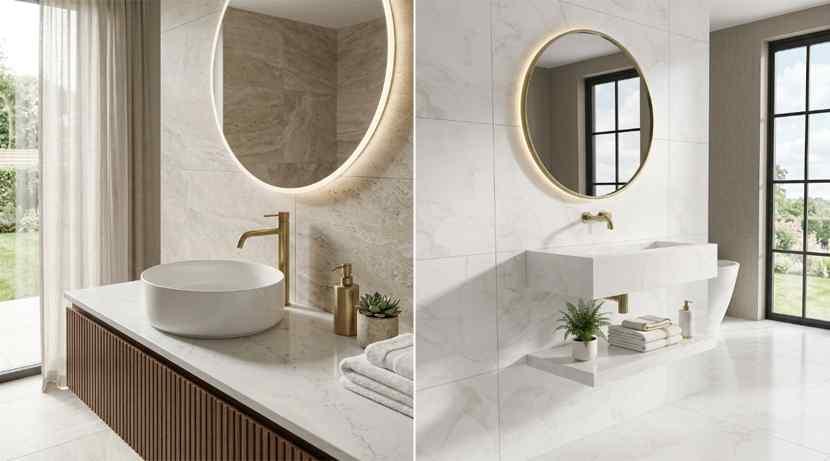
These two materials are the practical backbone of most bathroom installations. Hard-wearing, easy to clean, and stain-resistant, they perform reliably for decades.
The difference between porcelain basins and ceramic basins comes down largely to density: porcelain is denser, less porous, and marginally more resistant to chips and scratches.
Marble Basins
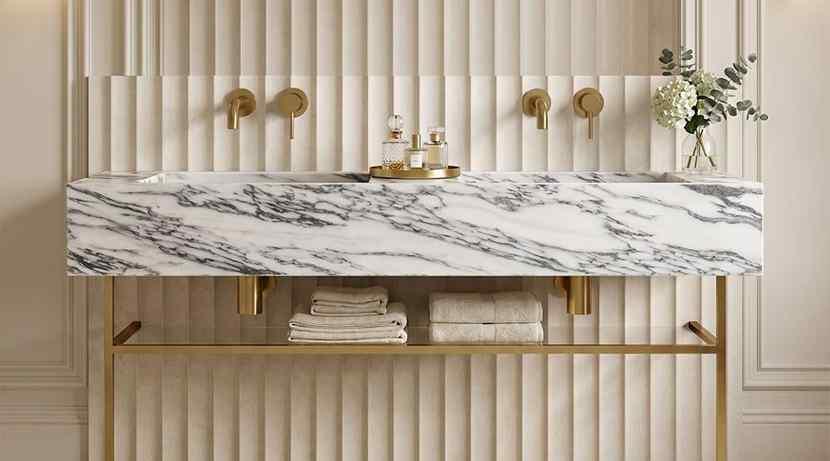
Marble basins are a different proposition entirely. Real marble brings genuine luxury: the depth of veining, the weight, the feel underhand, in a way that no surface-printed alternative replicates.
Royale Stones’ marble basin options pair naturally with their marble vanity tops and stainless steel leg configurations to produce a spa-like result that holds its visual quality over time.
Travertine Basins
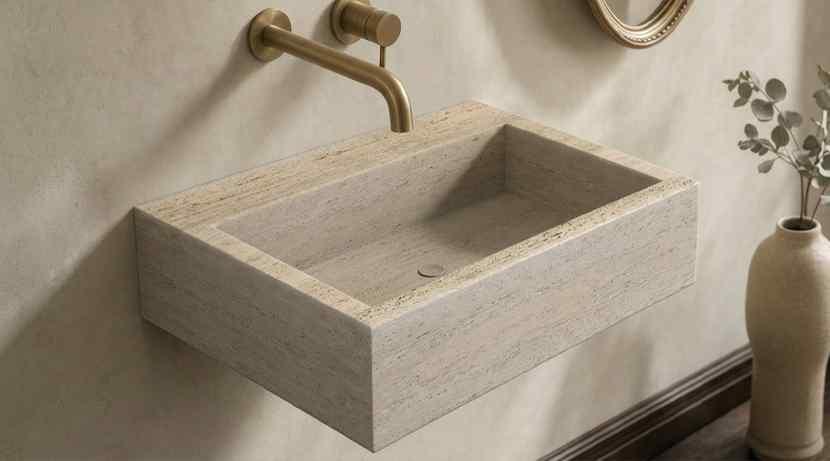
Travertine basins offer a warmer, earthier alternative for homeowners who want natural stone without the formality of marble. Travertine’s characteristic texture and tonal variation make each basin unique; a quality that matters when you are designing a space meant to feel personal.
Taps and Wastes: Details Determining The Finish
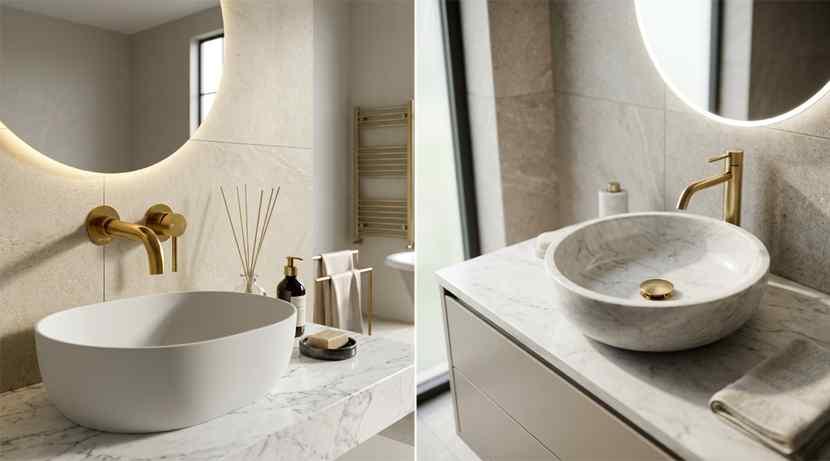
You may perfectly specify a vanity unit from every aspect and can still be undermined by the wrong tap.
Chrome lever taps on a matt black unit, brushed brass on a white marble top, or an exposed bottle trap in a dark finish are not afterthoughts. They are the decisions that separate an assembled bathroom from one that looks designed.
Royale Stones carries taps and wastes chosen to complement their vanity range rather than coexist with it. If you are specifying a complete scheme, sourcing these from the same supplier also eliminates the coordination problems that may arise when lead times and delivery schedules diverge.
Five Showrooms, Genuine Expertise, No Guesswork
Buying a vanity unit online without seeing the finish, the scale or the quality of construction in person is a reasonable risk on a small purchase. For bathroom renovations, it is a decision that leads to expensive regret.
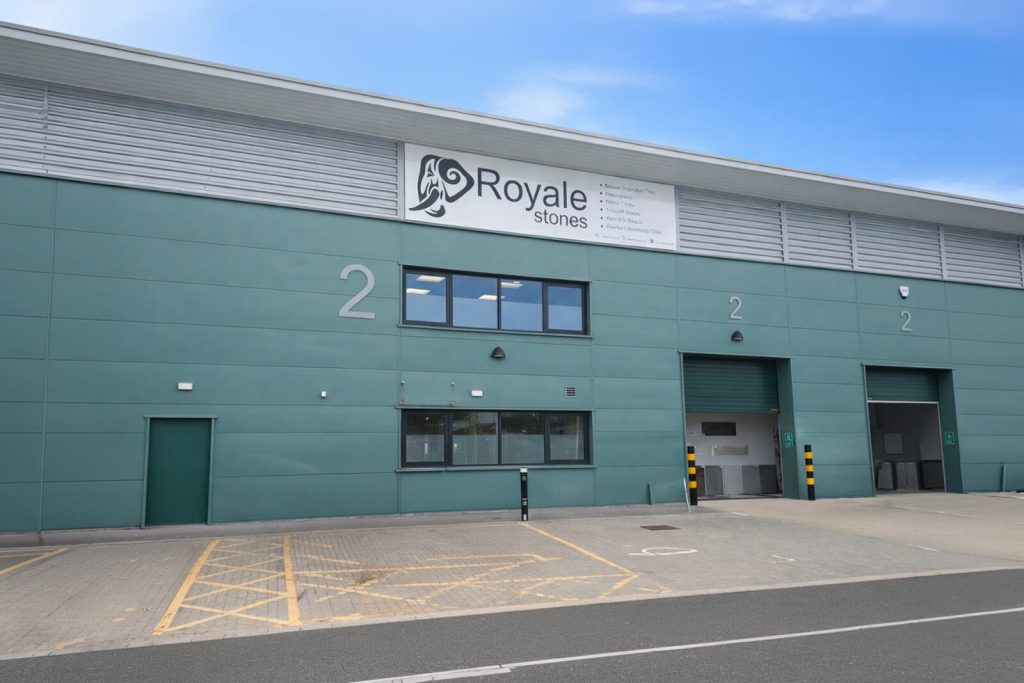
Royale Stones operates five UK showrooms in Watford, Birmingham, Lincoln, Peterborough, and Kent. The full-size display allows you to assess finishes in real light, compare scales, and speak with experts who know the range in detail.
Whether you want to start a new bathroom project or confirm a shortlisted item, the difference between visiting a showroom and an online order is the difference between confidence and guesswork.
The showroom experience at Royale Stones is built around decisions, not just display. Rachel Lovelock visited the Peterborough showroom specifically to assess wood vanity units.
The team arranged for her to view the corresponding tall side cupboard at the Lincoln showroom the following morning and had both pieces placed together so she could compare them as a set before committing. “Really helpful and unpressured” was her summary. That kind of coordination, across locations, without a sales agenda, is what separates a showroom network from a warehouse with lighting.
Delivery, Returns and Reassurance of 5000+ Reviews
Royale Stones offer free UK delivery on all orders above £399, with each product going through a quality check before dispatch.
Customer service is available Monday to Friday, 8 AM – 5 PM and Saturday mornings. This means support is accessible when most people are actually planning and ordering.
For full details on delivery, return, and terms, are available for anyone reviewing before committing:
Over 5000+ Trustpilot reviewsare a more reliable indicator of service quality than anything a brand says about itself.
For trade customers, adedicated trade account is available with benefits suited to professionals specifying at volume.
Frequently Asked Questions
Are wall-hung vanity units strong enough long-term?
Yes, if installed correctly. Wall-hung units require fixing into solid masonry or a batten frame secured to wall studs. The units are engineered for wall mounting, and the limiting factor is almost always the installation, not the product. Unsure about your wall type? Contact a plumber or a bathroom fitter before you order.
What type of vanity unit is best for a bathroom?
Wall-hung vanity for modern bathrooms or where floor space is restricted. Freestanding vanity unit in larger bathrooms and traditional schemes. For cloakrooms, 400mm-500mm units as a starting point and 750mm+ vanity unit size for meaningful storage.
Do I need a plumber to install a vanity unit?
Yes, for plumbing connections like the waste and supply pipe. The unit itself often can be assembled and positioned by a confident DIYer, but the water connections should be installed by a plumber.
What are common vanity installation mistakes?
Not checking the wall type before ordering a wall-hung unit, choosing a vanity that only looks good in the photograph, fitting taps and wastes that clash with the finish, and not accounting for pipework positions when placing the unit. It is best to visit a showroom and talk through the specifics of your project with the experts before ordering to eliminate most of these mistakes before they happen.
Royale Stones’ bathroom range is available to browse online or in person. Call 0800 002 9421 to speak with a specialist, or visit your nearest showroom for a hands-on look at the full collection.