


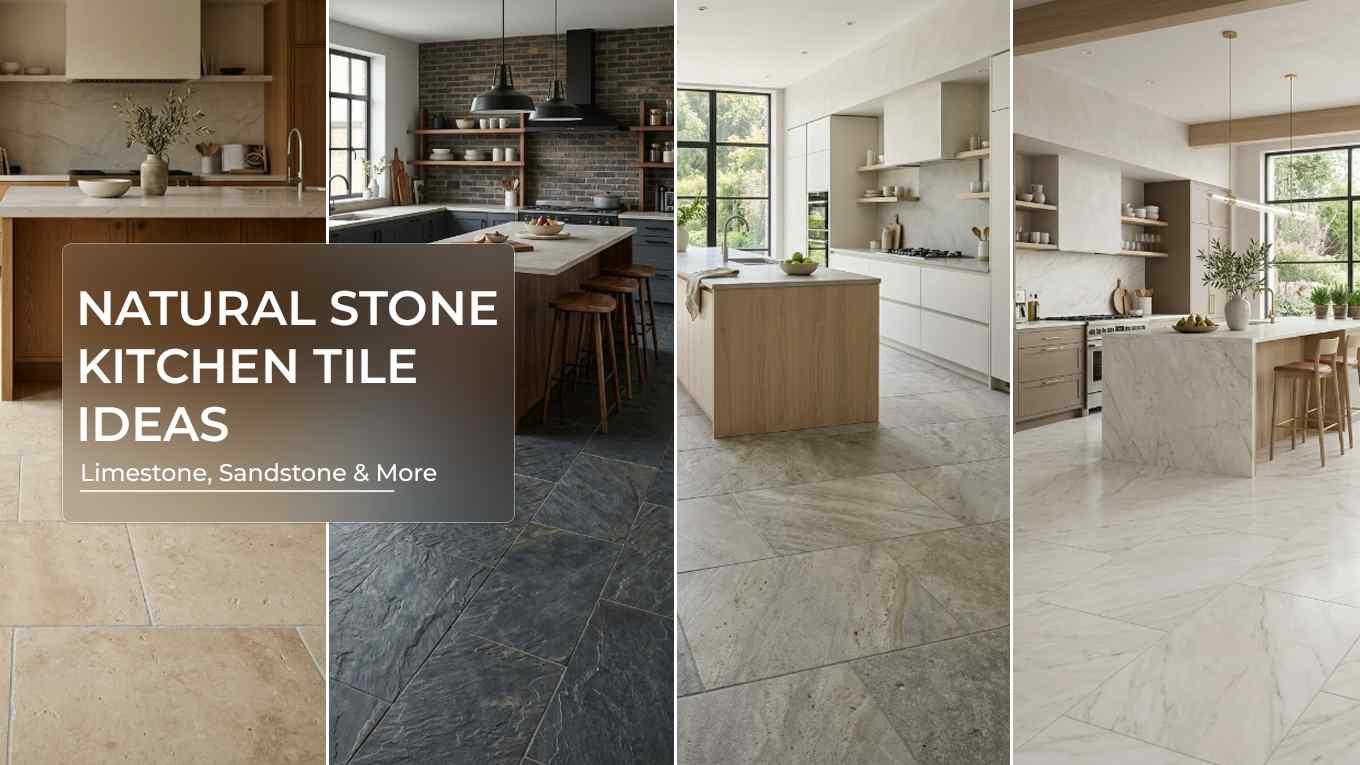
Natural Stone Kitchen Tile Ideas
Most natural stone kitchen guides sort everything by colour – beige tiles, grey tiles, cream tiles – and leave it at that. That obviously tells you what a stone looks like, not what it actually is, where it would work best and in what kind of home designs.
On the other hand, our guide starts from the material itself: the stone, its tonal range, and the finishes it comes in. Once you know what different types of natural stone tiles are and what they can do, we will show you how each one plays out across six distinct kitchen styles, so you can see the stone in context, not just in isolation.
This guide covers kitchen tiles (floor and backsplashes), intending to make it easy for you to choose with confidence, not just enough to be inspired for five minutes.
Tips for Selecting the Right Natural Stone Tiles for Kitchens
Natural stone is a popular choice for UK kitchens, yes; but popular does not mean it is universal. The right stone differs from home to home. The ideal stone for your neighbour’s kitchen does not make it ideal for yours automatically. Before you set your finger on a natural stone tile for your kitchen, work through these:
How Durable Is The Tile?
The kitchen is traditionally one of the busiest rooms in any home, taking on numerous activities at a time, such as cooking and eating. Dropped pans, spilt oil, dragged chair legs, and daily foot traffic are more common than you may expect.
Denser stones like slate and granite shrug these off with minimal upkeep. However, softer and more porous stones like limestone and travertine need sealing and a little bit more care to stay looking their best, while still being durable for kitchen floor tiles.
Neither of these options is “wrong”; it's a question of how much maintenance you are realistically going to put in to keep up the original look of the natural stone tiles.
What Look Are You Going For?
Decide on the mood of your kitchen before picking the material, not after.
- A honed finish gives your kitchen a smooth, contemporary surface with a soft matte sheen.
- A tumbled finish softens every edge and adds texture and age.
- A sawn or riven finish keeps things rugged and irregular.
The finish changes the entire personality of the same stone, so it is worth choosing this before you get fixed on a specific product.
What Colour Would Suit Your Kitchen Best?
One of the common features in all natural stone is its colour variation. They do not come in a flat, uniform colour; you will see tonal ranges with movement and variation from tile to tile.
- Warm beige and honey tones soften the kitchen and pair naturally with wood.
- Cool grey tones set well in more contemporary schemes.
- Deeper charcoal and black stones anchor the space and hide daily wear well.
Think about your cabinetry and worktop colours together, not just the tile of your choice in isolation.
How Big Is Your Space?
If you are searching for small kitchen ideas, one rule of thumb is to go for large format tiles with fewer grout lines to make your small kitchen feel spacious and less broken up. Unless you are opting for smaller or more richly textured tiles deliberately to add character in the space without overwhelming it.
Small tiles, especially Victorian tiles, in bigger rooms look a lot better and more intentional when paired with less chaotic patterns and minimal cabinetry to keep the focus on the floors.
Pale and honed stones reflect more light and help a smaller kitchen feel more open, while dull, deep and tumbled or riven stones in smaller spaces can start to feel busy.
What Maintenance and Cleaning Can You Provide?
You need to be honest about this one. Natural stone is not a surface that you can wipe and forget about like porcelain. Most stone floor and wall tiles need sealing on installation as well as periodically afterwards.
Use pH-neutral cleaning products to avoid etching or dulling the surface. If you want to maintain the character of the real stone with less ongoing care, ask about pre-sealed or filled and honed options. These are lower maintenance than the raw tumbled finish.
Will Your Kitchen Floor Continue to Another Room?
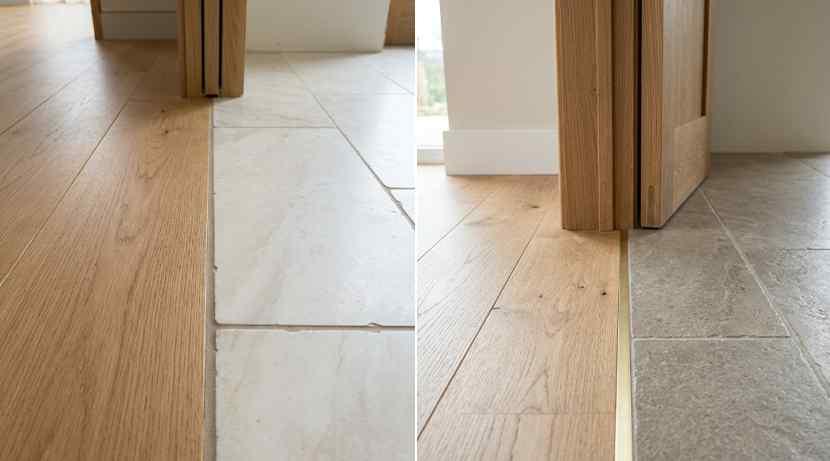
If your kitchen opens to a dining area, hallway or a garden room, think about whether you want the stone to run through unbroken. A continuous floor makes an open-plan space feel larger and more considered.
If you are stopping at the kitchen threshold, a contrasting material or a metal transition strip gives you a clean, deliberate break instead of a sudden or awkward one.
Explore the Range: Natural Stone by Material
Before you get into styling. It helps to know what each stone actually offers, including its natural tonal spread, the finishes it's typically available in, and where it performs best. This is the reference point the design ideas below are built on.
Limestone
Limestone is one of the most versatile tiles; that is why they are most popular among UK homeowners for their contemporary and modern homes. They are prized for their soft, evenly textured and wide tonal ranges, including pale creams, warm beiges, deeper greys and olive tones. Royale Stones’ Dijon Limestone tiles are a good example of the warmer end of that range, with honey and buttery beige tones that bring warmth to a kitchen without tipping into a heavy, dark palette.
Limestone typically comes in:
- Tumbled (soft, worn edges, rustic character)
- Honed (smooth, matte contemporary)
- Brushed (textured but not as rugged as tumbled) finishes
It performs well on both floors and splashbacks, and works comfortably with underfloor heating. Because it is naturally porous stone, sealing on installation and reapplication every year or two is worth budgeting for.
Sandstone
Sandstone brings a distinctive, earthy and grainy texture that reads as more rugged and outdoor adjacent than limestone. Its tonal range leans into warm ochres, muted browns and soft greys, often with visible natural banding or flecking that gives each tile a genuine individuality. Raj Green sandstone is a good reference point for this warmer, textured end of the palette.
Sawn finishes give sandstone a flatter and more structured surface suited for modern layouts. While riven finishes keep the natural, uneven texture of the quarried stone, better suited to a rustic or farmhouse-leaning kitchen.
Sandstone tiles work well as flooring in relaxed, characterful kitchens and as a textured backsplash where you want a tactile and natural feature rather than a flat backdrop.
Travertine
Travertine is instantly recognisable by its natural pitting and fossil-like surface texture, which can be left open for a raw and textural look or filled and honed for a smoother and more formal finish.
Its tonal range sits mostly in warm colours, including ivory, beige, and soft walnut tones, making it one of the warmer stones on this list,
Filled and honed travertine is the low-maintenance option that works well o kitchen floors and splashbacks alike. Unfilled and tumbled travertine has more visible texture and character while needing more regular sealing, since the open pores are more absorbent. It is a stone that rewards a bit of extra care with genuine warmth and depth.
Slate
There are other natural stone variations you can choose for your kitchen, yet slate remains one of the toughest and lowest-maintenance stones on the list. They are the one best suited to busy, high-traffic kitchens.
Its tonal range runs from deep charcoal and near black through to soft greys, often with a subtle sheen depending on the finish.
- Riven slate keeps its natural and slightly uneven surface and strong texture; good for grounding a rustic or industrial kitchen
- Honed slate is smoother and more refined, suited for contemporary spaces.
Slate is naturally dense and far less porous than limestone or travertine; that is why it needs less frequent sealing and stands up well against daily kitchen wear, making it a stronger choice for kitchen floors specifically.
Marble
Marble is the most recognisable natural stone by reputation, prized for its distinctive veining and its tonal range from crisp whites and soft greys through to warmer honey and emperador tones.
Marble is softer and more porous than slate or travertine, and it's more prone to etching from acidic spills – lemon juice, wine, vinegar – which makes it a better fit for a kitchen splashback than a floor, particularly in a busy family kitchen.
- Polished marble gives the sharpest, most reflective finish of any stone on this list
- Honed marble is more forgiving day-to-day, with a softer sheen that hides minor wear better than a high polish.
If you do want it underfoot, treat it as a feature area rather than the whole floor, and budget for more frequent sealing than limestone or travertine need.
Design Ideas: Natural Stone Styles for Every Kitchen
With the range established, here is how each stone and its finishes come together in a real UK kitchen. Each style below pairs a specific material and finish from above with the design choices that bring it to life.
1. Craftsman Kitchens: Presenting the Ultimate Authenticity
Craftsman kitchens are built around honest materials and visible textures; nothing artificial, nothing overly polished. Tumbled Dijon Limestone flooring is a natural fit here; its worn edges and warm tone do most of the work on their own.
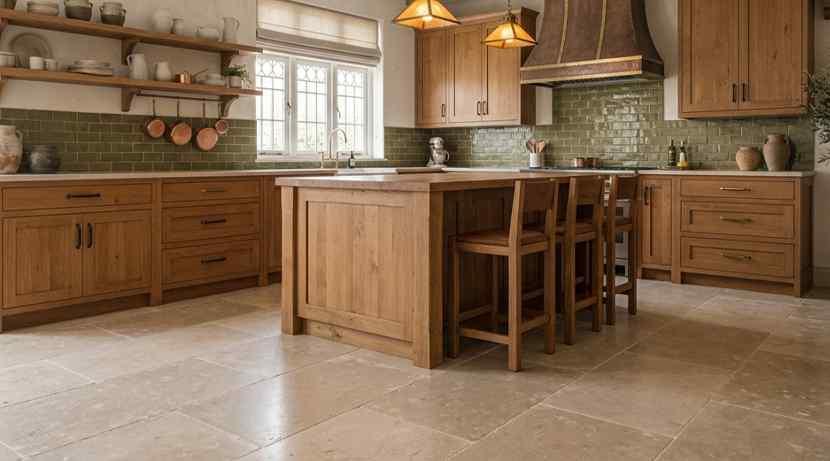
Pair it with stained timber cabinetry with a light-toned stain, exposed shelves, and matte black or aged brass hardware. Keep the grout lines narrow and in a tone close to the stone itself, so the floor reads as one seamless and weathered surface rather than a grid of individual tiles.
2. Eclectic: The Only Rule You Follow Is Yours
Unlike other home designs that follow strict interior design rules, eclectic kitchens thrive on the contrast of pairing old with new and rough paired with smooth. For example: use riven-sawn sandstone floor tiles as your grounding, textured base, then bring in a honed limestone herringbone splashback in a
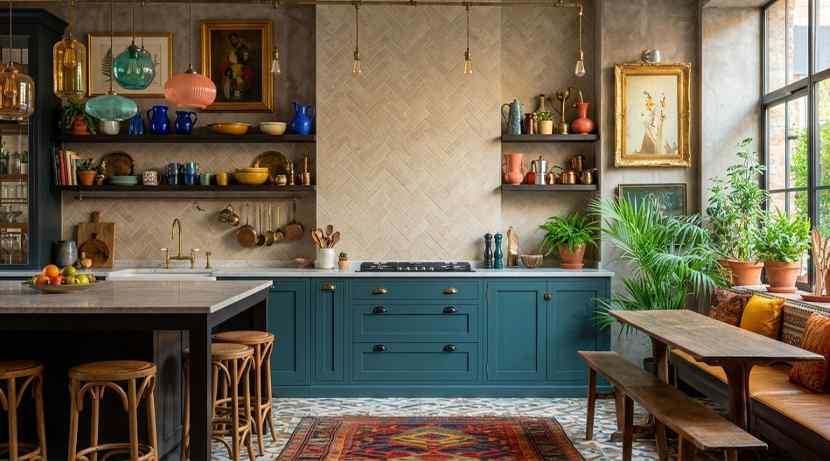
Mix cabinetry
finishes – open shelving next to solid units – layer in vintage lighting or
reclaimed hardware. Do not be afraid of introducing patterned or
encaustic-style tiles as a border detail against the plain stone field. The
stone provides the neutral backbone that lets everything else stay a little
louder.
3. Scandifornian: Coastal Vibes with Perfect Minimalism
It is the perfect marriage of Scandinavian restraint and Californian palette: soft earthy neutrals, natural materials, and an uncluttered layout. Honed, filled travertine flooring in warm ivory tones gives you exactly the base: smooth underfoot, light-reflecting, and free of heavy texture.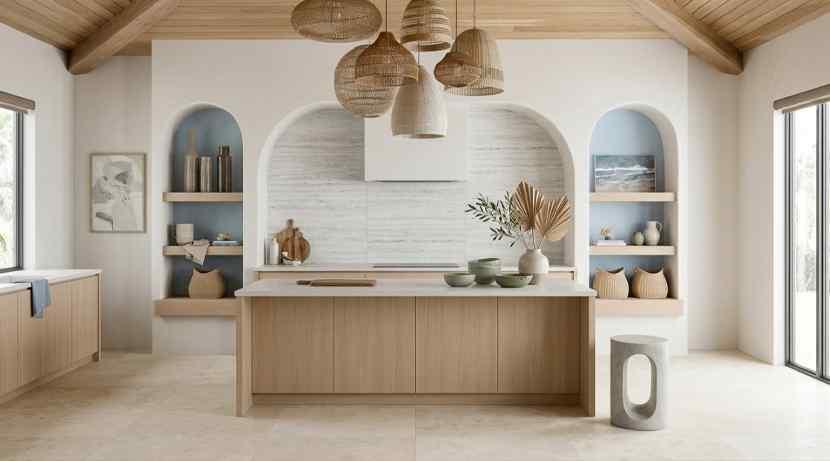
Pair it with pale oak or ash cabinetry, sage or dusty olive accents, and minimal, low-profile hardware. Keep the splashback in the same stone family as the floor, honed rather than tumbled, so the whole scheme feels calm and continuous rather than broken into competing textures.
4. Retro: Mid-20th Century Nostalgia
Current home designs are more inclined towards expressing oneself rather than complying with a single style, and retro is the perfect way to do that. A retro kitchen leans on bold, confident choices.
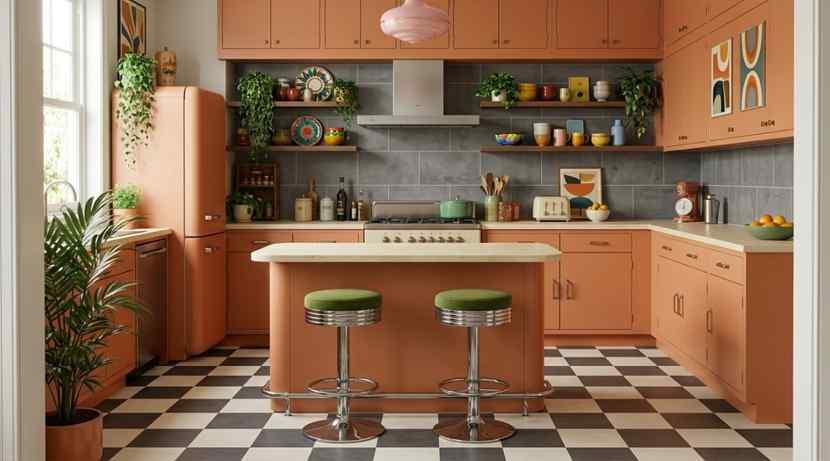
Honed slate flooring in a deep charcoal gives you a strong, graphic base this style needs, especially when paired with saturated cabinetry colours, such as burnt orange, avocado green, or mustard, that would have felt at home in a 1960s kitchen.
Consider simple checkerboard tiles or two-toned layout using slate alongside marble for genuine period character; chrome or brass fittings and a statement pendant light finish the look without the need to reach for anything else.
5. Naturalistic: Bringing Raw Beauty Inside
This is the style that leans hardest into the stone itself, letting texture and natural variation do the talking. Riven slate floor tiles paired with a raw tumbled limestone splashback bring two different yet complementary textures into the same space, both left as close to their natural state as possible.
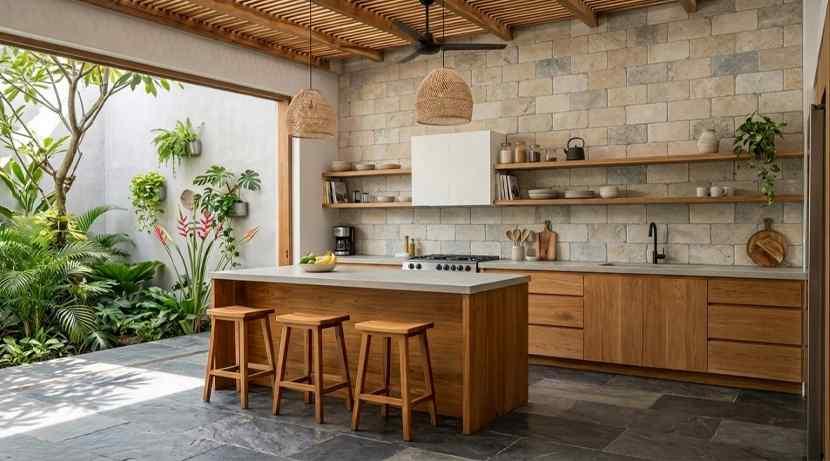
While you are at it, keep the cabinetry simple and in natural timber or a soft stone-matched neutral and avoid anything glossy or reflective that would compete with the stone texture. This is a style built on restraint everywhere except the stone itself.
6. Vintage: Historical Charm Collected Over Time
A vintage kitchen should feel gathered over the years, not installed in a week. Marble floor tiles in white with black veining give your kitchen an immediate, convincing base, particularly with a heritage checkerboard pattern with black borders.
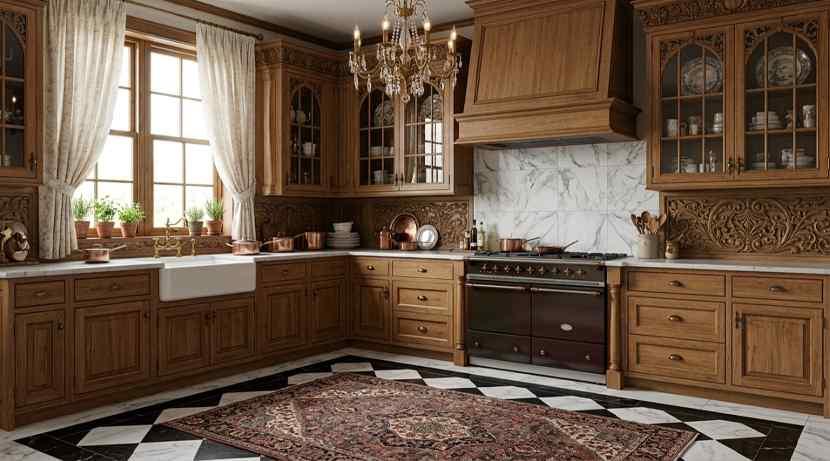
Panelled cabinetry in a muted heritage colour, ceramic knobs, and an open plate rack all reinforced the collected-over-time feeling. Keep the backsplash in the same white marble family, in a matte finish rather than glossy, so the whole kitchen reads as one continuous and lived-in material story.
Bring the Range Home
Photos and descriptions only tell you so much about how a natural stone will actually look and feel in your own kitchen light. Buy natural stone tiles for kitchen online or visit your nearest Royale Stones showroom before you commit, and compare tumbled against honed, and warm limestone against cool slate, side by side in your own space.
Related Reading
Why Interior Designers Recommend Indoor Dijon Limestone
Dijon Limestone: Kitchen Stone Flooring Care Guide
What Are the Best Colour Options for Kitchen Tiles
Frequently Asked Questions
Is natural stone good for kitchen floors?
Yes. Natural stone is dense, hardwearing and well-suited to the demands of a busy kitchen, particularly denser stones like slate. Softer stones like limestone and travertine are also suitable but need sealing to protect against spills and stains.
What is the most durable natural stone for a kitchen floor?
Slate is generally the most durable and lowest-maintenance option, thanks to its low porosity and dense structure. Granite is also highly durable, though it's typically used more for worktops than floor tiles.
Do I need to seal natural stone kitchen tiles?
Most natural stone tiles need sealing, particularly porous stones like limestone and travertine. Sealing should be done on installation and reapplied periodically, typically every one to two years, depending on the stone and how much wear the floor gets.
Can natural stone tiles be used on kitchen walls and splashbacks?
Yes. Natural stone works well as a splashback material, adding texture and warmth behind a hob or sink. Honed or filled finishes are generally easier to keep clean in a splashback than heavily tumbled or riven textures.
What's the difference between tumbled, honed and sawn stone finishes?
Tumbled stone has softened, worn edges and a rustic, textured surface. Honed stone is ground to a smooth, flat, matte finish. Sawn stone keeps a flatter, more structured surface straight from cutting, with less refinement than honed but less texture than tumbled or riven.
Which natural stone finish is best for a busy family kitchen?
Honed or filled-and-honed finishes on denser stones like slate are generally the most practical for busy kitchens, offering a smoother, easier-to-clean surface with less maintenance than raw tumbled or riven textures.
- Bathroom Tiles
- Porcelain Paving
- Bathroom Vanity Units
- Floor Tiles
- Kitchen Tiles
- Garden Paving
- Porcelain
- Wall Tiles
- Natural Stone Paving
- Onyx Tiles
- Paving Slabs
- Sandstone Paving
- Marble Tiles
- Terrazzo Tiles
- Anti Slip Tiles
- Wood Effect Paving
- Paving
- Exterior Floor Tiles
- Outdoor Tiles
- Outdoor Porcelain Tiles
- Brick Effect Tiles
- Bathroom Basins
- Stone Effect Wall Tiles
- Indoor Tiles
- Vinyl Flooring
- acoustic wall panels
- Porcelain Tiles
- Dijon Limestone
- Vanity Units
- Knowledge Base
- Inside Out Tiles
- Porcelain Paving Slabs
- Slate Effect Tiles
- Concrete Effect Tiles
- External Wall Tiles
- Wood-Effect Tiles
- Victorian Floor Tiles
- Luxury Tiles
- 3D Split face Wall Tiles
- Outdoor Porcelain Paving
Recent Post
-
Large-Format vs Small Paving Slabs: Which is Best for Your UK Garden?
October 9th, 2026 -

Limestone OR Limestone-Effect Porcelain – Which One Is Better?
October 9th, 2026 -

Low-Maintenance Patios: Why More UK Homeowners Are Choosing Porcelain
September 22nd, 2026
