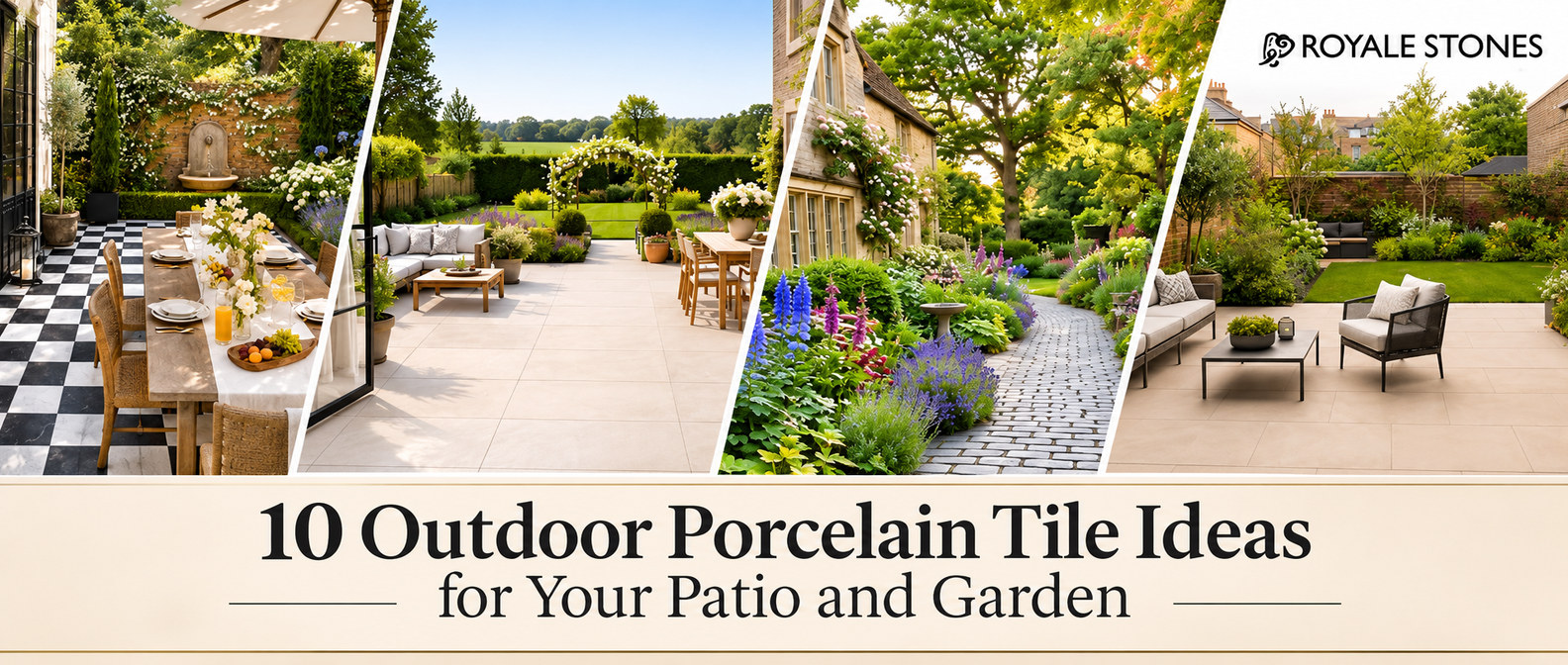
10 Outdoor Porcelain Tile Ideas for Your Patio and Garden
Outdoor porcelain has become one of the most popular surfaces for UK patios, and it is easy to see why. It is dense, frost resistant and stain resistant, and it needs very little upkeep, even after a wet British winter. Whether you are replacing tired concrete or designing a new space from scratch, the right look makes all the difference.
Many homeowners now choose garden patio tiles in porcelain because they deliver the appearance of natural stone without regular sealing, moss or weeding. Below you will find ten practical ideas, followed by simple advice on choosing and ordering.
Why Choose Porcelain for a UK Patio?
Before the ideas, here is what makes outdoor porcelain well suited to our changeable climate:
- Low water absorption: vitrified porcelain resists moss, algae and frost damage.
- Slip resistance: look for an R11 rating, which suits wet conditions.
- Easy care: no sealing is needed, and most marks clear with a brush and mild cleaner.
- Durability: it stands up to heavy furniture, barbecues and everyday foot traffic.
Our porcelain paving range covers a wide choice of colours, sizes and finishes, so it is easy to match a style to your garden and your budget.
10 Outdoor Porcelain Tile Ideas
1. Large-Format Slabs for a Clean, Modern Look
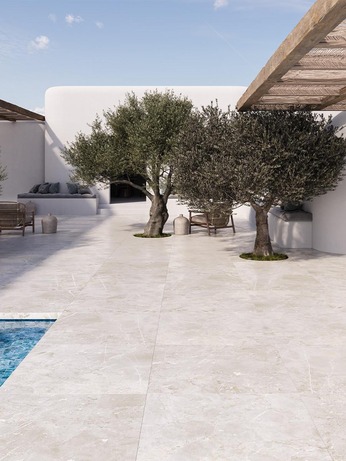
Sizes such as 900x600mm and 1200x600mm create fewer joint lines, so a patio looks calmer and more spacious. This approach works particularly well in small town gardens, and beside wide patio doors or outdoor kitchens, where long, uninterrupted lines look deliberate.
- Best for: contemporary homes and compact courtyards
- Keep in mind: large slabs are heavy, so plan handling and laying carefully
If you are unsure which size suits your space, compare garden slabs by dimension to see how 600x600mm, 900x600mm and 1200x600mm change the feel of the area.
2. A Sandstone Look Without the Upkeep
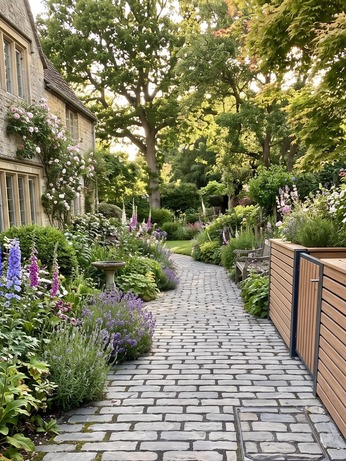
Kandla grey porcelain gives you the soft grey, lightly textured appearance of Indian sandstone with the easy maintenance of porcelain. Its rectified edges also allow neat, tight joints.
- Best for: almost any house style, modern or traditional
- Pairs well with: green planting and natural timber furniture
3. Checkerboard Patios
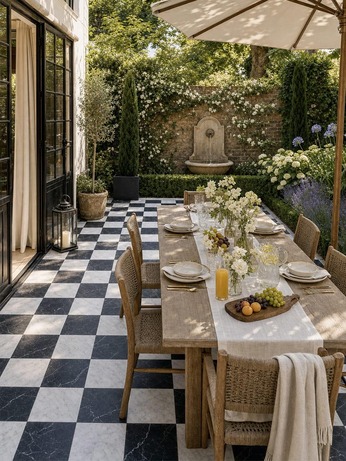
Alternating light and dark squares bring a classic, formal feel to a terrace. Checkerboard garden tiles work best as a feature panel within a plainer patio, rather than across the whole garden.
- Best for: dining areas and entrances
- Keep in mind: a simple, neutral surround stops the pattern from feeling busy
4. Wood-Effect Planks
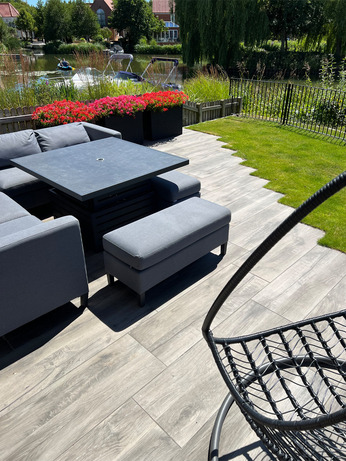
Wood-effect porcelain gives the warmth of decking without the staining, rotting or splinters. Long planks also draw the eye along a path or across a seating area.
- Best for: seating areas, paths and low-maintenance garden rooms
- Keep in mind: shaded areas stay damp for longer, so check the slip rating
5. Chiselled and Tumbled Edges
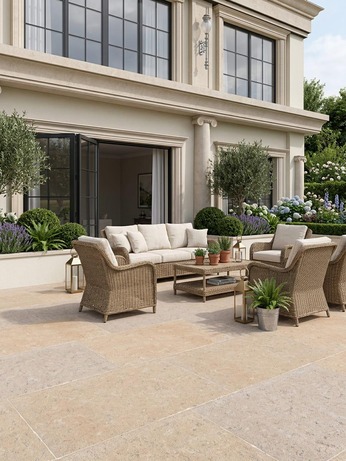
Chiselled or tumbled edges give porcelain an aged, natural character. They suit cottage gardens and period homes, where a perfectly sharp finish would feel out of place.
- Best for: traditional properties and informal planting
- Pairs well with: warm brick, cream render and soft, mixed borders
6. Travertine-Effect for a Mediterranean Feel
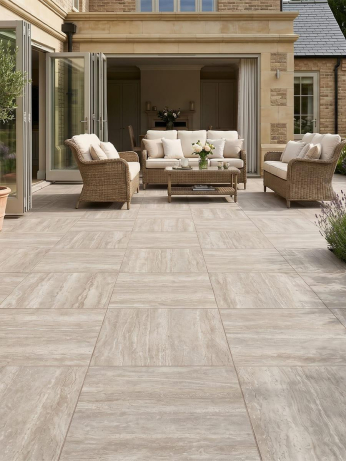
Creamy, warm tones create a relaxed, sun-drenched mood. Pair them with terracotta pots, olive trees and light outdoor furniture for a holiday atmosphere at home.
- Best for: south-facing terraces and dining areas
- Keep in mind: very light tones show soil and leaves more easily, so plan on regular sweeping
7. Concrete-Effect for an Urban Finish
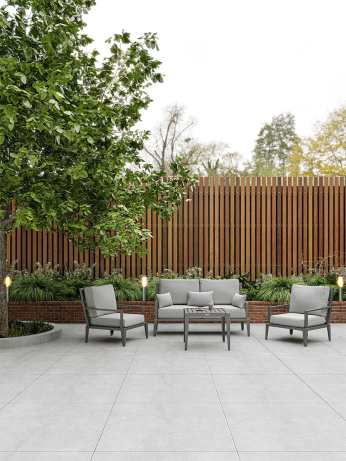
Muted grey concrete looks suit minimalist gardens and city courtyards. They provide a quiet backdrop for pergolas, steel planters and Corten edging.
- Best for: modern extensions and contemporary design
- Keep in mind: add texture through planting so the space still feels warm
8. Inside-Out Tiles for a Seamless Flow
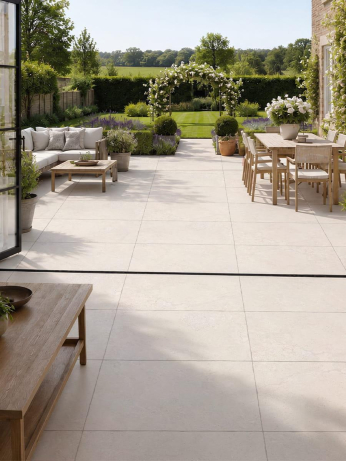
Matching your indoor and outdoor floors makes a kitchen or living room feel larger, particularly with bi-fold or sliding doors. The Inside Out collection is a good place to start.
- Best for: open-plan homes that open onto the garden
- Keep in mind: check that the outdoor version has a suitable slip rating
9. Mixing Porcelain with Natural Stone
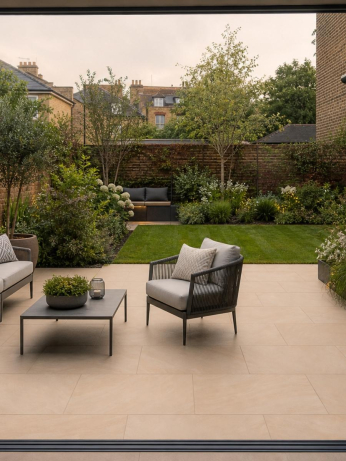
Using porcelain for the main surface and natural stone for borders or paths adds contrast and texture. It also lets you reserve natural stone for the details where its character shows most.
Limestone pavers make elegant borders, stepping paths and small feature areas, with soft tones that blend easily with grey or cream porcelain.
For a warmer, riven texture, sandstone paving can frame a porcelain patio or form a path leading away from it.
- Best for: larger gardens with several zones
- Keep in mind: natural stone may need sealing, so ask about aftercare
10. Zoned Patios with Mixed Sizes and Edging
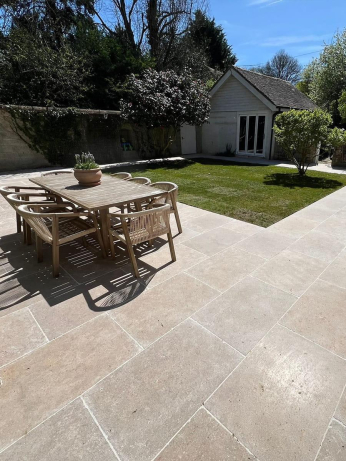
Mixed-size patio packs and contrasting borders help define dining, seating and walking areas without extra clutter. Finish steps and raised edges with bullnose steps and coping stones for a neat, safe edge.
- Best for: larger or multi-level gardens
- Keep in mind: sketch the layout first and order enough of each size
How to Choose the Right Outdoor Porcelain
- Check the slip rating: R11 is a sensible benchmark for wet UK conditions.
- Confirm the thickness: 20mm is widely used for patios, but always match it to your base and intended use.
- Order samples: samples cost £2.49 each and are sent by premium next-day service, so you can judge colour in your own light.
- Calculate quantity: the free tile calculator on each product page adds 10% for cuts and wastage.
Whatever you choose, order all your paving slabs together, because tone and size can vary slightly between production batches.
Plan Your Patio with Royale Stones
Royale Stones is a UK supplier with roots in stone manufacturing stretching back more than 25 years, offering porcelain, natural stone, tiles and outdoor living products from one place. You can see finishes in person at showrooms in Lincoln, Watford, Peterborough, Birmingham and Kent, order samples online, and receive free pallet delivery to most UK postcodes. Trade customers can also apply for a free Trade Account.
Frequently Asked Questions
Is outdoor porcelain suitable for UK winters?
Yes. Its very low water absorption helps it resist frost damage, and its dense surface discourages moss and algae.
Does outdoor porcelain need sealing?
No. It is dense and highly resistant to staining, so regular sweeping and an occasional wash with a suitable cleaner are usually enough.
Can I lay outdoor porcelain over an existing patio?
Sometimes. The existing base must be stable, level and well drained, so ask a landscaper to check whether it is suitable or needs relaying first.
Which colour suits a small garden?
Lighter greys and creams reflect light and help a compact space feel larger, especially when combined with large-format slabs.
- Bathroom Tiles
- Bathroom Vanity Units
- Porcelain Paving
- Floor Tiles
- Kitchen Tiles
- Garden Paving
- Porcelain
- Wall Tiles
- Natural Stone Paving
- Onyx Tiles
- Paving Slabs
- Sandstone Paving
- Anti Slip Tiles
- Terrazzo Tiles
- Marble Tiles
- Outdoor Porcelain Tiles
- Brick Effect Tiles
- Wood Effect Paving
- Paving
- Exterior Floor Tiles
- Outdoor Tiles
- acoustic wall panels
- Bathroom Basins
- Indoor Tiles
- Vinyl Flooring
- Stone Effect Wall Tiles
- External Wall Tiles
- Dijon Limestone
- 3D Split face Wall Tiles
- Vanity Units
- Outdoor Porcelain Paving
- Knowledge Base
- Luxury Tiles
- Inside Out Tiles
- Victorian Floor Tiles
- Slate Effect Tiles
- Porcelain Paving Slabs
- Concrete Effect Tiles
- Porcelain Tiles
- Wood-Effect Tiles
- Tumbled & Chiselled Tiles
- Tile Installation Tips
Recent Post
-
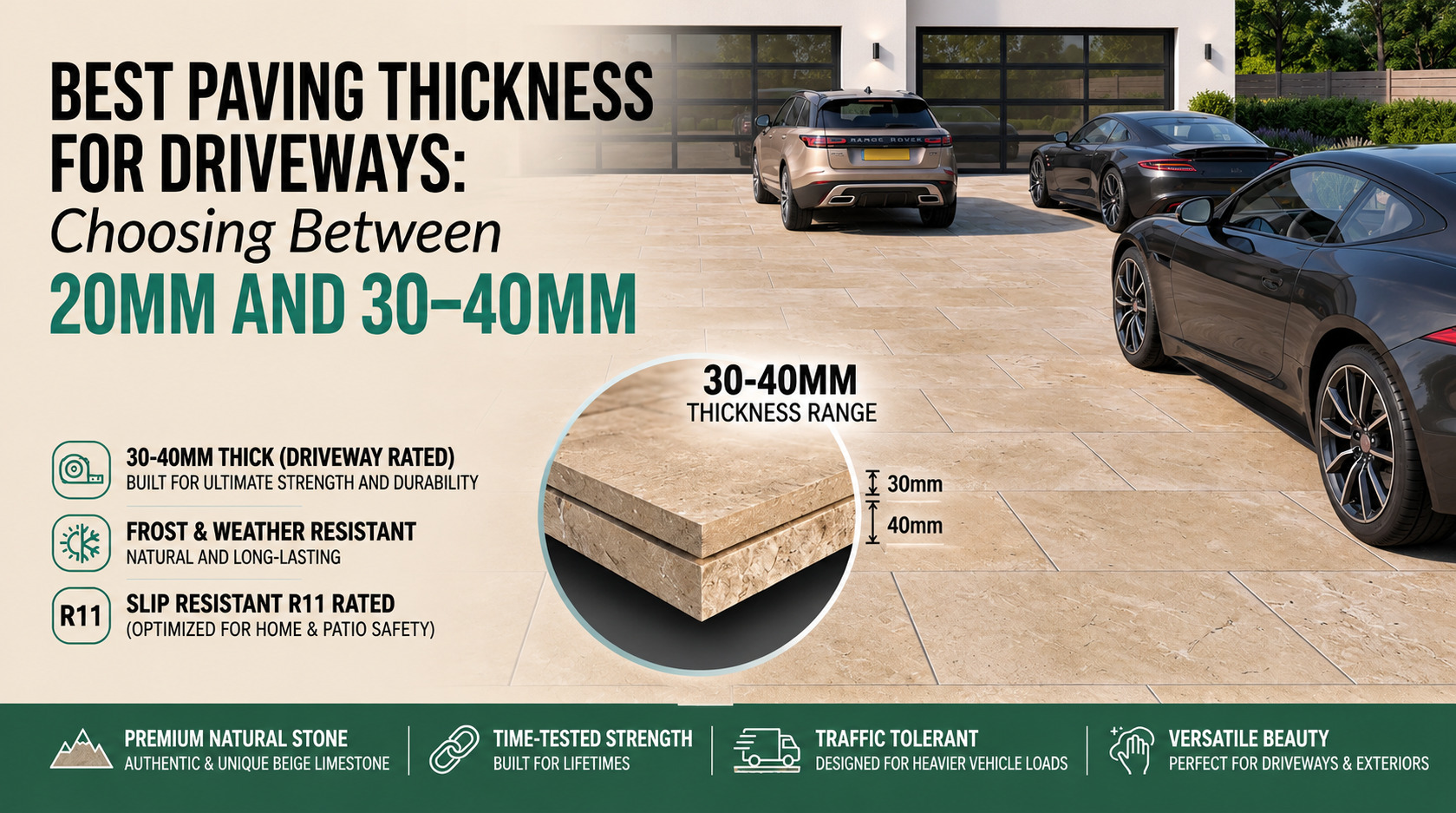
Best Paving Thickness for Driveways: Choosing Between 20mm and 30–40mm
November 2nd, 2026 -

7 Reasons to Choose a Wooden Vanity Unit for Your UK Bathroom
November 2nd, 2026