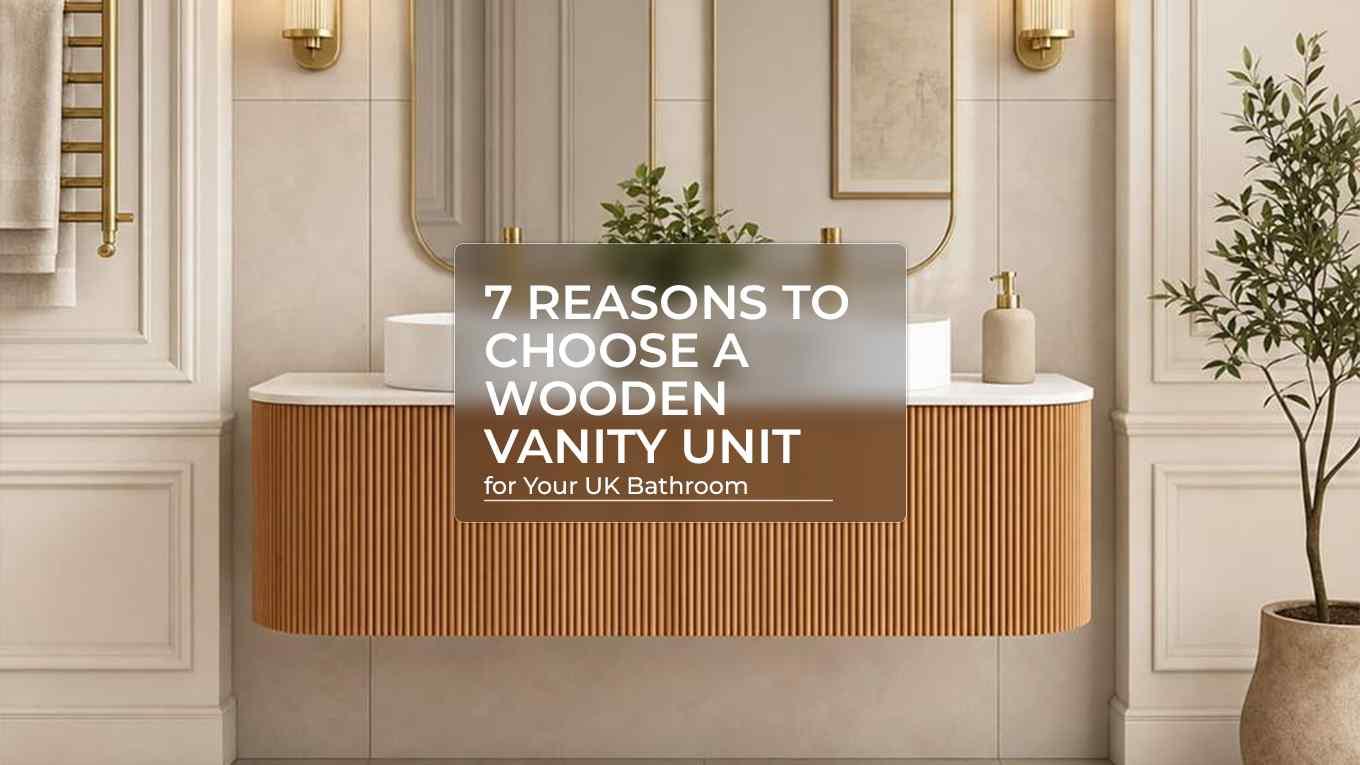
7 Reasons to Choose a Wooden Vanity Unit for Your UK Bathroom
Most people searching for a wooden vanity unit have the same question: will it survive in the steam, splashes and temperature swings of a British bathroom? It is a fair question to ask and, to be honest, the answer is yes, but only if you buy the right one for your bathroom.
Royale Stones Solid Wood Vanities range from classic to contemporary; however, not all wood furniture is made equal. Below are seven reasons wood is worth choosing and how to tell if a vanity unit will last, versus one that won’t.
Are Wooden Vanity Units a Good Idea for Bathrooms?
For most bathrooms? Yes. A wooden vanity unit performs well when:
- All the surfaces are meticulously sealed with a moisture-resistant finish
- The construction is clearly stated
- The room is ventilated
A bathroom vanity unit with poor finishing in a windowless room is where the problem starts in the first place.
Solid Wood, Veneer or Engineered (Know What You’re Buying)
Just “Wooden” is a very generic and loose term. We describe it in three quite different constructions, but the difference affects price, durability, and how the vanity unit ages.
|
Type |
What
it is |
Strengths |
Watch-outs |
|
Solid wood |
Timber throughout, such as oak, walnut or ash |
Strongest and can be sanded and refinished |
Needs a good seal, moves slightly with
humidity, usually costs more |
|
Veneer |
A thin layer of real wood over MDF or plywood |
Real grain at a lower price, stable |
Surface can’t be sanded back far, and edges
must be well sealed |
|
Engineered or moisture-resistant board |
Layered or treated board, often with a
wood-effect or painted finish |
Good stability and value |
May not be real wood, so check the description
carefully |
Before you decide to buy vanity units from a website or through a display, always confirm what the bathroom vanity unit is constructed from. If the product page says just “wooden”, ask.
Types of Woods Used for Vanity Units
Choosing the right wood for your bathroom sink cabinets affects durability, style, and maintenance. From solid hardwoods to engineered boards, each option has unique strengths and limitations.
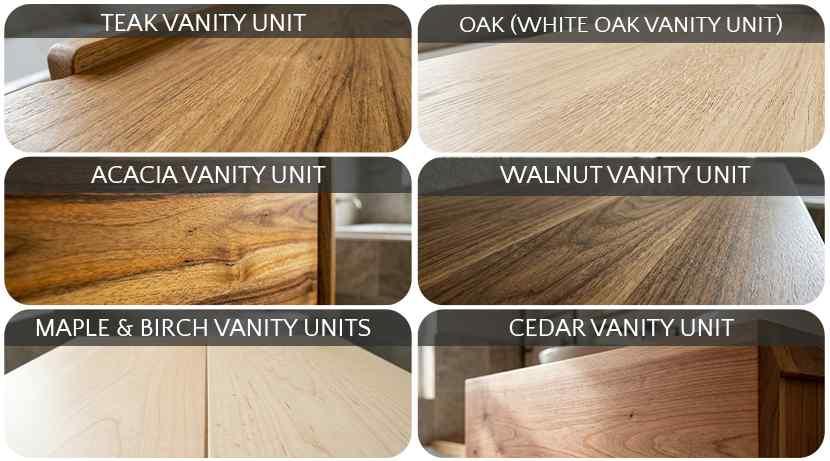
- Teak Vanity Unit: Naturally oily and water‑resistant, ideal for humid UK bathrooms.
- Oak (White Oak Vanity Unit): Strong, durable, and resistant to moisture thanks to closed grain.
- Acacia Vanity Unit: Dense, hard, and stylish with a dramatic two‑tone grain.
- Walnut Vanity Unit: Richly-colored hardwood that needs proper sealing for bathroom use.
- Maple & Birch Vanity Units: Affordable, light‑toned woods that require protective finishes.
- Cedar Vanity Unit: Aromatic, rot‑resistant softwood that adds rustic charm.
Engineered Woods & Composites
Stable alternatives offering value and versatility.
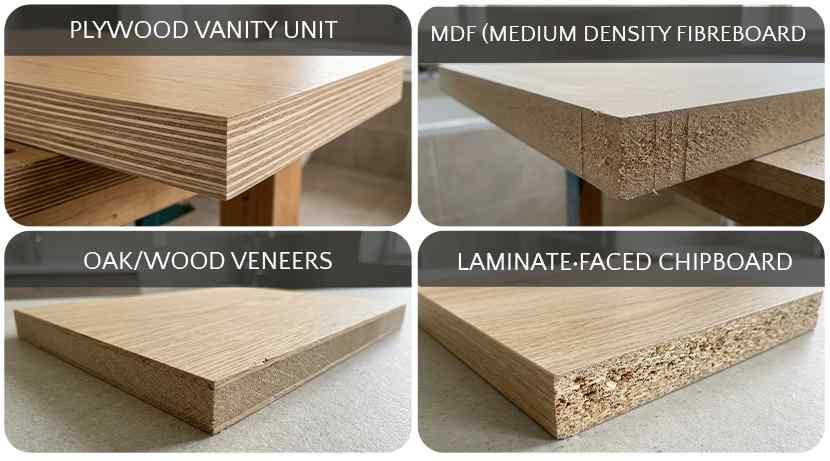
- Plywood Vanity Unit: Layered construction with good strength and moisture resistance.
- MDF (Medium Density Fibreboard Vanity Unit): Smooth, cost‑effective option, best when sealed.
- Oak/Wood Veneers: Real wood grain over stable core boards, balancing price and aesthetics.
- Laminate Faced Chipboard Vanity Unit: Budget option with a protective laminate surface
Benefits of Buying a Wooden Bathroom Vanity
Wood vanity units are not only a fan favourite among UK homeowners just because they are aesthetically pleasing; there is more to it.
1. It’s Built to Last
Dense hardwood is sturdy in its construction and holds its shape under the weight of a ceramic basin or stone top. Well-made solid or quality veneer units resist sagging and swelling in the edges, which is very common in cheap flat-pack carcasses once moisture gets in.
2. It Adds Warmth to a Hard-surfaced Room
Tile, porcelain, ceramic, chrome and steel make bathrooms feel clinical; natural wood grain softens all of that. A Scandi bathroom look looks its best with a light oak vanity, while dark walnut works for a richer bathroom. Wood has the ability to give bathrooms a tactile quality that gloss white units cannot.
3. Properly Finished Wood Handles Bathroom Conditions
This is mostly the main concern of homeowners who have bathrooms that remain damp most of the time. So, here is the straight version: unfinished wood and steam do not mix. A unit sealed with quality oil, lacquer or paint on every surface (including the back, underside, and cutouts for pipework) copes well with everyday humidity.
Look for the following when you choose a wooden vanity unit:
- A finish that covers all surfaces, not just the front
- Moisture-resistant hinges and fittings
- A window or extractor fan
- A habit of wiping standing water off the top
Skip only one and even good timber will suffer the consequences.
4. It Can Be Refreshed Instead of Replaced
When the wood vanity unit gets dull or scratched, it can be sanded, stained, and reoiled. You can also paint them if your taste changes with time. This is a genuine benefit that people have loved for decades. Laminate and foil-wrapped units cannot be refinished, so damage usually means replacing the entire unit. Over a decade, that flexibility can offset a higher upfront price.
5. It Works in Almost Any Style and Layout
Wood suits more bathrooms than people expect. Leave the grain showing, paint it in a heritage shade, or pair it with a quartz, ceramic or genuine marble countertop basin.
It adapts to bathroom styles. A freestanding vanity gives a furniture-like presence in a larger room while a wall-mounted vanity unit keeps the floor visible and makes small bathrooms feel larger. Add taps and wastes in brushed brass, matt black, or chrome and the same vanity unit can look traditional or modern.
6. It’s a Long-Lasting Choice
Furniture that lasts for a long time is the most practical form of sustainability. A unit that stays in your bathroom for many years creates less waste than a cheaper one replaced twice. Wood is also renewable, and the best vanity unit suppliers can show where their timber is sourced from.
7. It Signals Quality
Buyers, landlords, and developers read solid-wood furniture in a bathroom as a considered and deliberate fitout rather than a budget refresh. The real value comes from getting the details right: finish, proportions and materials.
Our guide to choosing a luxury vanity unit explains what separates a well-made unit from the one that merely looks good in pictures and the first week of use.
When a Wooden Vanity Unit Isn’t the Right Choice
Wood is not the right pick for every bathroom. You need to know the wooden vanity unit pros and cons before you choose one. We have already discussed the pros, but think twice if:
- It is a Wet Room: Where a vanity unit sits where it will take direct and regular water spray.
- Low Ventilation Room: Where it has no windows or extractor an fitting one is not an option.
- Low Budget: If your budget only stretches to an unsealed or poorly finished unit. In this case, a well-made moisture-resistant board unit is better.
In these cases, a ceramic, gloss or engineered unit may serve you better, and there is no shame in choosing it; it is even a wise decision.
What to Check Before You Buy Wooden Vanity Unit
Before you order a vanity unit for your bathroom, run through this:
- Construction: Is it solid wood, veneer or engineered board?
- Finish: Oil, lacquer, or paint, and are all surfaces sealed?
- Sourcing Claims: If a seller mentions FSC® or PEFC, ask for the licence code or certificate.
- Hinges and Fittings: Are they suitable for humid rooms such as bathrooms?
- Size: Measure your space against standard vanity unit sizes in the UK so the unit clears doors, radiators, and pipework.
- Basin and Top Compatibility: Does the wooden vanity unit come with a top, or do you need to source one?
- Warranty: Does the bathroom vanity unit cover moisture damage or exclude it?
How to Look After a Wooden Vanity Unit
Taking care of a bathroom vanity wooden type is straightforward and simple:
- Wipe spills and splashes promptly, especially around the basin and taps
- Run the extractor or open a window after showers
- Clean with a soft cloth and mild cleaner, avoiding abrasive pads and harsh chemicals
- Re-oil or refresh the finish when the surface looks dry, following the maker’s instructions for your finish type
Final Words
A wooden vanity unit rewards you when it is made well, properly finished and described honestly. Only then can you choose the best wood vanity unit for your bathroom that gives every pound back over the years.
Browse Royale Stones bathroom furniture UK homeowners adore, or get in touch if you like help choosing between solid, veneer, and engineered options for your bathroom.
Frequently Asked Questions
Will a wooden vanity unit warp in a bathroom?
Yes, if the wood is unsealed or the room is poorly ventilated, then there is a high chance that the bathroom vanity unit would warp and the edges would swell. A unit finished on all surfaces and used in a ventilated bathroom is far less likely to warp and swell.
Is solid wood better than veneer?
Solid wood is better because it is stronger and can be sanded back and refinished, but it costs more. A well-made veneer gives you real grain with more stability at a lower price but does not provide as much durability as the solid wood vanity unit. Quality of the finish and construction matters more than the label alone.
Which wood is best for a vanity unit?
Oak, Walnut, and Ash wooden vanities are popular for their strength and grain for construction of the best wooden vanity unit for UK bathrooms. Whatever dense hardwood species, the finish and sealing matter as much as the timber.
Can I put a wooden vanity unit in an en-suite or cloakroom?
Yes, cloakrooms and most ensuites suit wood well given the room is ventilated enough, and the unit is not under the direct shower spray zone.
How do I look after a wooden vanity unit?
After use, wipe up the water promptly without any delay, ventilate the room after showering by opening the windows or turning on the extractor, clean the bathroom vanity unit with a gentle wood cleaner, and refresh the finishes when it looks dry.
- Bathroom Tiles
- Bathroom Vanity Units
- Porcelain Paving
- Floor Tiles
- Kitchen Tiles
- Garden Paving
- Porcelain
- Wall Tiles
- Natural Stone Paving
- Onyx Tiles
- Paving Slabs
- Sandstone Paving
- Anti Slip Tiles
- Terrazzo Tiles
- Marble Tiles
- Brick Effect Tiles
- Wood Effect Paving
- Paving
- Exterior Floor Tiles
- Outdoor Tiles
- Outdoor Porcelain Tiles
- acoustic wall panels
- Bathroom Basins
- Indoor Tiles
- Vinyl Flooring
- Stone Effect Wall Tiles
- External Wall Tiles
- Dijon Limestone
- 3D Split face Wall Tiles
- Vanity Units
- Outdoor Porcelain Paving
- Knowledge Base
- Luxury Tiles
- Inside Out Tiles
- Victorian Floor Tiles
- Slate Effect Tiles
- Porcelain Paving Slabs
- Concrete Effect Tiles
- Porcelain Tiles
- Wood-Effect Tiles
- Tumbled & Chiselled Tiles
- Tile Installation Tips
Recent Post
-
Best Paving Thickness for Driveways: Choosing Between 20mm and 30–40mm
November 2nd, 2026 -
 October 31st, 2026