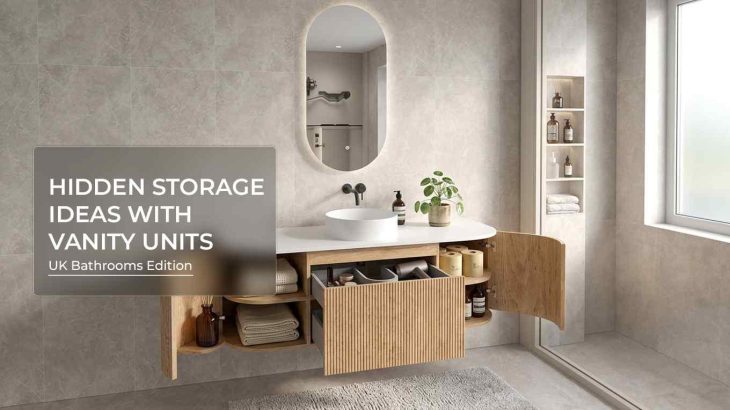
In the United Kingdom, most bathrooms are small – smaller than in any European country. This means that every inch of the floor and wall space needs to work harder. Thus, it is no surprise that hidden storage has become a necessity and the most searched-for topic in bathroom renovation on the internet.
That said, one piece of furniture does more of the heavy lifting for hidden storage than anything else in the room: the bathroom vanity units with sink, the hero of this blog and that for a good reason.
Why Vanity Units Are the Foundation of Hidden Bathroom Storage
A well-chosen vanity unit is not just somewhere where you can hide sink pipework; it is the single best opportunity for concealed storage in the entire bathroom.
The right vanity configuration depends on your space, your household size and how much you want on display or tucked away.
Vanity Unit Storage Configurations to Consider
The right storage configuration can make a vanity unit far more practical, helping you keep everyday essentials organised without sacrificing style.
Under-Sink Storage
This is the original hidden storage idea, which is still very practical in bathrooms. Shelves, drawers and pull-out baskets under the basin that turn dead under-basin space into genuinely usable storage for toiletries, spare toilet rolls and cleaning supplies.
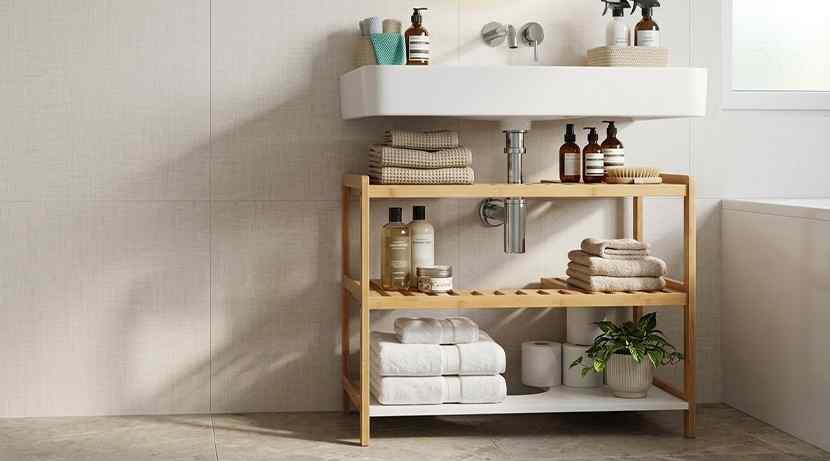
Soft-close drawers with internal dividers work particularly well since they stop bottles rolling around every time you open the drawers.
Toe-Kick Drawers
Toe-kick drawers are one of the details that homeowners request after their bathrooms are finished. Toe-kick drawers are shallow drawers built into the plinth at the base of freestanding bathroom vanities, providing extra storage without increasing the unit’s footprint.
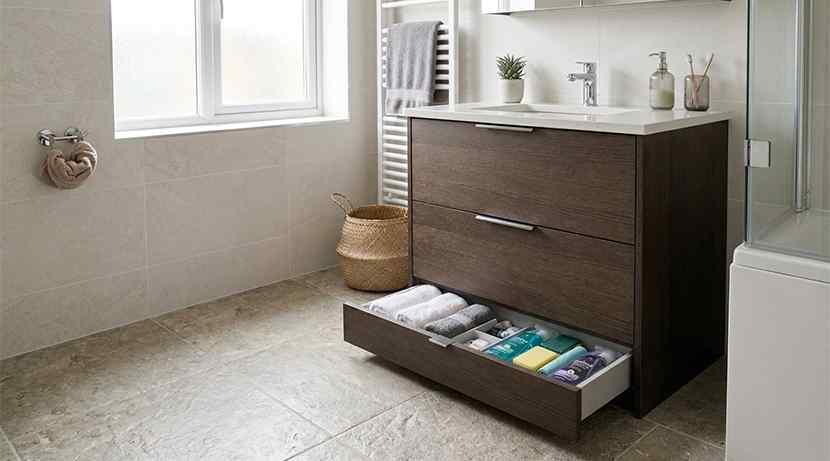
They are ideal for spare towels, bath mats, or cleaning products you want within reach but out of sight. It’s a small addition that makes a disproportionate difference in a family bathroom.
Wall-hung Vanity Units for Small Bathrooms
If floor space is the constraint in your small bathroom, wall-hung vanity units solves two problems at once. The floating design opens the floor visually (and makes cleaning easier), while the cabinet itself can still house a full depth of hidden compartments.
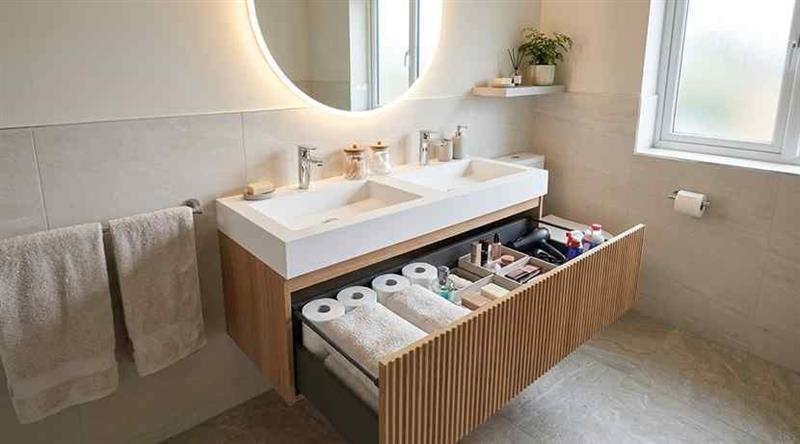
For flats and ensuites where every square foot counts, London Solid Wood Double Sink vanity unit is usually the better call over a freestanding unit.
Matching Storage Ideas to Your Organisation Style
Not every idea suits every household. This is where diagnosing your organising style actually pays off.
| Organising Style | How You Operate | Best Storage Fit |
| Visual Organiser | Needs to see things to remember they exist | Transparent drawer inserts, open shelving, glass-fronted cabinet doors. Fully concealed storage just means forgotten products at the back of a drawer. |
| Non-Detailed Organiser | Happy for things to be broadly out of sight rather than perfectly arranged | Deep drawers and larger hidden compartments; better than fiddly dividers that never get maintained. |
| Detailed Organiser | Likes everything labelled and in its place | Custom dividers, modular inserts, and vanity units with configurable internal fittings; the extra spend on customisation actually gets used. |
Complementary Hidden Storage Solutions Beyond Vanity Units
Although in the bathroom, vanity units carry most of the storage load, a handful of complementary ideas fill the gaps they can’t.
Internal Wall Niches & Alcoves
If you are renovating down to the studwork, build a recessed niche into the stud wall. This way, it will cost little and adds shelves’ worth of storage without eating floor space.
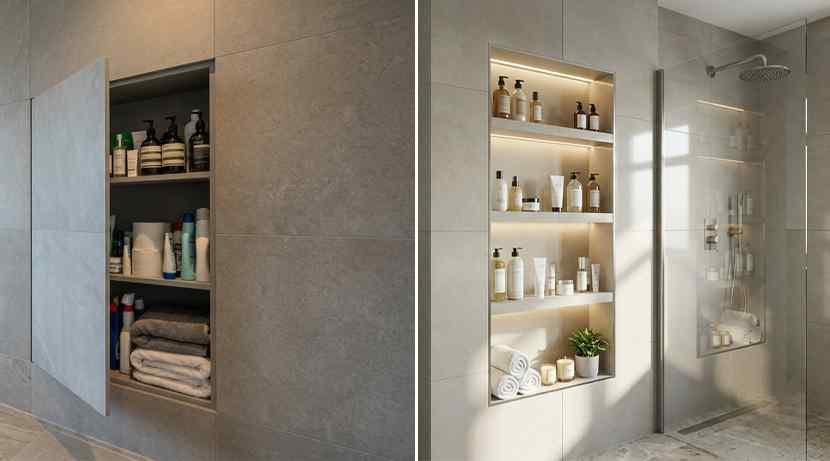
Even if your bathroom has solid masonry walls, a false wall panel can be built out to create the same effect – hiding shampoo bottles and shower essentials behind a flush panel rather than an obvious shelf.
Floating Shelves with Hidden Compartments
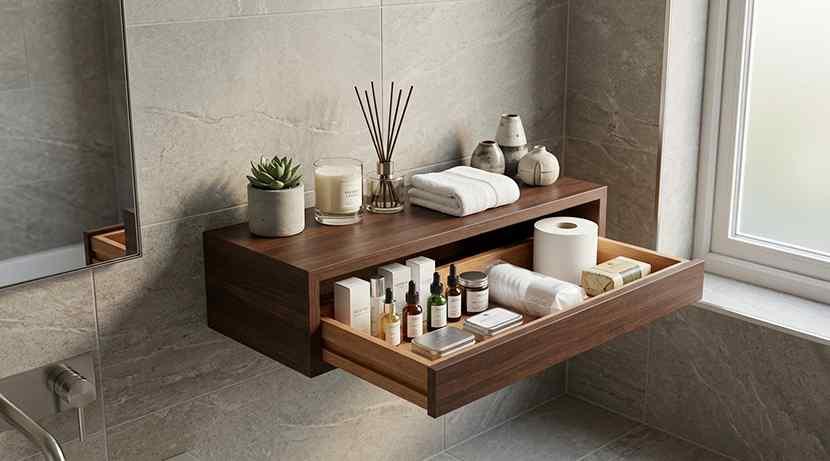
Open floating shelves look good in pictures, but the more practical version has a concealed compartment behind or beneath the visible shelf; decorative on top, functional beneath. This suits you if you want the aesthetic of an uncluttered wall without actually giving up storage.
Mirrored Cabinets with Concealed Shelves
Mirrored cabinets are arguably the most efficient piece of furniture in any bathroom, doing double duty as both the mirror above the basin and a shelved cabinet for daily essentials.
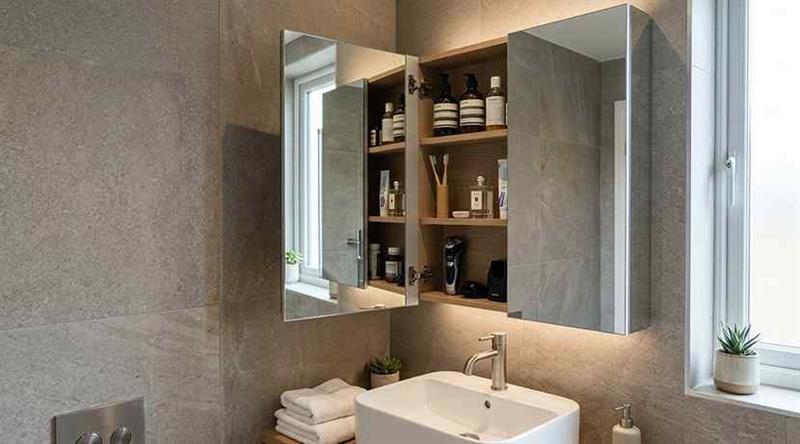
In smaller bathrooms, the reflective surface also helps bounce light around, which makes the room feel larger; a genuine two-for-one.Hidden Cabinets Over the WC
Hidden Cabinets Over the WC
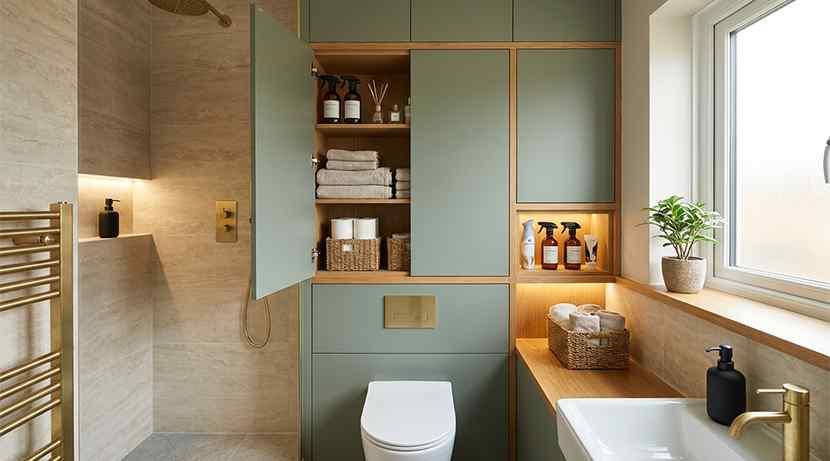
The wall space above the toilet is almost always wasted. A shallow cabinet here, recessed or surface-mounted, makes use of vertical space that’s otherwise empty, and it’s a sensible spot for spare toilet rolls or cleaning products you’d rather not have on open display.
Concealed Modules for Toilet Brush & Paper
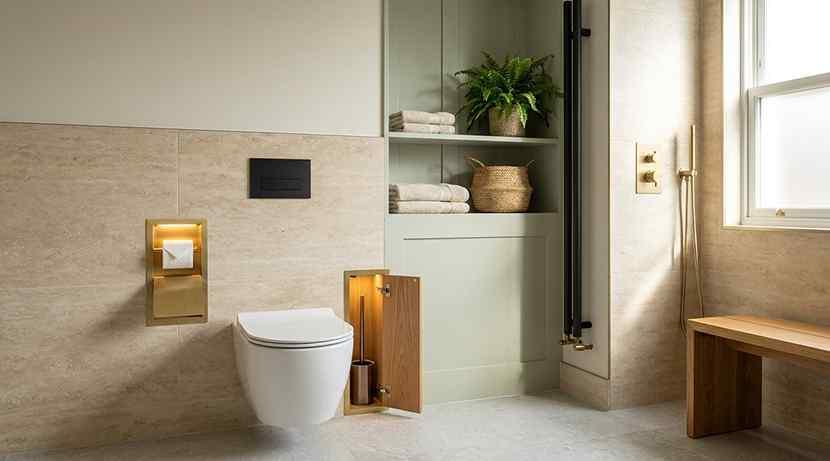
Distinct from the cabinet above, this is about the small, frequently-used items: a built-in module for the toilet brush and a discreet toilet roll holder with a cover. It’s a hygiene-driven choice as much as a storage one; keeping visibly “used” items out of sight tends to make the whole room feel cleaner, even when nothing else has changed.
Practical Tips for Maximising Hidden Storage
According to the Office for National Statistics benchmarks, “For small and compact bathroom designs, a small bath size would be 1400mm (bath length) x 700mm (bath width)”, thus every inch is important. There are a few things worth getting right before you commit to any of the above:
- Materials matter more in the UK climate:
Bathrooms are humid rooms, so moisture-resistant carcasses (MFC or MDF with a proper waterproof finish) will outlast cheaper alternatives by years, particularly around the toe-kick and under-sink areas where splashes are constant.
- Decide DIY versus professional installation early:
Wall-hung units in particular need proper bracket fixings into solid backing. This is not the place to cut corners, since a poorly fixed wall-hung vanity is a genuine safety issue, not just an aesthetic one.
- Group by frequency of use, not by category:
Daily items should be in the most accessible drawer, not organised purely by type.
- Check hidden compartments periodically:
Concealed storage is easy to forget about, which means it’s also easy to let damp, expired products, or general clutter build up unnoticed.
If you are weighing up styles and finishes, do not forget about the standard vanity unit sizes in the UK before you finalise a layout, since storage capacity and unit dimensions are directly linked.
Turning Bathrooms into Organised Sanctuaries
Vanity units remain the foundation of any hidden storage plan; everything else on this list is a complement, not a replacement. Before you buy bathroom vanity units, take your time to actually diagnose your own organising style. Without it, the most expensive and cleverly designed compartment is wasted if it does not match how you naturally put things away.
If you are ready to start planning and have a large bathroom, Royale Stones double sink vanity units collection in freestanding and wall-hung systems not only looks beautiful but also has the smartest storage solutions for couples and large family bathrooms.
Frequently Asked Questions
What is the best vanity unit for small UK bathrooms?
Wall-hung vanity units are one of the best options for small bathrooms. The configuration lifts up the unit from the floor, freeing up visible floor space while still offering a full depth of hidden storage inside.
How do I add hidden storage without major renovation?
Floating shelves that have concealed compartments, mirrored cabinets, and toe-kick drawers under freestanding units. These are some of the easiest additions in your bathroom that do not require any structural work.
Are wall-hung vanity units durable enough for family bathrooms?
Yes, wall-hung units can be installed on a solid brick wall or on plasterboard with heavy-duty wall plugs for solid brick walls and specialised cavity anchors for plasterboard stud walls. Weight ratings vary by model, so check the manufacturer’s guidance if the unit will regularly hold heavier items.
What’s the difference between freestanding and wall-hung vanity units for storage?
Freestanding vanities offer more storage volume and stand on the floor, and offer space for toe-kick drawers, ideal for large bathrooms. Wall-hung units are lifted from the floor, leaving floor space underneath. They offer easier cleaning and maintenance perks.
How can I keep hidden storage hygienic and organised?
Use dedicated modules for items like toilet brushes rather than leaving them loose, wipe down concealed shelves regularly since they’re easy to overlook, and avoid overpacking drawers so airflow and cleaning stay easy.