


Porcelain Tiles Buying Guide: Everything UK Homeowners Need to Know Before Buying
Without any fluff or preface like any other buying guide or blog, this time we will cut to the chase and get to what you have really come here looking for.
In order to save you time, let us tell you beforehand what we will be covering in this guide so that you can get to the part you really need if you do not want to read the whole thing:
- Introduction to Porcelain Tiles
- Types of Porcelain Tiles
- Porcelain Tile Finishes and Effects
- Porcelain Tile Sizes and Formats
- Room by Room Suitability
- Key Technical Specs to Check Before Buying
- Porcelain Tile Pricing in the UK
- DIY or Professional Assistance
- Maintaining Porcelain Tiles
- Common Mistakes When Buying Porcelain Tiles
- Porcelain vs Alternatives
Browse our porcelain tile ranges for walls and floors in multiple finishes. We offer fast delivery across the UK.
Now that that’s out of the way, let’s get started.
What Is Porcelain Tile
Porcelain tiles are dense and durable manufactured tiles made of refined kaolin clay and fine minerals such as quartz, sand, feldspar, and silica, fired at a temperature of 1200C to 1400C and under intense mechanical pressure. This process is called Vitrification.
Ceramic vs Porcelain Tiles
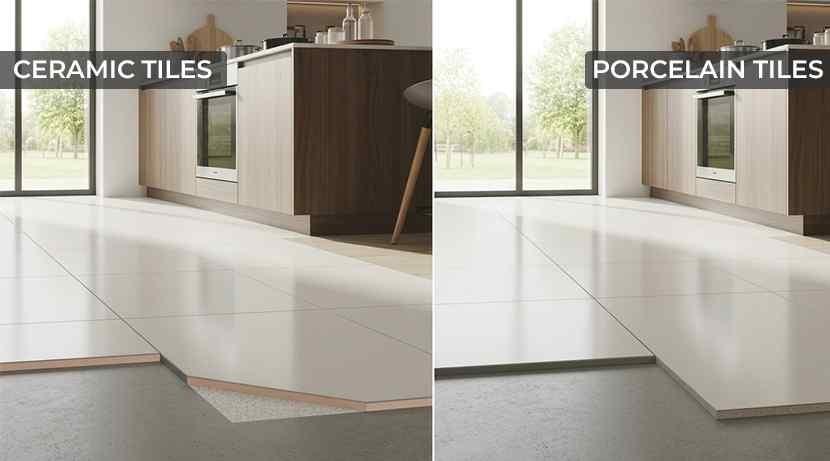
When it comes to porcelain vs ceramic tiles, porcelain is denser, harder and more waterproof than ceramic tiles, as it is fired at a higher temperature than ceramic (800C to 1200C), making it ideal for high-traffic floors in your home and outdoor spaces.
Ceramic is softer, lighter, DIY-friendly, and more affordable for bathroom walls, kitchen splashbacks, and as feature walls.
Here are the main differences between porcelain and ceramic tiles:
|
Feature |
Porcelain
Tiles |
Ceramic
Tiles |
|
Material
& Making |
Made from refined clay + feldspar, fired at
>1,200 °C. Dense and hard. |
Made from coarser red/white clay, fired at
lower temperatures. Softer body. |
|
Water
Resistance |
Absorbs
<0.5% water → virtually waterproof. Excellent for wet areas. |
More porous, absorbs more water. Not ideal for
prolonged moisture exposure. |
|
Durability |
Highly resistant to scratches, cracks, and
heavy foot traffic. Long lifespan. |
Chips/cracks more easily under heavy impact.
Less durable in high-traffic zones. |
|
Installation
& Cost |
More expensive. Requires special wet saws and
professional installation. |
Lower
cost. Cuts easily with standard tools → suitable for DIY projects. |
|
Design
Options |
Available in glazed and full-body versions.
Can mimic stone, wood, marble. |
Wide range of colours and patterns, but less
realistic than porcelain finishes. |
|
Best
Uses for UK homes |
Kitchens, bathrooms, showers, hallways,
outdoor patios (frost-resistant). |
Indoor walls, backsplashes, guest bathrooms,
low-traffic floors. |
|
Maintenance |
Easy to clean, stain-resistant, doesn’t fade. |
Easy to clean but more prone to staining and
wear over time. |
|
Longevity |
Decades of performance in high-traffic and wet
areas. |
Shorter lifespan in demanding environments. |
Types of Porcelain Tiles
Now, when it comes to porcelain, you can find it in the following types:
1. Full-body Porcelain: Unglazed tile where the colour, pattern, and texture run completely through the thickness of the tile, rather than just appearing on the surface layer. (Also called through-body porcelain).
2. Glazed Porcelain: A dense, highly durable porcelain tile that has an added liquid glass coating (hence the glaze) baked onto its surface during a secondary firing process.
3. Polished Porcelain: A mechanically ground and buffed tile surface to create a smooth, highly reflective, and mirror-like gloss surface.
4. Structured/Anti-slip: Durable porcelain tiles with a specially textured, raised, or shaped surface, with R10, R11, or R12 anti-slip ratings, designed to increase traction and prevent slipping under wet or dry conditions.
5. Lappato (semi-polished) Porcelain: Combines glossy and matt textures on a single tile surface.
These porcelain tile types are used on different surfaces, and they play completely different roles in home designs.
Porcelain Tile Finishes & Effects
The constant technological advancement in porcelain manufacturing has allowed it to flourish in a wide variety of surface finishes and realistic material effects. They combine the high durability of porcelain with realistic, versatile natural designs that suit your taste just right.
- Unpolished or Matte Porcelain Tiles: These tiles have a non-reflective surface, look natural and minimal, and hide smudges and watermarks effortlessly.
- Polished or Gloss Porcelain Tiles: They have a high shine and reflect light; however, they show marks more easily than other porcelain tiles.
- Satin Porcelain Tiles: They have a medium sheen and are the perfect balance of matt and gloss finish.
- Structured or Textured Porcelain Tiles (Anti-slip): The surface has grains and raised areas, providing excellent foot grip. They are ideal as shower tiles, bathroom floor tiles, and kitchen floor tiles.
After choosing the finishes, choose the tile design and how you would like it to look in your space. You can opt for multiple natural finishes, including wood and stone, without compromising on the functionality and durability of your tile.
- Wood Effect Porcelain: It has printed grain patterns, replicating timber and planks without the maintenance of real wood.
- Stone-Effect Porcelain: Mimics travertine, slate, and limestone tiles almost perfectly. They have near-perfect stone visuals with the benefits of porcelain.
- Marble-Effect Porcelain: Replicates the veining and gloss of real marble without the drawbacks and maintenance of natural marble.
- Concrete-Effect Porcelain: Made of porcelain, looks industrial and modern in contemporary homes.
Tumbled-look / Chiselled-look Porcelain
Not only the polished and textured ones, but porcelain must also be praised due to the fact that it replicates the natural stone tumbling very naturally. It does not have a physical tumbling process but is engineered to replicate worn edges and rustic character.
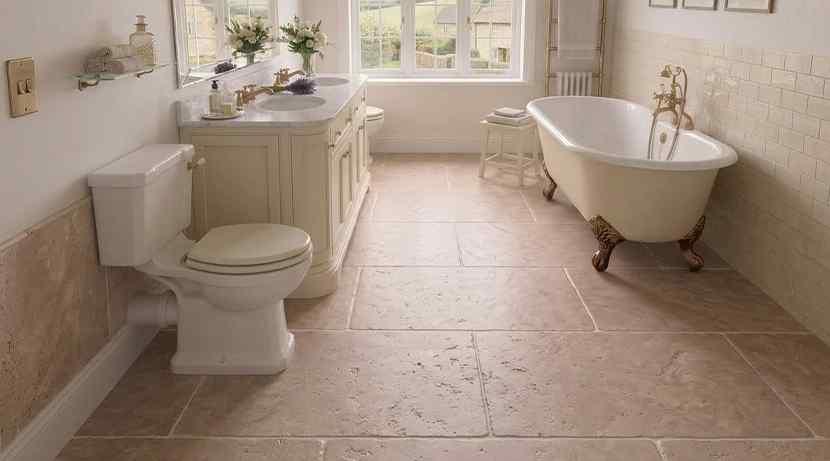
Chiselled and tumbled limestone effect porcelain tiles look like tumbled or chiselled limestone or natural stone, but are stronger, consistent in appearance, and easier to clean without any requirement for sealing.
Genuine Tumbled Stone vs Porcelain Tumbled-look
|
Feature |
Genuine
Tumbled / Chiselled Stone |
Porcelain
Tumbled-look |
|
Durability |
Softer edges; can chip or wear |
Hard, resistant to chips and scratches |
|
Sealing Needs |
Requires sealing due to porosity |
No sealing required |
|
Cost |
Higher, natural stone premium |
Lower, manufactured consistency |
|
Maintenance |
Regular sealing and upkeep |
Simple cleaning, minimal upkeep |
See it in your own light before you commit. Screens and showroom lighting rarely match a real room. Order our stone-effect, wood-effect and marble-effect porcelain cut samples starting from £0.99!
Porcelain Tile Sizes & Formats
Standard porcelain tile sizes range from small mosaic tiles (100x100mm) to large-format tiles such as 1200x1200 mm, 1200x600mm, and 1200x2800mm. Here are some of the most popular porcelain tile sizes available in the UK:
|
Format
Type |
Tile
Sizes (mm) |
Room
Application |
Safety/Durability
Notes |
|
Small
Format |
200×200 |
Feature walls, period bathrooms |
Decorative use; not ideal for high‑traffic
floors |
|
Small
Format |
200×300 |
Bathrooms, utility rooms |
R9–R10 slip rating recommended for wet
walls/floors |
|
Small
Format |
300×300 |
Cloakrooms, smaller spaces |
R10 slip rating for bathroom floors; PEI 3+
for durability |
|
Medium
Format |
300×600 |
Bathrooms, shower enclosures |
R10–R11 slip rating for wet zones; barefoot
comfort |
|
Medium
Format |
400×400 |
Kitchens, utility rooms |
PEI 4+ for kitchen floors; R10 slip resistance |
|
Rectangular
/ Plank |
150×900 |
Hallways, timber‑effect floors |
PEI 4–5 for heavy traffic; R10 slip rating |
|
Rectangular
/ Plank |
200×1200 |
Hallways, open‑plan spaces |
Long planks need flat substrate; PEI 4–5 |
|
Standard
Format |
600×600 |
Floors, general use (living rooms, kitchens) |
PEI 4+ for living areas; R9–R10 slip rating
indoors |
|
Large
Format |
800×800 |
Contemporary, spacious rooms |
Minimal grout; PEI 4+; R9–R10 slip rating |
|
Large
Format |
600×1200, 1200×1200, 1200×2800 |
Open‑plan spaces, transitional areas |
Seamless look; PEI 4–5; R9–R10 indoors |
|
Large
Format |
800×1000 and beyond |
High‑spec contemporary projects |
Specialist install; PEI 5 for durability |
|
Metro
/ Subway |
75×150 |
Kitchen splashbacks, bathroom walls |
Decorative; not floor‑rated |
|
Metro
/ Subway |
100×200 |
Kitchen splashbacks, bathroom walls |
Decorative; not floor‑rated |
|
Outdoor
/ Patio |
600×600, 600×900, 600×1200, 20 mm thick |
Patios, driveways, outdoor living |
Frost‑proof, R11+ slip rating, PEI 5 |
Room-by-Room Suitability
Honestly, porcelain tiles can be used in any room of the house; however, the right specification changes from room to room. One of the most important factors is the R-rating (grip underfoot) and the PEI rating (wear resistance).
Kitchen Floors and Splashbacks
Best Specs: PEI
4+, R10, Matte or Satin Finish
Dropped pans, spilt oil, and constant foot traffic are some of the main issues in the kitchen when it comes to tiles. Choose a PEI 4 or above with an R10+ slip rating for kitchen floors. Full-body porcelain is worth considering as chips from dropped objects show far less than on glazed tiles. Avoid polished tiles for floors; oil and water spills make them slippery, and they also show footprints.
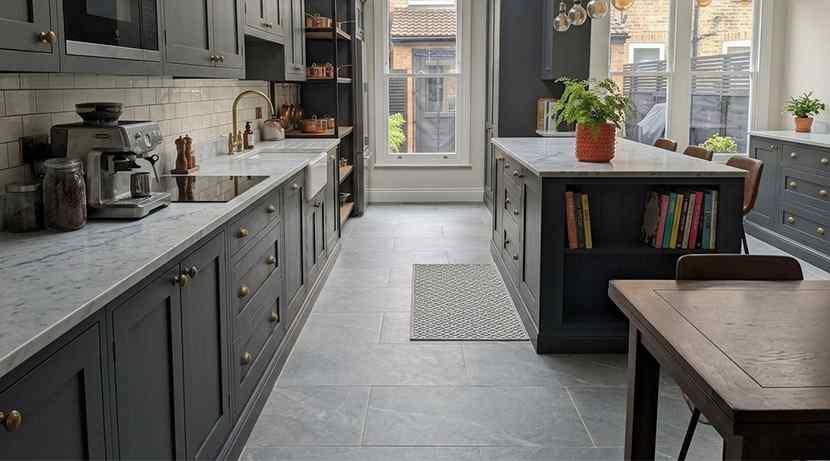
For splashback tiles, slip resistance is irrelevant; choose tiles that look good and are easy to clean. Gloss and metro tiles are easy to wipe down and reflect light. Larger tiles with minimal grout lines are easier to clean when used behind the hob.
Bathroom Floors and Walls
Best Specs: R10
Minimum for Floors, R11 for Wet Rooms and Shower Areas, Matte or Structured
Finishes
Porcelain bathroom floor tiles need to be R10 rated or higher. For wet rooms and walk-in shower areas, R11 is the optimum choice. Small and medium-format tiles are easier to slope towards the drain and provide more grout lines for grip. For bare feet in showers, ask your supplier to specify tiles that are barefoot A/B/C classified and R-rated because they measure different things.
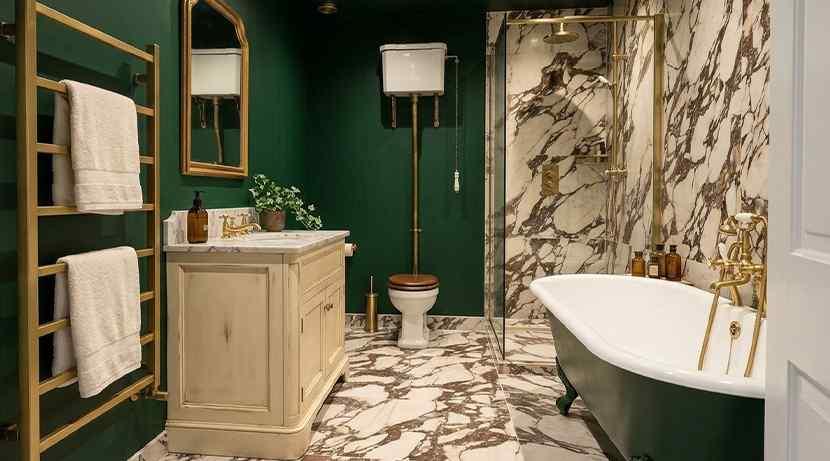
For porcelain bathroom wall tiles, there are no slip requirements; these gloss, satin and large-format tiles all work, but specify according to your bathroom design. Large tiles mean fewer grout joints to clean and a less mould-prone surface. Whatever you choose, wet areas need proper waterproofing behind the tile because porcelain itself is waterproof, but the joints and substrate are not.
Hallways and High-Traffic Areas
Best Specs: PEI 4–5, R9–R10, Full-body or Durable Glazed Porcelain.
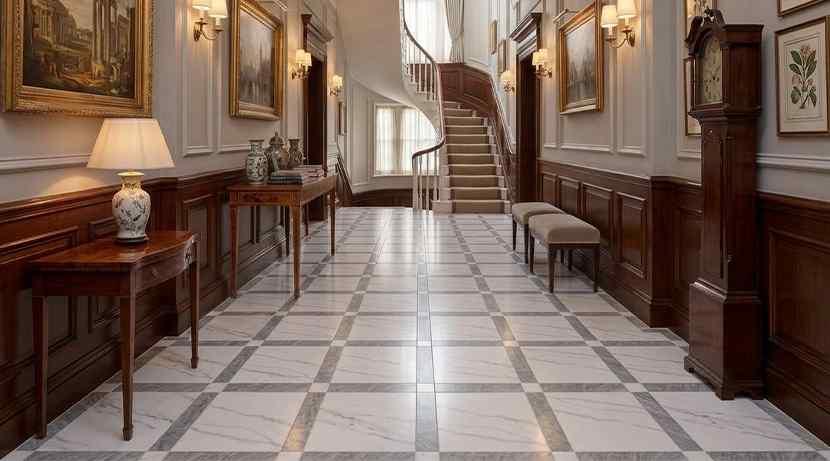
Hallways take the most abuse in the form of grit from shoes, wet coats, pet claws, and daily foot traffic. Full-body porcelain with PEI 4 or 5 is the best choice for the main entry point. Choose a matte or satin finish over polished, as polished tiles show scuffs and grit marks quickly. Plan formats suit the length of the hallway but need a very flat subfloor to avoid lippage.
Living Rooms and Bedrooms
Best Specs: PEI 3–4, R9, any finish.
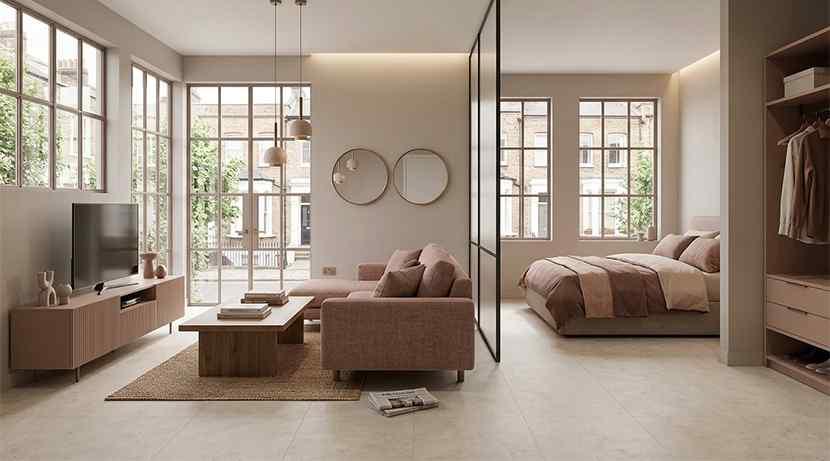
Living rooms and bedrooms are the most forgiving
spaces; prioritise appearance. Polished, Lappato and large-format tiles with an
R9 rating all suit these rooms, and are fine for dry interiors.
Wood-effect, stone-effect and marble-effect porcelain work well in open-plan spaces where you want one continuous floor. Porcelain feels cold underfoot, but it conducts heat efficiently, so it pairs well with underfloor heating (use an S1 flexible adhesive).
Utility Rooms and Boot Rooms
Best Specs: PEI 4–5, R10–R11, Structured or Matte Finish.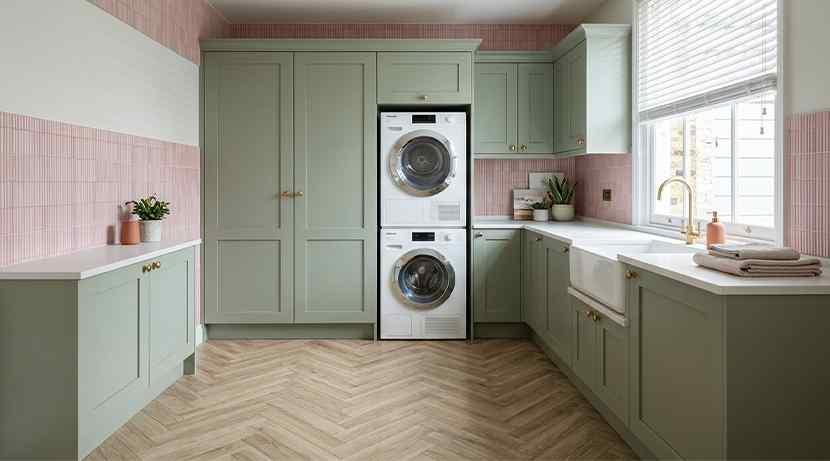
These rooms get wet boots, muddy paws and spilt laundry water, so slip resistance matters more than in the living room. Choose an R10 or R11 tile with a textured finish. Full-body porcelain is a sensible choice if the room takes heavy use. Darker and mid-tone colours hide mud better than pale ones, and mid-grey concrete-effect or slate-effect tiles are popular for this reason.
Outdoor Patios and Garden Rooms
Best Specs: 20mm Outdoor Porcelain, Frost-proof, R11+.
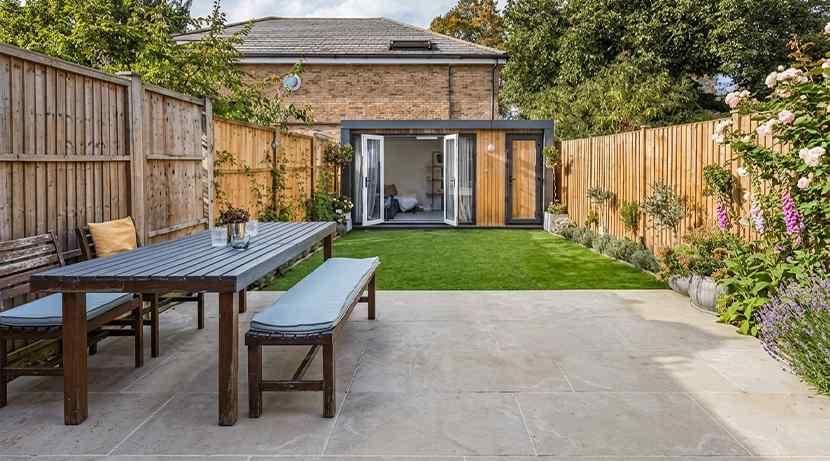
Outdoor porcelain is a different product from indoor tiles. Standard 8–10mm indoor tiles are not designed for frost, foot traffic on soil-based sub-bases or the weight loads outside, and can crack.
Use 20mm porcelain paving rated frost-proof with an R11 or higher slip rating, laid on a proper sub-base. If you want a seamless indoor-outdoor look, buy matching indoor and outdoor tiles from the same range, so colour and pattern match while each is specified for its job.
Key Technical Specs to Check Before Buying
● Slip Rating (R‑rating):
○ R9 = low resistance (dry areas only)
○ R10 = moderate resistance (bathrooms, kitchens)
○ R11+ = high resistance (wet rooms, outdoor patios)
● PEI Rating (Wear Resistance):
○ PEI 3 = light traffic (bathrooms, bedrooms)
○ PEI 4 = medium traffic (kitchens, living rooms)
○ PEI 5 = heavy traffic (hallways, commercial)
● Frost Resistance: Outdoor porcelain must be frost‑proof and ≥20 mm thick for patios/driveways.
Rectified vs Cushioned Edge: Rectified tiles hae sharp, machine-cut edges for tight, minimal grout lines. Cushioned-edge tiles have slightly rounded edges for easier installation and a softer, more traditional look.
Porcelain Tile Pricing in the UK
The porcelain tile cost is estimated per square metre, and it can vary widely by the finish you choose, the tile format and the tile brand you select. You need to set the benchmark for your indoor floor tiles and wall tiles according to not only the aesthetics but also how the tile would function in your home in the long run.
For instance, standard porcelain floor and wall tiles suitable for bathrooms typically cost from £20 to £35 per square metre, while large format tiles range from £40 to £180 depending on the size and range: budget to premium.
|
Tier |
Price
per m² (supply only) |
What
you're paying for |
|
Budget |
£15–£25 |
Standard sizes, basic matte or gloss finishes,
own-brand ranges |
|
Mid-range |
£25–£45 |
Stone-effect, wood-effect, wider format
options |
|
Premium |
£45–£100+ |
Large-format (900×600 and above), designer
finishes, rectified edges |
Want an exact figure for your room? Send Royale Stones your measurements on WhatsApp and get a quote covering tiles, adhesive, grout and wastage.
Installation Costs
This cost excludes the material costs
The professional porcelain tile installation labour cost ranges from £30 to £50 per square metre. If you want to get a package that includes material, adhesive, grout, and labour, expect around £66 to £95 per square metre for a mid-range specification. In cities such as London and the South East, the costs sit 20-30% above the normal range.
For a 10m² bathroom, estimate a mid-range professional specification roughly around £700–£950 all-in, materials and labour.
Pro tip: When a professional tiler quotes for an indoor floor or wall tile project, ask what is included and excluded before you compare it against another quote.
Wastage Allowance: Always order 10 to 15% more than the area you have measured to account for cuts, breakages, and future repairs. Do not order the bare minimum and assume you’ll find the exact match later, because most of the time, you won’t.
Can You Fit Porcelain Tiles Yourself?
This is the number one query DIY-curious readers have: can I install porcelain tiles myself? Yes, only if you are a professional tile installer doing your floor or wall tiling in your own home. Apart from that, NO.
Porcelain tiles are not the easiest tile to self-install; a guide that says otherwise sets the reader up to waste money. Small format tiles up to 300x300mm are genuinely manageable for confident DIYers.
Large-format tiles of 600x600mm and above, polished or Lappato finishes, and rectified edge tiles are different. They are heavier, less forgiving of an uneven subfloor, and prone to lippage where adjacent tile edges sit at slightly different heights if laid without proper levelling equipment.
|
Format/finish |
DIY difficulty |
Why |
|
Small-format, matte |
Moderate; doable for a careful DIYer |
Forgiving of minor unevenness, easier to cut and handle |
|
Standard 300×300–450×450, glazed |
Moderate |
Straightforward with the right tools and patience |
|
Large-format 600×600+ |
Difficult |
Heavy, unforgiving of substrate imperfections, needs a levelling system |
|
Polished/lappato large-format |
Not recommended for beginners |
Shows lippage and scratches immediately; unforgiving finish |
Tools Required for Installing Porcelain Tiles
Wet saw with a diamond blade (a standard snap cutter or angle grinder won't cut porcelain cleanly; it's too dense)
Tile levelling clip/spacer system (essential for large-format, not optional)
Notched trowel (size depends on tile size)
Rubber mallet and spirit or laser level
Tile nippers for awkward cuts
Grout float, sponge, and mixing bucket
Suction cups, for placing, lifting, and positioning large-format tiles safely
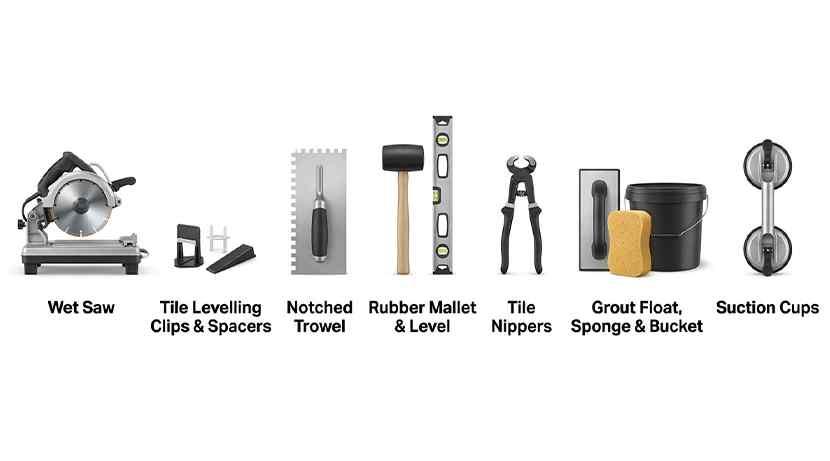
If you do not have professional equipment such as a wet saw, renting it or buying a levelling kit adds real cost to the “DIY saves money” calculation. Before you choose either option, factor in which one will be cheaper: DIYing or hiring a tiler.
Here is when you must hire a professional tiler:
Bathroom (Wet Rooms and Shower Floors)
Waterproofing and tanking system installation is complex and needs to be built according to the Building Regulations (Part G). Getting it wrong means leaks in the floors, which is not just a cosmetic issue.
Large Format Tile Installation
The margin for error on lippage and flatness is small. Hiring a professional tiler is crucial because a botched large-format tile installation is expensive to rip out and redo.
Underfloor Heating
A professional has a precise idea of the correct flexible adhesive (S1-classified) and the proper heat-up and cool-down cycles before grouting. Not having proper knowledge will eventually result in cracked tiles.
Check out our guide
on how to grout floor tiles for an idea: How to Grout Floor Tiles Like a Pro.
Complex Layouts
Opting for complex layouts such as herringbone limestone tiling patterns, large diagonal runs, or anything with a lot of cuts around the fixtures means you need to hire a tiler that can get the job done, making the tile last for decades.
How to Maintain Porcelain Tiles
Before you choose porcelain tiles for your home, you need to know what you are getting yourself into. Here are some of the cleaning dos and don’ts when it comes to porcelain tiles:
Do’s:
- Use pH-neutral cleaner and warm water for routine cleaning.
- Dry polished or gloss finishes after mopping to avoid water spots and streaks.
- Wipe spills promptly on polished floor tiles; they are more prone to show temporary marks than matte tiles.
Don’ts:
- Do not use vinegar, bleach or other acidic/harsh chemical cleaners. They can dull the glaze and degrade the grout over time.
- Do not use abrasive scouring pads on polished or Lappat finishes. They will scratch the surface.
Grout Maintenance
There are different grouts used for porcelain tiles in UK homes; thus, grout maintenance also differs:
- Cement-based Grout: Porous and needs sealing. Reseal after every 12-24 months in shower areas and wet rooms to prevent staining and mould growth.
- Epoxy Grout: Common grout choice in bathrooms and kitchens. Resists moisture and stains better than other options without any sealing requirements. Higher upfront cost.
- Grout Pens: A temporary fix for minor discolouration. Mostly popular in rented flats and homes.
Longevity and Ageing
When porcelain tiles are installed professionally and the correct way, they can realistically last a lifetime in the room. Not only that, they will have minimal wear due to being highly dense and non-porous. What ages is the grout, not the tile.
There is only one distinction that is worth knowing: A chip on the glazed porcelain would reveal a different coloured body underneath the glaze, which is visibly obvious.
On a full-body porcelain, the colour and pattern run through the whole body; thus, the chips are far less noticeable. It is mostly crucial in high-traffic areas such as the kitchens and hallways where dropped objects are most likely.
Common Mistakes When Buying Porcelain Tiles
If you want to enjoy durable floor tiles or wall tiles indoors, these are the mistakes you would want to avoid while you buy porcelain tiles:
- Ignoring Slip Resistance in Wet Areas: Polished porcelain looks great but is a dangerous choice in wet bathrooms or for kitchen floors. Check R-ratings (R10+ for bathroom floors and R11+ for wet areas), not just the PEI durability rating.
- Underordering With No Wastage Buffer: Not ordering an extra 10-15% material and then discovering that the same dye is not available after 6 months or after ordering.
- Choosing Tile Based on PEI Rating Without Checking If It Matches the Room: PEI 3 is fine for bedrooms, not for high-traffic hallways or kitchens.
- DIY-installing Large-Format Tiles Without Proper Equipment: Not having a wet machine or levelling systems can result in visible lippage.
- Not Confirming Underfloor Heating Compatibility: Before purchasing, it is important to know that not all adhesives and tile thicknesses are suitable for underfloor heating.
- Skipping Samples: Screen colours and showroom lights can be deceiving and rarely show how a tile looks in actual rooms.
- Overlooking Edge Type: Rectified edges give tight and minimal grout lines, best for modern homes. Cushioned edges are more forgiving to lay but show wider grout lines
Porcelain vs Alternatives
|
|
Porcelain |
Ceramic |
Natural Stone |
LVT (Luxury Vinyl Tile) |
|
Water
absorption |
<0.5%
— highly water-resistant |
Higher,
more porous |
Varies;
most need sealing |
Waterproof |
|
Durability |
Very
high, dense and hard-wearing |
Good,
but softer than porcelain |
High,
but can etch/stain without sealing |
Good,
but can scratch/dent |
|
Maintenance |
Low |
Low–moderate |
Higher
— needs periodic sealing |
Low |
|
Typical
cost |
£15–£80+/m² |
£15–£40/m² |
£40–£150+/m² |
£15–£45/m² |
|
DIY
difficulty |
Moderate–difficult |
Easier |
Difficult
(heavy, needs sealing) |
Easy |
|
Underfloor
heating |
Excellent
conductor |
Good |
Good,
but varies by stone type |
Limited
— check manufacturer spec |
|
Best
for |
Bathrooms,
kitchens, high-traffic areas |
Budget-conscious
walls/floors |
Character,
natural variation |
Budget,
quick installs, softer underfoot |
Conclusion
Porcelain tiles are one of the most versatile tiles for floors and walls. They provide you with the flexibility to choose between effects and finishes according to your style without compromising on functionality and durability.
However, it is equally important to choose the right size, format, and suitability according to the room. Check the functional aspects of the tile, your budget and the maintenance you can afford. So before you commit to a pack of porcelain tiles, see what your home actually requires and choose the one you can happily live with for the next 25 years.
Frequently Asked Questions
Porcelain vs ceramic: which is better?
Porcelain is more durable, denser, and less porous, making it a better choice for high-traffic areas such as bathrooms and kitchens. Ceramic is best for budget projects, as it is easier to cut and install, making it a reasonably better choice for lower-traffic areas like bedroom walls, kitchen splashbacks, and feature walls where extra durability is not necessary.
What are the key benefits of using porcelain tiles for home flooring?
They are low maintenance, durable and have near-zero or 0.5% water absorption, which makes them resistant to staining and suitable for wet areas. It is also highly suitable for underfloor heating and are available in a wide range of finishes, including wood-effect, stone-effect, and marble-effect. When properly installed, it can last 25 years or more without significant wear.
Is porcelain tile good for bathroom floors in the UK?
Yes, but with the right finish. Look for slip resistance above R10 for bathroom floors and avoid high-gloss polished finishes in wet zones specifically. They are the most durable bathroom floor tiles, but not automatically the safest underfoot when wet.
Do porcelain tiles crack?
Yes, they can chip or crack from dropping heavy objects, an unstable subfloor, incorrect installation and the wrong adhesive over underfloor heating. However, it is still one of the best materials among tile materials. It won't wear down from foot traffic the way softer tiles do.
- Bathroom Tiles
- Porcelain Paving
- Bathroom Vanity Units
- Floor Tiles
- Kitchen Tiles
- Garden Paving
- Porcelain
- Wall Tiles
- Natural Stone Paving
- Onyx Tiles
- Paving Slabs
- Sandstone Paving
- Marble Tiles
- Terrazzo Tiles
- Anti Slip Tiles
- Wood Effect Paving
- Paving
- Exterior Floor Tiles
- Outdoor Tiles
- Outdoor Porcelain Tiles
- Brick Effect Tiles
- Bathroom Basins
- Stone Effect Wall Tiles
- Indoor Tiles
- Vinyl Flooring
- acoustic wall panels
- Porcelain Tiles
- Dijon Limestone
- Vanity Units
- Knowledge Base
- Inside Out Tiles
- Porcelain Paving Slabs
- Slate Effect Tiles
- Concrete Effect Tiles
- External Wall Tiles
- Wood-Effect Tiles
- Victorian Floor Tiles
- Luxury Tiles
- 3D Split face Wall Tiles
- Outdoor Porcelain Paving
Recent Post
-
 October 28th, 2026
-
Large-Format vs Small Paving Slabs: Which is Best for Your UK Garden?
October 9th, 2026 -
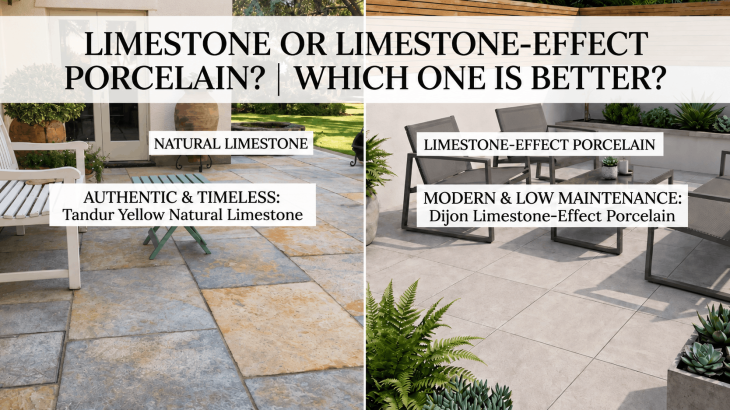
Limestone OR Limestone-Effect Porcelain – Which One Is Better?
October 9th, 2026
