How to Cut Porcelain Tiles Without Chipping
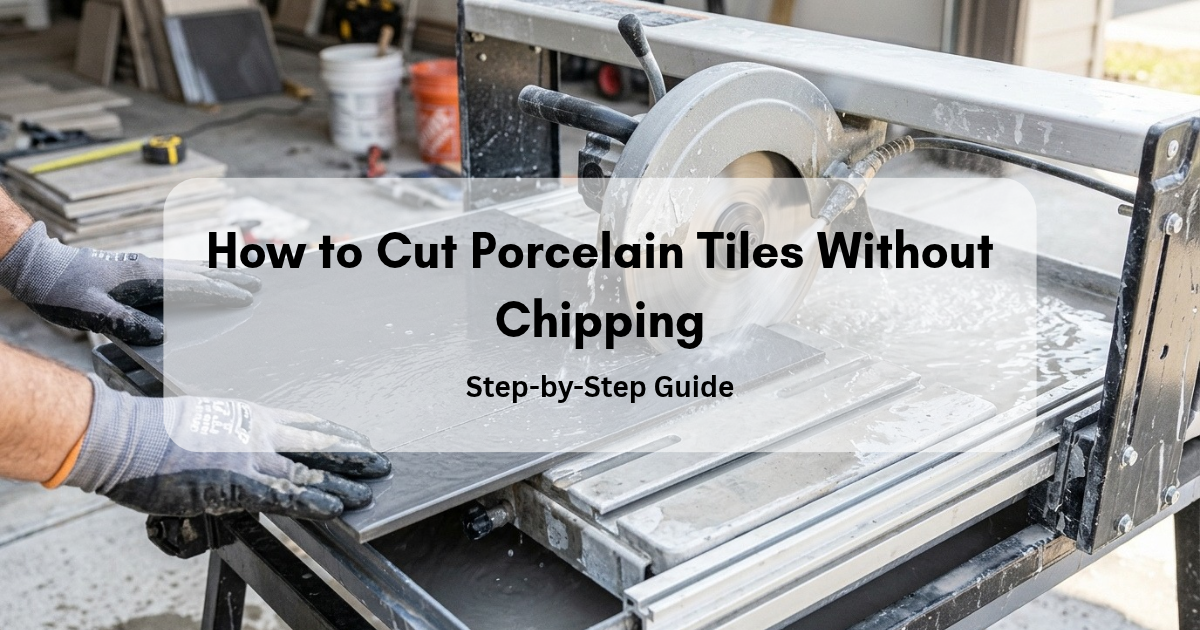
The best way to cut porcelain tiles without chipping is with a wet tile saw, a continuous rim diamond blade, a well-supported tile and a slow and steady feed. Porcelain tiles are dense and hard; one wrong tool or too much speed and the edges would be ragged and chipped.
However, no method guarantees a perfect edge every time on pressed edge tiles. The only goal is to minimise chipping, and this article will show you how.
Why Porcelain Tiles Chip When Cut
Porcelain's hard, brittle nature causes chipping; cutting stresses the edge where the blade exits. Knowing the causes makes them easy to avoid:
Hardness and Density
Porcelain is fired at 1200C to 1400C, making it almost non-porous and absorbing little water. It makes it tough in use but unforgiving under a poor blade. Polished porcelain tiles show chips most, because the glossy face makes every flaw visible.
Glazed vs Full-body Porcelain
On glazed porcelain, the chip exposes the body beneath, which is often a different colour from the surface. Full-body porcelain carries the colour throughout the tile, so chips are far less notable.
Common Causes of Chipping in Porcelain Tiles
- Using a worn, segmented blade or a blade that is not meant for porcelain
- Hastening the process of pushing tiles through the cutter
- Cutting the tile from the unsupported part where it can flex
- Cutting the glazed surface with your saw, which can chip its face
Best Tools for Cutting Porcelain Tiles
Using the wet saw is the best cutting tool to be used for porcelain due to its cleanest, straightest cut and lowest chip risk. The right cutting tool choice depends on the job you want to get done.
|
Tool |
Best
for |
Chip
risk |
|
Wet tile saw |
Straight cuts, most tile sizes |
Low |
|
Angle grinder with diamond blade |
L-cuts, curves, quick trims |
Medium to high |
|
Score-and-snap cutter |
Thin, small tiles only |
High on thick or hard tiles |
|
Diamond hole saw |
Tap and pipe holes |
Low if used wet and slowly |
For porcelain tiles, the best way to cut porcelain tile is to use the continuous-rim diamond blade. Its unbroken edge cuts smoothly and reduces chipping. Replace the blade as soon as you notice the cuts slowing down or the edges starting to chip.
Segmented diamond blade cuts faster but leaves rougher edges. It suits rougher work rather than visible cuts on your bathroom tiles or kitchen surfaces.
How to Cut Porcelain Tiles Step by Step
For clean cutting of your porcelain tiles, follow four crucial steps that can give your wall and floor tiles a professional look:
- Measure - Follow the “measure twice, cut once” strategy here, allowing for the grout joint. Mark the cut line clearly with a fine marker. Before you start cutting your project tiles with your new blade, try test cutting a spare tile.
- Tile Placement on the Saw Table - Place your tile on a flat saw table with a fully supported surface. If you are cutting a glazed tile, face it up and cut unless your saw manufacturer advises you otherwise. An unsupported tile flexes, raising the chances of tiles chipping.
- Feed Slowly with Steady Water Flow - Work slowly and steadily with the blade. Push the tiles through the saw at a slow and even pace in a single continuous pass while letting the water flow over the blade to cool it and carry away dust. The last thing you would want to do is to stop halfway or force the tile into the saw.
- Smooth the Edges - Run a rubbing stone or a diamond hand pad along the cut edges to remove sharp burrs and tiny chips. Do this while the tile is wet and finish before you start laying porcelain tiles on floors or walls.
How to Make L-Cuts, Curves and Holes in Porcelain Tiles
Awkward layouts, corners, pipes and fittings need more than a straight cut on the porcelain floor tiles, as well as the wall tiles around the taps. These are the cuts where most tiles often crack.

L-Shaped Cuts
L-shaped cuts are often required for door frames and corners. Measure, make two straight cuts with a wet saw and stop each just short of the inside corner. Finish the corner carefully with an angle grinder, rather than overcutting with the saw or forcing the cut-out piece free.
Curves for Pipes
Measure and mark your tile around the pipe area or the WC unit in the bathroom, for instance. Make a series of straight relief cuts towards the curve, then remove the waste in small pieces and smooth the edges with a rubbing stone. An angle grinder with a diamond blade can sharpen the tighter curves, but only if you go slowly.
Taps and Waste Holes
Use a diamond hole saw, run wet and at low speed to cut for taps and waste holes. Start at an angle to bite into the glaze, then bring the drill upright. Keep the holes away from tile edges to avoid cracking. This matters when you are fitting kitchen tiles or bathroom tiles around the taps and pipework.
Cutting Large-Format and Outdoor Porcelain
Large format and thicker porcelain tiles need a bigger saw, more support, and sometimes a professional tile cutter.

Large-format Tiles
600mm and larger tiles can exceed a standard wet saw’s capacity, flex under their own weight, and snap if unsupported. Use a saw with a larger table or a rail saw and support the whole tile on both sides of the cut.
For big projects, ask your supplier whether they offer cutting services. Plan your layout carefully so that you need fewer cuts and check for tile lippage to make floor tile maintenance easier and minimise chips.
The best practice is to use levelling clips and an experienced professional tiler with large format tiles.
20mm Outdoor Paving
Cutting Porcelain Slabs: 20mm porcelain paving cuts best with a wet saw or a bridge saw that has the depth to cut through in a single pass, using a quality diamond blade. Cut the tile slowly, keep it wet, and wear full protective equipment.
Staying Safe: Silica Dust and Protective Kit
While cutting porcelain tiles, you may see a release of fine dust containing respirable crystalline silica, which is harmful to breathe over time. Take your safety seriously even if you are handling a minor tiling project.
Wet Cutting and a Proper Mask
Cut the tiles wet when possible because water keeps the dust down. For more safety, and when the dust cannot be avoided, wear an FFP3 mask rated for fine dust, outdoor work, and cutting tiles in well-ventilated spaces. Clean up with a vacuum designed for fine dust or by wet wiping, never by dry sweeping.
Eye and Ear Protection
Wear safety gear and goggles because chips and slurry can fly off the blade. Use ear defenders with a saw or grinder and wear gloves when handling freshly cut sharp edges.
Common Mistakes and What to Do If a Tile Chips
These mistakes increase the chances of chipping your porcelain tiles:
- Forcing the tile through the blade
- Using a worn or wrong-type diamond blade
- Letting the tile overhang the table unsupported
- Dry cutting without a blade designed for porcelain
- Skipping a test cut on a spare tile
Small chips on a cut edge can be hidden under skirting, trims or against a wall, or smoothed with a rubbing stone. If the chip will be visible, or the edge is badly broken, recut a fresh tile. It costs less than living with the flaw, so it is worth ordering a few spare tiles.
To sum it up,
Cutting porcelain tiles without chipping comes down to three things: a wet saw with a continuous-rim diamond blade, a fully supported tile, and a slow, steady feed. Smooth every cut edge, wear an FFP3 mask when cutting, and order a few spare tiles so a bad cut doesn’t stall the job. Some tiles chipping can still happen on pressed-edge tiles, but this method keeps it to a minimum.
Frequently Asked Questions
Can you cut porcelain tile with a tile cutter?
Sometimes, but only for cutting thin and small porcelain tiles. Manual score-and-snap cutters chip and break thick and large-format porcelain tiles. For clean and repeatable cuts, use a wet tile saw with a continuous rim diamond blade.
Can you cut porcelain with an angle grinder?
Yes, an angle grinder with diamond blade suits L-cuts, curves, and notches a wet saw cannot reach. It chips more easily than a wet saw, so cut slowly and smooth the edge with a rubbing stone. Wear an FFP3 mask and eye protection because dry cutting creates silica dust.
Do you need a special blade for porcelain?
Yes. Use a diamond blade made for porcelain, ideally a continuous rim, which cuts smoothly and reduces tiles chipping. General-purpose and segmented blades cut faster but leave rougher edges. Replace the blade when cuts slow, or edges start to chip.
Can you drill porcelain tiles?
Yes. Use a diamond hole saw or core drill, run wet and at low speed. Standard masonry bits can crack porcelain. Start at an angle, then bring the drill upright, and keep holes away from tile edges.
- Bathroom Tiles
- Bathroom Vanity Units
- Porcelain Paving
- Floor Tiles
- Kitchen Tiles
- Garden Paving
- Porcelain
- Wall Tiles
- Natural Stone Paving
- Onyx Tiles
- Paving Slabs
- Sandstone Paving
- Anti Slip Tiles
- Terrazzo Tiles
- Marble Tiles
- Outdoor Porcelain Tiles
- Brick Effect Tiles
- Wood Effect Paving
- Paving
- Exterior Floor Tiles
- Outdoor Tiles
- Porcelain Tiles
- acoustic wall panels
- Bathroom Basins
- Indoor Tiles
- Vinyl Flooring
- Stone Effect Wall Tiles
- Wood-Effect Tiles
- Dijon Limestone
- 3D Split face Wall Tiles
- Vanity Units
- Outdoor Porcelain Paving
- Knowledge Base
- Luxury Tiles
- Inside Out Tiles
- Victorian Floor Tiles
- Slate Effect Tiles
- Porcelain Paving Slabs
- Concrete Effect Tiles
- External Wall Tiles
- Tumbled & Chiselled Tiles
- Checkerboard Tiles
- Tile Installation Tips
Recent Post
-

Can You Use Indoor Porcelain Tiles Outside? What UK Homeowners Need to Know
November 16th, 2026