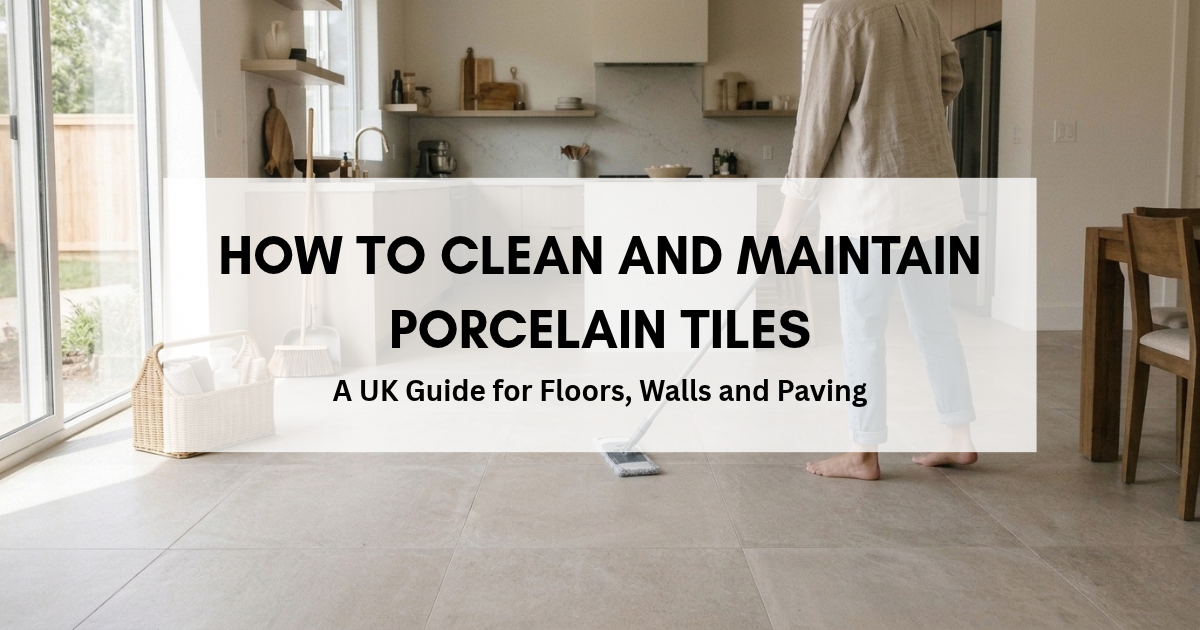
How to Clean and Maintain Porcelain Tiles: A UK Guide for Floors, Walls and Paving
The best way to clean porcelain tiles is to use pH-neutral cleaners, a microfibre mop, a clean water rinse and a dry buff. That routine handles almost every porcelain tile in UK homes, from kitchen floors to bathroom walls to garden paving. The details only change with the finish, the grout and the room, which is what this guide covers.
Quick Answer: How to Clean Porcelain Tiles?
- To Remove Grit: Sweep with a damp cloth or vacuum (hard floor setting)
- Household Grime: Mop the floor with warm water and a pH-neutral porcelain tile cleaner (diluted as directed)
- Residue Build-up: Rinse the floor with clean water so no residue dulls the surface
- Streaks and Watermarks: Dry the streaks with a microfibre cloth or mop
The only caveat is from acid-based cleaners, bleach on coloured grout, wax or oil polishes, and abrasive pads.
Porcelain has a reputation for being “maintenance-free”. However, it is not quite. It is far easier to look after than natural stone, carpet, or most timber floors, but the wrong product, a dirty mop or a missed rinse will leave it cloudy, streaky or stain the grout.
Follow the routine explained below on how to clean certain finishes, how to shift stubborn stains like rust and limescale, and how to look after grout, outdoor paving and underfloor-heating floors.
Why Porcelain Is Easy to Maintain (and Where It Isn't)
Porcelain is easy to keep clean because it is dense and barely absorbs water. Porcelain tiles are generally defined as having water absorption of 0.5% or less, so spills tend to sit on the surface rather than soak in. Most porcelain is fired at high temperatures, making it hard-wearing and resistant to staining, frost, and fading.
Three things still catch people out:
1. Glazed vs Full-body Porcelain
a. Glazed porcelain has a printed, protective surface layer, which gives you convincing stone-effect tiles and the wood look. It resists stains well, but deep scratches or chips expose the body beneath.
b. Full-body porcelain carries its colour through, so wear shows less, though an unglazed, honed surface can be a little more stain-prone than a glazed face.
If you’re not sure which type suits your project, our porcelain tile buying guide explains the differences in more detail.
2. Finish Matters More Than the Material
A polished, matt, and heavily textured anti-slip tile is all porcelain, but they clean very differently. Textured surfaces trap dirt in the relief. Polished surfaces show every streak
3. Grout is the Weak Link
The tile rarely stains, but the grout lines do. Most “my tiles look dirty” complaints are grout problems, or a film of cleaner residue sitting on the tile surface.
How to Clean Porcelain Floor Tiles: Daily, Weekly and Deep Cleaning

A simple, regular cleaning routine keeps porcelain floor tiles like new and stops grit from wearing out the surface. Here is what works for most floor tiles in a typical UK home:
Daily
- Sweep the floor or vacuum on a hard-floor setting. Mostly, grit is the main cause of dull patches.
- Wipe the spills straight away with a damp microfibre cloth
- Use door mats at every external door to catch the worst of it
Weekly
- Remove the loose dirt first, so you do not push grit around with the mop
- Use lukewarm water mixed with pH-neutral cleaner to mop the floor with a well-wrung microfibre mop. (Work in sections)
- Rinse the mop in a second bucket of clean water, and go over the floor again to lift the residue.
- Dry with a clean microfibre mop or cloth, particularly on polished or dark tiles.
Change the water as soon as it starts turning grey. Dirty mop water is how you end up spreading a film across the floor.
Deep Clean
How often you need to deep clean the porcelain tiles depends on the footfall they receive and the finish they have.
|
Area |
Deep
Clean Frequency |
|
Kitchens and Hallways (high traffic) |
Every 1 to 3 months |
|
Living Rooms and Bedrooms |
Every 3 to 6 months |
|
Bathrooms and Wet Rooms |
Monthly, plus weekly limescale and soap-scum
wipe-downs |
|
Textured or Anti-slip Surfaces |
More often, as dirt collects in the relief |
For a deep clean, use a stronger dilution of a porcelain-safe cleaner as directed on the label, leave it to dwell for the recommended time, agitate grout lines with a soft brush, then rinse thoroughly twice.
How to Clean Porcelain Tiles by Finish
The porcelain tile finish determines which tools and techniques to use to clean porcelain tiles.
Polished and Lappato Porcelain
Polished porcelain has a mirror-like face, which means streaks, scratches, footprints, water drops, and cleaner residues are evident on the surface. Use a minimal amount of cleaner, rinse well and always dry-buff with a microfibre cloth.
These tiles should especially be taken care of from abrasive powders and stiff brushes because they can dull or micro-scratch the polish. Lappato is more forgiving but follows the same rules.
Matt and Satin Porcelain
Matt finishes hide marks better than the polished ones, thus are easiest to live with. Mop and rinse weekly to keep them new. Avoid wax- or oil-based polishes; they leave a film that dulls the tile and attracts dirt.
Textured, Structured and Anti-Slip Porcelain
Textured tiles trap dirt on the surface really well, so only a flat mop won't clean them. Include a soft to medium nylon brush or a deck-style scrubbing brush in your cleaning routine, then rinse thoroughly.
Anti-slip porcelain is rated R value (R9 to R13): the higher the rating, the more texture and more cleaning effort needed. Never use wax or sealing polishes on these surfaces, because they can fill the texture and reduce grip. If slip resistance matters in your bathroom, entrance or outdoor area, keep the texture clean and clear.
Stone-, Marble-, Limestone- and Wood-effect Porcelain
Effect porcelain looks like a natural material but cleans like porcelain, which is its main advantage. You don't need the specialist stone care that real marble or limestone demands.
- Marble-effect Tiles: Usually polished or semi-polished, so treat them as polished porcelain. Dry-buff to avoid streaks across veining.
- Limestone-effect Tiles: Typically matt or lightly textured, so a standard mop-and-rinse routine works.
- Stone-effect Tiles: Often have a riven or structured surface, so use a soft brush to lift dirt from the texture.
- Wood-effect Tiles: Clean along the plank direction, and use a well-wrung mop so water doesn't sit in the long grout lines.
What Is the Best Cleaner for Porcelain Tiles?
The best cleaner for porcelain tiles is a pH-neutral cleaner because it cleans without attacking the glaze, the grout or any sealer. Look for cleaning products that are suitable for porcelain, ceramic or “all hard floors”, and follow the dilution on the bottle.
|
Cleaner
type |
Best
for |
Watch
out for |
|
pH-neutral |
Weekly cleaning, all finishes |
Too much product leaves a film |
|
Mild alkaline (degreaser) |
Kitchen grease, oily footprints |
Rinse well, especially on polished tiles |
|
Acidic (descalers) |
Limescale, rust, grout haze |
Can damage cementitious grout and some
finishes; always test first |
|
Strong alkaline or caustic |
Rarely needed |
Can dull surfaces and discolour grout |
For most UK households, a pH-neutral cleaner for weekly use plus one specialist product for limescale or grease covers every situation.
Homemade Cleaners: What is Safe?

Vinegar: Most
homeowners ask, “Can I use vinegar on porcelain tiles?” and the answer is yes,
but only on glazed porcelain. However, vinegar is acidic, and regular use can
erode the cement-based grout and dull some porcelain finishes and often leaves
a smell and a film if not rinsed properly. It is better kept for the occasional
limescale mark than used as an everyday floor cleaner.
Washing-up Liquid:
It works for light grease in tiny amounts, but too much leaves a sticky residue
that makes floors look dull and attracts dirt. Rinse the liquid thoroughly.
Bicarbonate of Soda: Mixed into a paste, it is fine for spot-treating stains on glazed
porcelain. Use a soft cloth, not a scouring pad, and avoid it on polished
tiles, where it can leave micro-scratches.
How to Remove Stains from Porcelain Tiles
Most stains lift from glazed porcelain tile
easily with the right product and a little dwell time. Act quickly, start with
the gentlest method and test in an inconspicuous spot first.
Stain
What
to use
Method
Avoid
Grease and oil
Mild alkaline degreaser or diluted washing-up
liquid
Apply, leave 5 to 10 minutes, wipe, rinse
twice
Using too much detergent
Red wine, coffee, tea
pH-neutral cleaner, then a porcelain stain
remover if needed
Blot, don't rub; clean, rinse
Leaving it to dry
Rust
Rust remover labelled for tiles
Apply to the mark only, leave briefly, rinse
thoroughly
Bleach (it can fix rust stains)
Limescale
Descaler suitable for porcelain
Dilute, apply, rinse immediately
Leaving acid on grout
Soap scum
Alkaline bathroom cleaner
Dwell, soft brush, rinse
Abrasive pads
Ink, marker, paint
Isopropyl alcohol or a suitable solvent
Dab on a cloth, don't pour
Scrubbing, which spreads the stain
Stain
What
to use
Method
Avoid
Grease and oil
Mild alkaline degreaser or diluted washing-up liquid
Apply, leave 5 to 10 minutes, wipe, rinse twice
Using too much detergent
Red wine, coffee, tea
pH-neutral cleaner, then a porcelain stain remover if needed
Blot, don't rub; clean, rinse
Leaving it to dry
Rust
Rust remover labelled for tiles
Apply to the mark only, leave briefly, rinse thoroughly
Bleach (it can fix rust stains)
Limescale
Descaler suitable for porcelain
Dilute, apply, rinse immediately
Leaving acid on grout
Soap scum
Alkaline bathroom cleaner
Dwell, soft brush, rinse
Abrasive pads
Ink, marker, paint
Isopropyl alcohol or a suitable solvent
Dab on a cloth, don't pour
Scrubbing, which spreads the stain
How to Remove Rust From Porcelain Tiles
Rust is caused by metal furniture, plant pots,
tools or leaking fixtures. Remove the source first, or the stain will return.
Wipe the rusted area clean, apply a rust remover designed for ceramic or
porcelain tiles and leave it on for as long as the label recommends. Rinse
thoroughly with clean water.
Warning: Never mix
rust remover with bleach or other cleaners, and avoid using it on grout, where
it can cause discolouration. If a rust mark sits in a scratched area of glaze,
it may not be fully lifted.
Limescale and Hard-water Marks
London and the South East counties have hard
water, so it is normal for limescale to build up quickly around bathroom tiles,
shower screens and taps. In this case, wipe tiles dry after showers, and use a
squeegee on wall tiles. For existing build-up, use a descaler suitable for
porcelain, rinse straight away and keep it off the grout.
When a Stain Won't Shift
If a stain survives two treatments, further
treatment must be stopped immediately. Repeating stronger products risks dulling
the surface and ruining the tile. Check the tile finish (unglazed and honed
surfaces are more porous), try a poultice-style stain remover, and contact your
supplier or a professional cleaner for advice.
How to Remove Grout Haze and Cement Residue from New Porcelain Tiles

If you notice a
slightly cloudy film on your brand-new porcelain tiles, there is a high chance
that it is grout haze or adhesive residue, not a defect in the tile. It is the
single most common reason most people think new porcelain looks dull.
- Wait for the grout to cure before cleaning, as cleaning too early can destroy the joint. Cleaning too late also makes the haze harder to shift.
- Start with warm water and a non-scratch nylon pad or sponge to lift the haze.
- For stubborn haze, use a dedicated post-construction cleaner. Test on a spare tile first, dilute as instructed, and rinse thoroughly. Do not leave acid sitting on the grout lines.
- Do not scrape the haze with metal tools, as it will most likely scratch the glazed and polished surfaces permanently.
- Finish your tiling project with a pH-neutral cleaner and rinse to neutralise any remaining residue
The key is to deal with the haze early, before it hardens on the surface. If you are fitting the tiles yourself, wipe the excess grout from the surface with a damp sponge during the grouting stage. It will save you a lot of cleaning time.
How to Clean Grout Lines on Porcelain Tiles
Cleaning grout lines requires a soft brush, a pH-neutral or mildly alkaline cleaner, and thorough rinsing. Grout is porous, so it holds onto dirt, grease and mould long after the tile has been wiped.

- Apply cleaner directly to the grout and leave it for 5 to 10 minutes.
- Scrub gently with a grout brush or an old toothbrush. Avoid wire brushes, which wear down the joint.
- Wipe away the loosened dirt, then rinse with clean water.
- For mould in bathrooms, use a mould remover suitable for tile grout and follow the label. Ventilation matters as much as the product.
Bleach and Coloured Grout: Oxygen-based cleaners are generally safer than chlorine bleach on coloured grout, which can fade or blotch.
Sealing Grout
Sealing depends on the type of grout you have used for your tiles.
Cementitious Grout: For sealing cementitious grout, use a penetrating grout sealer. It makes cleaning the grout much easier, especially in kitchens and showers.
Epoxy Grout: Applying epoxy grout means resisting stains and moisture between tiles without sealing. It is often chosen for wet areas and commercial kitchens; however, it costs more and is trickier to install.
Reapply sealer as the manufacturer recommends.
Choosing a Grout Colour That Stays Cleaner
White grouts may look crisp at first, but show every mark on the floor. A mid-grey or a colour matched to the tile hides dirt far better, which is why many installers recommend it for kitchen and hallway floors.
When to Regrout
Regrout your porcelain tiles when the grout is cracked, crumbling, loose, or permanently stained after cleaning. Moisture getting behind failed grout in a wet area can cause bigger problems, so don't leave it without regrouting.
What Not to Use on Porcelain Tiles
Avoid anything that causes the risk of stains, scratches, or leaving a film. These are the products and tools that you need to avoid at all costs:
- Hydrofluoric Acid Products: These can etch the glaze and ruin polished surfaces. Never use them on porcelain.
- Strong Acids, Including Undiluted Descalers: They attack grout and can dull the surface.
- Abrasive Powders, Wire Wool and Scouring Pads: They scratch polished and glazed finishes.
- Wax, Oil and "Shine" Polishes: They build up as a film that traps dirt and disturbs R-ratings of the tile, making floors slippery.
- Too much Soap or Detergent: Soap-based cleaners leave residue that dulls tiles and attracts grime.
- Chlorine Bleach on Coloured Grout: It can fade or stain the joints.
- Metal Scrapers on Glazed or Polished Tiles: Scratches are permanent.
If you are unsure about a product, check the tile manufacturer's care instructions and test it on a spare tile or a hidden corner first.
How to Maintain Porcelain Tiles (Room by Room)
Each room behaves differently when it comes to porcelain, so tailor the cleaning and maintenance routine to where the tiles are.
Kitchens
Kitchen tiles face stubborn stains, grease, food spills and heavy footfall. To keep the floor tiles in kitchens spotless, wipe the spills immediately, use a mild alkaline degreaser near the hob, and clean grout more often than in other rooms. A mid-toned grout and sealed or epoxy grout are much easier to maintain.
Bathrooms and Wet Rooms
In bathrooms, moisture, soap scum, and limescale are the enemies. Squeegee or wipe wall tile after showering, ensure good ventilation, and maintain a weekly bathroom cleaning routine. Choose a slip-resistant finish for floors and keep the texture clean. If you are choosing new bathroom tiles, larger formats mean fewer grout lines to clean.
Hallways and Entrances
Hallway floor tiles take some of the most dirt and debris from outside. A large entrance mat, daily sweeping anda regular wet cleaning prevent the dull, scratched look that grit causes.
Living Rooms
Living room tiles need the least work. A weekly vacuum and mop is usually enough. Use felt pads under furniture feet, and lift rather than drag chairs and tables.
Wall Tiles
Wall tiles are easier to clean. A soft cloth or sponge with a pH-neutral cleaner is all you need. Work from top to bottom so that there is no streak left on the wall. In wet areas, wipe the wall dry to prevent water marks and limescale. Avoid abrasive pads on glossy or glazed finishes.
Underfloor Heating and Steam Mops
“Can I use a steam mop on porcelain tiles?” The answer is sometimes, but check first. Glazed porcelain tolerates steam, but the heat and moisture can weaken grout, degrade sealers, and force water into poorly sealed joints. Steam mops also leave streaks on polished tiles.
Check your tiles’ and grout’s manufacturer’s guidance, use a low setting and do not hold the mop in one spot. If you have underfloor heating, switch it off and let the floor cool before wet cleaning, and avoid sudden temperature changes.
How to Clean Outdoor Porcelain Paving

Outdoor porcelain paving faces tougher conditions than indoor tiles, so it needs regular sweeping and occasional deeper cleaning, mainly to remove algae, moss, and leaf stains in the damp UK climate. It doesn't need sealing and is far less prone to green growth than natural stone, but shaded and north-facing patios will still need attention.
Routine Cleaning
Sweep your tiled patios regularly to remove leaves and debris before they stain. Every few weeks, scrub the tiles with a stiff brush, warm water and pH-neutral cleaners or outdoor tile cleaners, and then rinse with a hose.
Removing Algae, Moss and Green Growth
Use a specialist patio or algae cleaner suitable for ceramic and porcelain. Apply as directed and leave it to work, then scrub and rinse the solution. It is better to treat shaded areas early in autumn, when leaf fall and damp cause slippery growth. Remove moss from joints before it spreads.
Leaf, Tannin and BBQ Stains
Leaf tannins leave brown marks if not swept regularly. Scrub with warm water and a pH-neutral or mild alkaline cleaner. For grease from barbecue, use a degreaser and rinse thoroughly.
Can You Jet Wash Porcelain Paving?
Yes, in most cases, and with care. Porcelain is hard-wearing and copes with pressure washing better than many materials, but the joints are the weak point.
- Use a wide fan nozzle, not a pencil jet.
- Keep the lance moving and at a sensible distance from the surface, starting further back and moving closer only if needed.
- Avoid blasting the joints, which can strip jointing compound or sand and cause the paving to loosen.
- Check your paving supplier's guidance on pressure before you start.
After jet washing, re-sand or re-point joints if needed.
Winter Care
Porcelain is frost-resistant, which is why it is popular for UK patios. Clear snow with a plastic shovel rather than metal. Rock salt can be used sparingly on the surface, but rinse it off afterwards, because it can affect joints and nearby planting. Avoid wire brushes and metal tools, which scratch the surface.
20mm Porcelain Paving
20mm porcelain paving is thick and designed for outdoor use and cleans in the same way. The only difference is in the installation: when laid on adhesive, grass, gravel, or pedestal, it is very important to keep the joints clear and well maintained.
Do Porcelain Tiles Need Sealing?
Glazed and polished porcelain tiles do not need any kind of sealant because of their density and non-porous surface; sealer has nothing to penetrate. Sealing is important for natural stones, and sealing porcelain will only make the surface hazy.
Sealing porcelain paving can be considered in the following few cases:
- Grout: Sealing cementitious grout is the most useful job a sealing can do for porcelain.
- Unglazed, Honed, Highly Matt Surfaces: These surfaces are more open to be sealed than glazed ones, and some manufacturers do actually recommend it. Always follow their instructions.
- Wet or High-Stain Areas: Seal joints in showers or kitchen areas to keep cleaning and maintenance easy.
If you do seal porcelain tiles, use a penetrating sealer designed for porcelain or grout, apply it to clean, dry tiles and wipe excess before it dries.
Preventative Maintenance and Common Cleaning Mistakes
Most porcelain problems are avoidable with a few habits and by steering clear of a handful of common errors.
Preventative Habits
- Put mats inside and outside every external door.
- Fit felt pads to chairs, tables and sofa feet.
- Lift furniture rather than dragging it.
- Wipe spills straight away, especially oil, wine and coffee.
- Ventilate bathrooms and kitchens to limit moisture and mould.
- Keep dedicated mops and cloths for tile floors, and wash them regularly.
Mistakes to Avoid
- Using Too Much Cleaner: It leaves a film that dulls tiles and attracts dirt.
- Mopping With Dirty Water: You are just redistributing grime.
- Skipping the Rinse: Residue is the main cause of cloudy floors.
- Letting Water Stand on the Surface: It leaves marks and seeps into grout.
- Using a Flat Mop on Textured Tiles: It won't reach the dirt in the relief.
- Reaching Straight for Harsh Chemicals: Start with the gentlest method and escalate only if needed.
- Ignoring Grout: Dirty grout makes clean tiles look dirty.
Repairing Scratches and Chips, and When to Call a Professional
Light surface marks are often residue or metal transfer, not scratches. Try a pH-neutral cleaner and a soft cloth first. Real scratches in a glazed surface cannot be polished out, and chips and cracks need a repair rather than a cleaning product.
DIY-Friendly: Colour-matched ceramic repair filler for small chips, and regrouting or sealing grout.
Call a Professional or Your Supplier When:
- A tile is cracked, loose or hollow-sounding.
- Water is getting behind damaged grout in a wet area.
- A stain has survived repeated, correctly chosen treatments.
- You are maintaining a large commercial floor and need a cleaning regime and machines.
Commercial and High-Traffic Floors
In shops, restaurants and offices, use a scheduled cleaning regime with scrubber-driers and cleaners suited to the finish. Keep slip-resistant surfaces clean and free of residue, because build-up can reduce grip. Specify finish and grout colour with maintenance in mind, and check manufacturer guidance on approved cleaning products.
Choosing Low-Maintenance Porcelain Tiles
If you are choosing tiles and want the least upkeep, four decisions make the biggest difference.
- Finish: Matt and lightly textured finishes hide marks better than polished or heavily structured ones.
- Colour and Pattern: Mid-tones and veined or mottled patterns disguise dust and footprints. Plain black and white show everything.
- Format: Larger tiles mean fewer grout lines. Browse our floor tiles to compare sizes and finishes.
- Grout: A mid-tone or sealed grout, or epoxy in wet areas, keeps joints cleaner for longer.
Tile lippage, where one tile edge sits higher than its neighbour, catches mops, traps dirt along the grout line and makes chips more likely. Use levelling clips and an experienced tiler to prevent tile lippage, especially with large-format rectified porcelain.
If you're unsure how a finish will look and feel in your own space, order a sample first. Seeing a tile in your own light and testing how it cleans is the most reliable way to avoid a surprise. You can browse the full porcelain tiles collection at Royale Stones, and our team can advise on finishes, slip ratings and aftercare for your project.
Porcelain Tile Cleaning FAQs
Is porcelain harder to keep
clean than ceramic?
No. Porcelain is denser and less porous than ceramic, so porcelain is easier to keep clean than ceramic. It generally resists stains and moisture better. Both rely on clean grout.
Why does my porcelain look
cloudy after cleaning?
Usually due to cleaner residue, grout haze or a dirty mop. In order to get rid of the haze, rinse with clean water, use less product, and dry-buff with microfibre. On new tiles installed, see the grout haze section above.
Do porcelain tiles stain?
Glazed porcelain resists most stains. Grout and unglazed or honed surfaces are more vulnerable. Clean spills promptly.
How long do porcelain tiles
last with proper care?
With sensible care, porcelain tiles can last for decades. The tile itself rarely wears out, so the grout is usually what needs maintenance first.
Are porcelain tiles suitable
for busy kitchens?
Yes. Porcelain is hard-wearing and easy to wipe clean, which is why it is a popular choice for kitchen tiles. Choose a finish with some grip and a stain-resistant grout.
Can you use a steam mop or
vinegar on porcelain?
Both can be used cautiously, but each has risks for grout and some finishes. See the steam mop and vinegar guidance earlier in this guide.
- Bathroom Tiles
- Bathroom Vanity Units
- Porcelain Paving
- Floor Tiles
- Kitchen Tiles
- Garden Paving
- Porcelain
- Wall Tiles
- Natural Stone Paving
- Onyx Tiles
- Paving Slabs
- Sandstone Paving
- Anti Slip Tiles
- Terrazzo Tiles
- Marble Tiles
- Outdoor Porcelain Tiles
- Brick Effect Tiles
- Wood Effect Paving
- Paving
- Exterior Floor Tiles
- Outdoor Tiles
- acoustic wall panels
- Bathroom Basins
- Indoor Tiles
- Vinyl Flooring
- Porcelain Tiles
- Stone Effect Wall Tiles
- Wood-Effect Tiles
- Dijon Limestone
- 3D Split face Wall Tiles
- Vanity Units
- Outdoor Porcelain Paving
- Knowledge Base
- Luxury Tiles
- Inside Out Tiles
- Victorian Floor Tiles
- Slate Effect Tiles
- Porcelain Paving Slabs
- Concrete Effect Tiles
- External Wall Tiles
- Tumbled & Chiselled Tiles
- Checkerboard Tiles
- Tile Installation Tips
Recent Post
-
Can You Use Indoor Porcelain Tiles Outside? What UK Homeowners Need to Know
November 16th, 2026 -
Laying Porcelain Paving Over Concrete: When It Works and When It Fails
November 13th, 2026