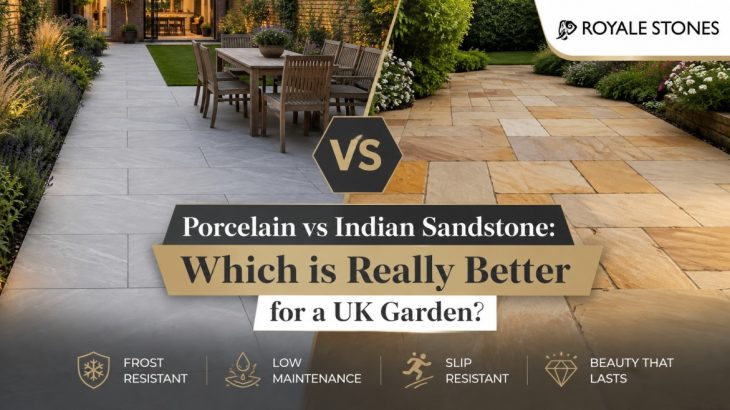
Choosing the right material for your patio or pathway is one of the biggest decisions you will make when landscaping a UK garden. Two options dominate the conversation: porcelain and Indian sandstone. Both look wonderful in the right setting, but they perform very differently once the British weather, footfall, and years of upkeep are factored in. This guide compares the two honestly, so you can choose paving slabs that genuinely suit your garden rather than simply following a trend.
Understanding the Basics: What Are You Actually Comparing?
Indian sandstone is a natural stone, quarried in Rajasthan and other regions of India, prized for its warm, riven texture and the subtle colour variation that comes from being formed in the earth over millions of years. Porcelain, on the other hand, is a manufactured product made by compressing and firing clay at extremely high temperatures, which gives it a dense, low-porosity surface. Both are widely used as garden slabs across the UK, but their origins explain most of the practical differences discussed below.
Durability and Weather Resistance in the UK Climate
The UK’s mix of heavy rain, damp winters, and occasional frost puts any outdoor surface to the test, and this is where the two materials diverge most clearly. Porcelain paving has very low water absorption, typically under 0.5%, which means it resists frost damage, staining, and algae growth far more effectively than most natural stone. Sandstone paving is more porous by nature, so it can absorb moisture, and in freeze-thaw cycles this occasionally leads to flaking or surface degradation over time, particularly if it was not sealed correctly at installation. That said, good quality sandstone that is properly laid and sealed can still last for decades, and its natural texture provides excellent slip resistance even when wet.
Maintenance: Which Material Asks Less of You?
If low maintenance is your priority, porcelain has a clear edge. Its non-porous surface resists ingrained dirt, moss, and weed growth, so an occasional jet wash is usually all that is needed to keep it looking new. Sandstone, by comparison, is more prone to organic growth such as lichen and moss, especially in shaded or damp corners of a garden, and benefits from periodic sealing to protect its surface and preserve its colour. Many homeowners still choose sandstone despite this extra care because of the authentic, characterful finish it brings to a traditional English garden.
Aesthetics and Design Flexibility
This is where personal taste plays the biggest role. Sandstone has a timeless, organic appeal, with each slab showing unique veining, tonal variation, and a naturally driven surface that suits cottage gardens, period properties, and rustic-style outdoor spaces. Porcelain, meanwhile, offers far greater design consistency, since every slab from the same batch looks virtually identical, and it is now available in an enormous range of finishes, including options that mimic natural stone, wood, and even Dijon Limestone tones for those who want a warmer, honey-coloured look without the maintenance of real limestone. For contemporary gardens, porcelain’s crisp edges and large-format slabs create a clean, architectural finish, while sandstone tends to suit softer, more traditional landscaping schemes.
Cost Comparison: Upfront Price vs Long-Term Value
Indian sandstone is generally the more budget-friendly option at the point of purchase, which is part of why it remains one of the most popular choices for garden paving across the UK. Porcelain typically carries a higher upfront cost due to its manufacturing process and durability credentials, but this is often offset over time by lower maintenance spend, since there is no repeated sealing or intensive cleaning required. If you are working to a strict budget for a large area, sandstone may offer better initial value; if you are thinking in terms of a ten- or twenty-year lifespan with minimal upkeep, porcelain often works out more cost-effective overall.
Installation Considerations for Your Garden Project
Both materials require a properly prepared sub-base and correct jointing to perform well, but there are some practical differences worth knowing before you start a project. Sandstone slabs vary slightly in thickness and can have a riven, uneven surface, so laying them takes a little more time and skill to achieve a level, professional finish. Porcelain slabs are manufactured to precise, consistent dimensions, which generally makes installation faster and more straightforward, though it still requires the correct adhesive and full-bed bonding method rather than the traditional mortar bed used for natural stone. For smaller detailing, such as edging a patio or defining a pathway, many UK gardeners also pair either material with slim sett pavers or traditional cobbles to add texture and structure to the wider design.
Which is Really Better for a UK Garden?
There is no single right answer, because the best choice depends on what you value most. Choose Indian sandstone if you want a natural, characterful look at a lower upfront cost and are happy to carry out occasional sealing and cleaning. Choose porcelain paving if you want a low-maintenance, frost-resistant surface with consistent colour and a modern finish that will hold up reliably through wet British winters and busy summer gatherings alike. Many UK homeowners are now blending the two, using natural stone such as granite paving slabs or sandstone for garden walling and feature areas, and porcelain for the main patio or entertaining space, combining the best qualities of both materials in one garden.
Final Thoughts
Ultimately, both porcelain and Indian sandstone can create a beautiful, long-lasting UK garden when chosen thoughtfully and installed correctly. Consider your budget, your appetite for maintenance, and the overall style of your home before deciding. If you would like to see and feel the difference for yourself, you can explore a wide range of natural and porcelain garden patio tiles in person at one of our UK showrooms, or browse the full collection online to find the right fit for your space.