


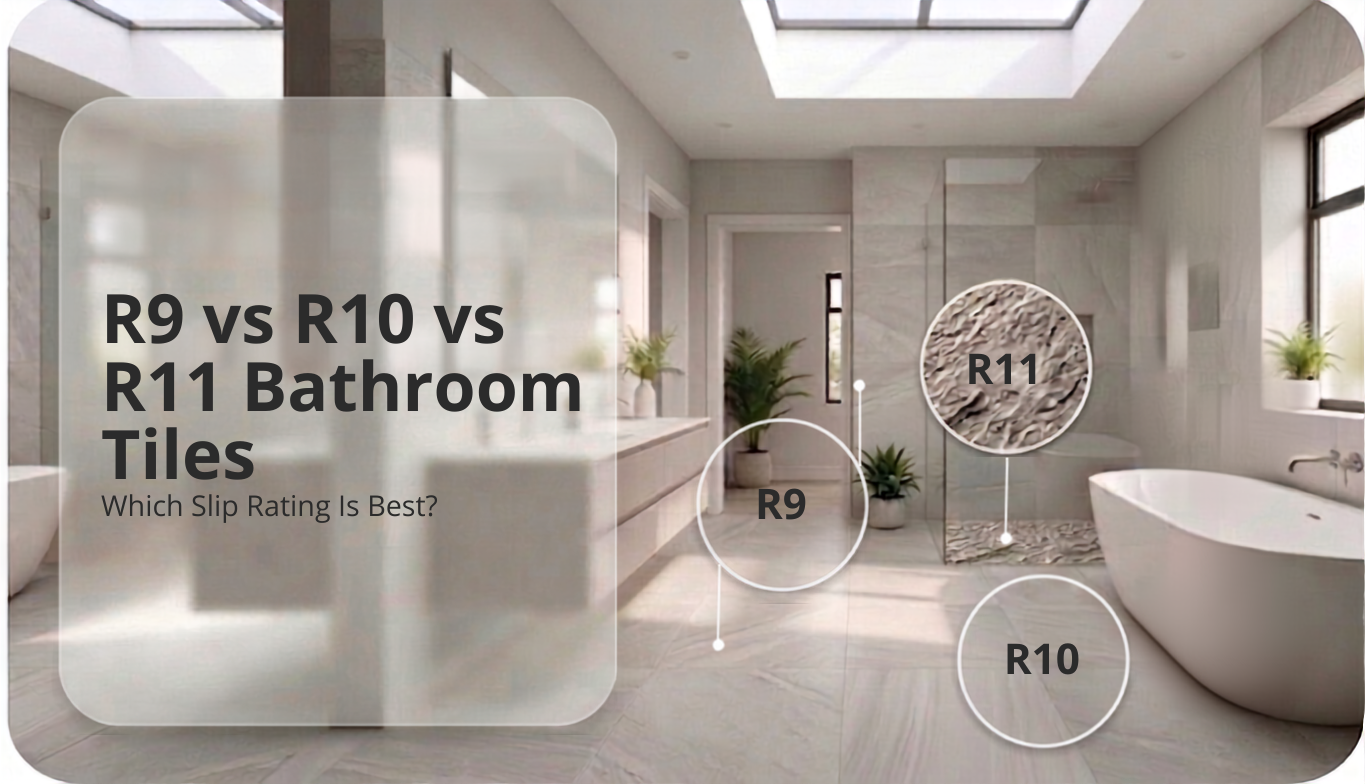
R9 vs R10 vs R11 Bathroom Tiles: Which Slip Rating Is Best?
While shopping for bathroom tiles for your wet room or kitchen tiles, you may have come across codes such as R9, R10, and R11. You may have no idea what this actually means, but it is one of the technical tile specifications that ensures your safety. These are R-ratings, used to measure the slip resistance of the tiles and whether it is suitable for a specific space or not.
R9 slip rating provides minimal slip resistance; thus is ideal for dry indoor spaces like living rooms, dining rooms and bathrooms with a mat. R10 slip rating provides slightly better slip resistance, best for standard bathroom and kitchen floor use. R11 slip rating provides the safest foot grip, making it ideal for wet rooms and walk-in showers.
This guide breaks down what R9, R10, and R11 antislip actually mean, where UK safety guidance points, and which rating makes sense for your bathroom.
What Are Tile Slip Ratings
| Slip Rating | Slip Resistance | Ideal For | Visual Example |
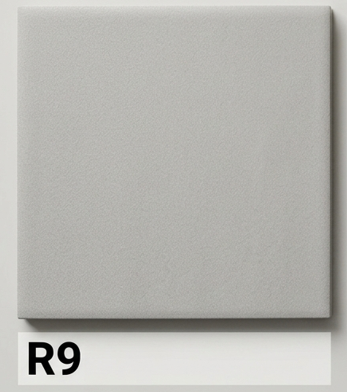
| R9 | Minimal | Dry indoor spaces; bathrooms with mats | |
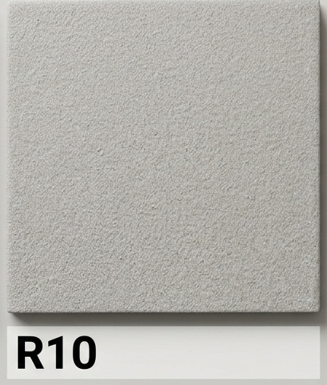
| R10 | Moderate | Standard bathrooms & kitchens | |
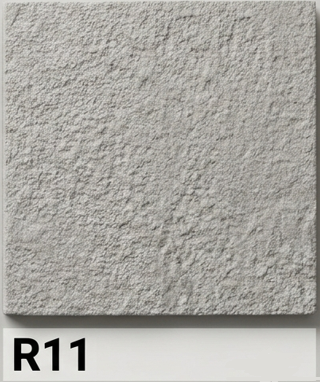
| R11 | High | Wet rooms; walk-in showers |
The R rating system (R9 to R13) comes from a German test standard, DIN 51130. An operator wears shoes and walks across a tiled ramp coated in oil. The angle at which they start to slip determines the rating. The higher the number, the steeper the ramp, the more resistant the tile.
The R rating system (R9 to R13) comes from a German test standard, DIN 51130. An operator wears shoes and walks across a tiled ramp coated in oil. The angle at which they start to slip determines the rating. The higher the number, the steeper the ramp, the more resistant the tile.
Pendulum Test Values (PTV) Scale UK
In the UK, slip resistance is usually measured using Pendulum Test Values (PTV), based on BS 7976. This is a different test method entirely. A pendulum swings across the tile surface and measures resistance, usually in wet conditions with a rubber slider.
R ratings and PTV aren't directly interchangeable; a tile's R rating won't reliably tell you its exact PTV score, so don't treat one as a substitute for the other if a supplier only provides one figure.
The Health and Safety Executive (HSE) recommends a minimum PTV of 36 for areas at high risk of slipping when wet; a useful benchmark if a tile's spec sheet includes it.
R9 Bathroom Tiles: Light Slip Resistance
R9 slip rating works best in dryindoor spaces; living rooms, dining areas, bedrooms. Some suppliers list R9 for bathrooms, but the caveat matters: it's really suited to dry bathroom floors, or bathrooms used alongside a bath mat near the shower or bath.
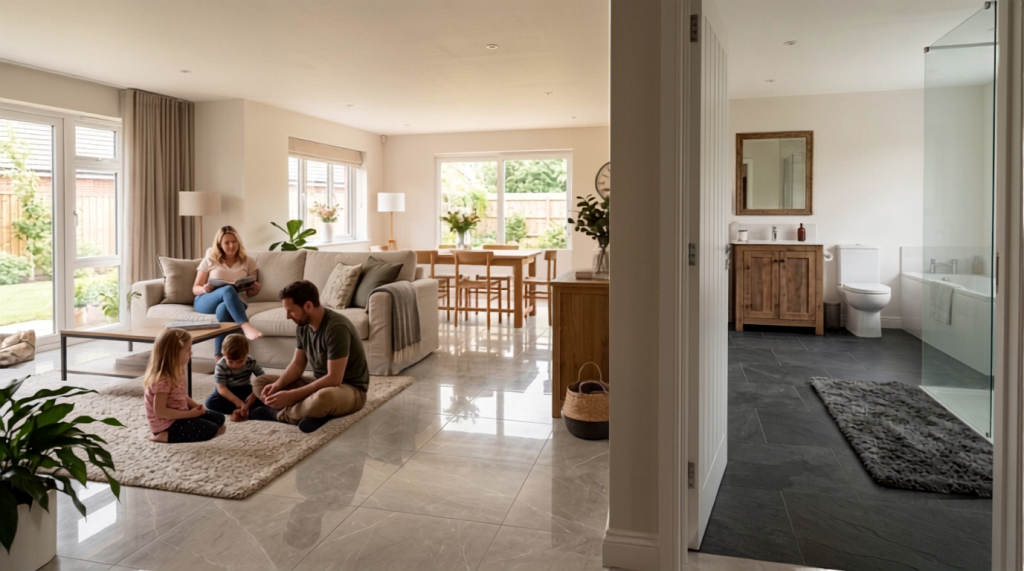
| Pros | Cons |
| Wider choice of smooth, polished, and matt finishes | Not rated for standing water; a wet R9 floor offers minimal grip |
| Often the most budget-friendly option | Most UK suppliers recommend a bath mat as standard if you go this route |
| Easier to clean, since there's less surface texture to trap grime | Not a safe standalone choice for family bathrooms with children or older adults |
R10 Bathroom Tiles: Balanced Safety & Comfort
R10 is the realistic baseline most suppliers specify for UK bathroom floors. R10 anti-slip tiles offer moderate slip resistance suited to occasional splashes and spills, which is normal in most bathrooms. But remember, it is not ideal for a shower that drains directly onto the floor.
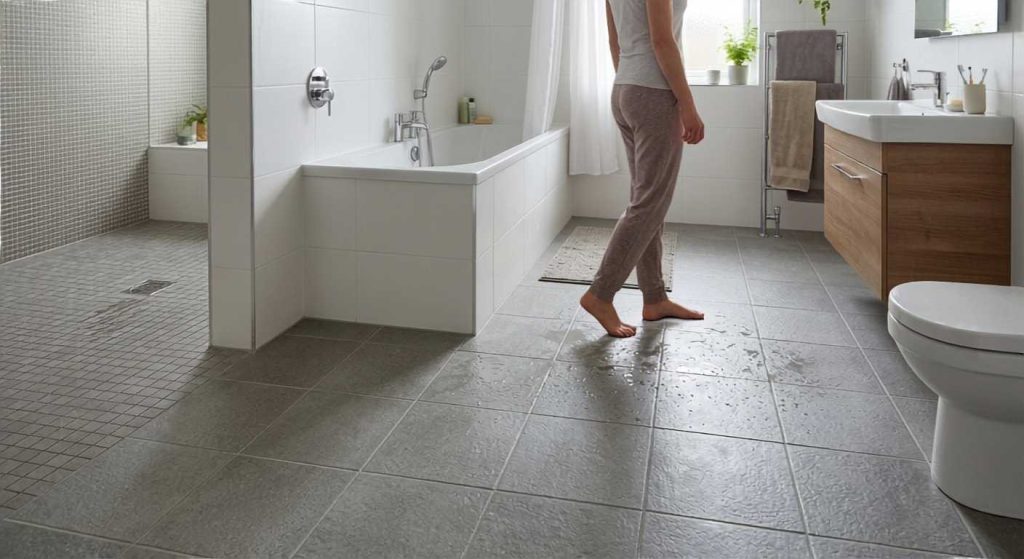
| Pros | Cons |
| Safe for the majority of domestic bathrooms with typical use | Not necessarily enough for wet rooms or showers with no enclosure, where water sits on the floor for longer |
| Still available in a good range of styles, including wood-effect and stone-effect porcelain | Slightly more texture than R9, which can affect cleaning in grout lines |
| A sensible middle ground between look and safety |
R10 is also the rating most commonly used for kitchen tiles, since kitchens face similar occasional-splash conditions to a standard bathroom.
R11 Bathroom Tiles: High Slip Resistance
R11 is where suppliers start recommending anti-slip tiles for wet rooms, walk-in showers, and bathrooms used by children or elderly family members. R11 anti-slip tiles are best for anywhere water regularly covers the floor rather than just splashing it.
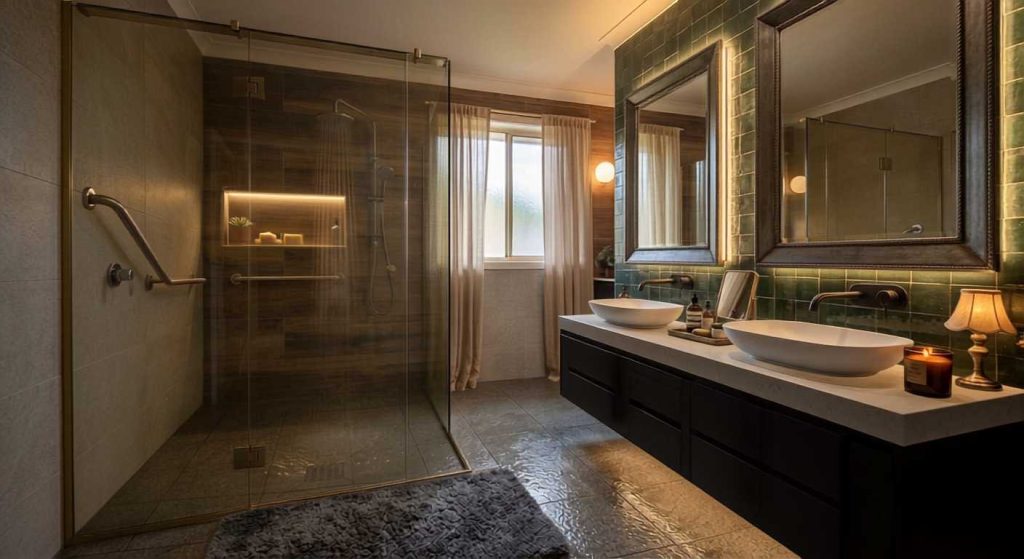
| Pros | Cons |
| Meaningful grip in genuinely wet conditions, in both porcelain tiles and other finishes | More textured surface, which can feel rougher underfoot and is slightly harder to keep spotless |
| The standard suppliers point to for wet room installations | Fewer ultra-glossy or highly polished finishes available at this rating |
| Suitable for both indoor wet areas and outdoor paving in thicker versions, such as patios and paths |
Choosing the Right Slip Rating for Your Bathroom
There's no single "correct" answer; it depends on how the room is actually used. Some points worth weighing up:
- Who Uses the Bathroom? Children and elderly users benefit from R10 minimum, R11 for wet rooms.
- Is it a Wet Room or a Standard Bathroom? Standing water changes the calculation; R11 becomes the sensible floor for a wet room.
- Comfort vs Safety Trade-off: Smoother tiles feel nicer underfoot but offer less grip when wet; textured tiles are safer but take more cleaning effort.
- Compliance, Not Just Aesthetics: A beautiful floor that ignores slip resistance is a liability, particularly in shared or family homes.
If in doubt, R10 slip resistance is a defensible default for a standard bathroom floor, stepping up to R11 wherever the floor sees direct, standing water.
Conclusion
R9 suits dry rooms in homes and, at a stretch, bathrooms used with a bath mat, and under-stairs cloakrooms. R10 is the practical baseline for most bathroom and cooking space floors. R11 is what you want wherever water actually sits on the floor; wet rooms, walk-in showers, family bathrooms with heavy use.
Match the rating to how the room is really used, not just how the tile looks in the showroom, and check the supplier's PTV data if slip resistance is a priority. Browse the full range at Royale Stones to compare finishes personally.
Frequently Asked Questions
- Bathroom Tiles
- Bathroom Vanity Units
- Porcelain Paving
- Floor Tiles
- Kitchen Tiles
- Garden Paving
- Porcelain
- Wall Tiles
- Natural Stone Paving
- Onyx Tiles
- Paving Slabs
- Sandstone Paving
- Anti Slip Tiles
- Terrazzo Tiles
- Marble Tiles
- Outdoor Porcelain Tiles
- Brick Effect Tiles
- Wood Effect Paving
- Paving
- Exterior Floor Tiles
- Outdoor Tiles
- acoustic wall panels
- Bathroom Basins
- Indoor Tiles
- Vinyl Flooring
- Stone Effect Wall Tiles
- External Wall Tiles
- Dijon Limestone
- 3D Split face Wall Tiles
- Vanity Units
- Outdoor Porcelain Paving
- Knowledge Base
- Luxury Tiles
- Inside Out Tiles
- Victorian Floor Tiles
- Slate Effect Tiles
- Porcelain Paving Slabs
- Concrete Effect Tiles
- Porcelain Tiles
- Wood-Effect Tiles
- Tumbled & Chiselled Tiles
- Tile Installation Tips
Recent Post
-
 November 6th, 2026
-
 November 3rd, 2026
-
Best Paving Thickness for Driveways: Choosing Between 20mm and 30–40mm
November 2nd, 2026
